



The American dream has always carried a simple promise: Work hard, build a life, and give the next generation a better chance. But for many families, that promise now depends on more than effort. It depends on ZIP code. It depends on access. It depends on who knows your name, who takes your call, and who is willing to open a door.
Research from Harvard University’s Opportunity Insights has given this reality a name: Economic Connectedness. Communities where people across income levels form real friendships tend to produce stronger upward mobility. In plain terms, when people with different levels of income, education, and professional access know one another, opportunity travels faster.
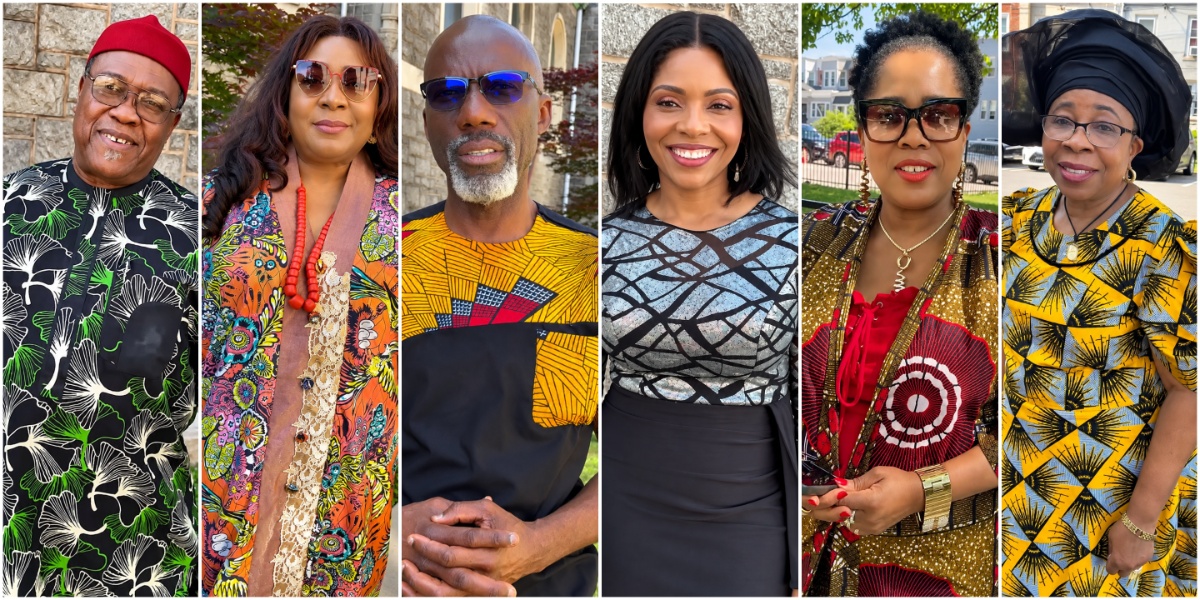
In Philadelphia, that connectedness exists on Sundays at St. Cyprian Catholic Church in West Philadelphia, where the Blessed Iwene Tansi Igbo Catholic Community (BITICC) gathers for worship, fellowship, and the quiet work of holding one another up. What happens there is more than religious practice. It is a community system forged from cultural memory and a network of trust. It is also an informal engine of economic mobility.
In this community, doctors, nurses, business owners, educators, home health workers, students, new arrivals, elders, and young families share the same sacred space. They celebrate together. They mourn together. They exchange information. They refer one another to jobs. They help newcomers settle. They show how immigrant communities often build the kind of social infrastructure that formal programs try to create.
“This community is vast,” says Ms. Pauline Onyeani, a registered nurse and Psychiatric Nurse Practitioner candidate. “All professions are here … If you want to hire people, you are able to hire people here. There’s so much you gain from this kind of community. They are there for you every time you call upon them. You’re never left alone.”
More than a religious practice
Constance Chisom Orji joined her husband in the United States after he had lived here for several years. Both had completed high school in Nigeria before coming to the country. Orji went on to become a certified physician assistant, diagnosing medical conditions and treating patients under a physician’s supervision. Her husband earned a PhD from Temple University. He worked for the City of Philadelphia and now lectures intermittently at a university and takes on other consulting work.
Orji has witnessed and experienced how the community provides the social capital to find comfort here in the United States and gain a foothold in the American dream.
According to Opportunity Insights, Philadelphia falls far below the national average in both upward economic mobility and economic connectedness. In essence, lower-income residents in Philly have fewer higher-income friends than those in other counties across the country. This has consequences beyond the current moment: Research has shown that friendships across socioeconomic lines are a catalyst for economic mobility.
In 2022, Opportunity Insights conducted a study of Facebook friendships of 72 million people, or 84 percent of American adults between 25 and 44. The results of this “Friendship Index,” as reported in The New York Times, were profound:
The study found that if poor children grew up in neighborhoods where 70 percent of their friends were wealthy — the typical rate of friendship for higher-income children — it would increase their future incomes by 20 percent, on average.
These cross-class friendships — what the researchers called economic connectedness — had a stronger impact than school quality, family structure, job availability or a community’s racial composition. The people you know, the study suggests, open up opportunities, and the growing class divide in the United States closes them off.
In Philadelphia, that growing class divide is evident in our segregated neighborhoods and schools, in the types of jobs people hold and the access residents have to services, including job opportunities. But Blessed Iwene Tansi has proven to be an exception.
The Friendship Index
Economic life in the U.S. is often separated by class. People may live in different neighborhoods, work in different industries, attend different schools, and move through different social circles. But immigrant community spaces often cut across those divisions.
At Blessed Iwene Tansi, Sunday worship creates a shared room.
Isioma Achilefu, known affectionately in the community as “Isi-Baby,” who has a master’s in Healthcare Administration and works with the state, describes the church as a place where people who might otherwise remain strangers become family. “The camaraderie is something else,” she says. “It’s just something that makes you feel like you are home again.”
She recalls one moment that showed how quickly the community can receive a newcomer. A man from Nigeria had traveled from Connecticut, hoping to connect with the Nigerian community. The priest introduced him to Isioma and her husband after an earlier Mass. They told him about the Iwene Tansi Igbo Community and encouraged him to stay for the 1 pm gathering.
“Today, that man is a strong member of this community and is contributing a lot,” she says.
That story is simple, but its meaning is large. A stranger arrived looking for a connection. Someone made an introduction. A community made room. Over time, that person became part of the same network and began contributing to it.
Churches, masjids, cultural associations, neighborhood markets, and immigrant community hubs play a role in Philadelphia’s economic future. They are part of the city’s opportunity infrastructure.
This is how social capital grows. It does not always begin with a formal program or a grant-funded intervention. Sometimes it begins when someone says, “Stay. Meet the people. You belong here.”
“People who are new to the country, who are not actually very familiar with the culture … it is an opportunity for them to meet the people who understand their language, their culture,” Engineer Kene Ilonze says. “We tend to find, give them a soft landing by having people who are already business owners here to help them secure a place while they get their feet on the ground. With time, it will be an easy landing for them; it will make it a lot easier for them to settle in.”
“Soft landing” is the first step because before a person can move forward economically, they must first be accepted socially. They need someone who can explain how things work, point them to resources, and help them avoid the isolation that often comes with starting over in a new country.
In this setting, cultural connection becomes practical support. A shared language can lead to housing guidance. A church introduction can lead to a job referral. A casual conversation after Mass can result in a path into a profession, a business, or a support network.
Brotherhood, responsibility, and order
The Iwene Tansi Igbo community also carries forward the structure of associations familiar to many Igbo families: men’s groups, women’s groups, faith-based associations, cultural networks, and family-centered gatherings. These groups do more than organize events. They build accountability.
Chief Sir Tony Okorji, a traditional leader and Knight of St. John International, describes the community as a place where people are expected to act responsibly and with mutual respect.
“Brotherhood or sisterhood, whichever way you look at it, here, you have the various associations as they are back home: Catholic Men’s Organization, Catholic Women’s Organization,” he says. “Responsible people are together, and they move responsibly.”
In communities like this, social connection is tied to conduct. People know one another. Families are visible. Elders advise. Peers observe. The group becomes a moral and social anchor.
That matters for economic mobility because trust underpins referrals. People recommend people they trust. They hire people they know. They send job leads to those they believe will show up, work hard, and represent the community well.
In this sense, the church is not just a place of worship. It is also a trust network.
The referral system
Once trust is in place, opportunity begins to circulate.
Orji, the co-founder, recalls the time her sister-in-law made the announcement from the pews that she was looking for a job. Shortly thereafter, Orji says, “She got one.” Such things happen frequently. When her husband worked for the City, he’d often point parishioners to career opportunities.
Those jobs were more than ways to pay rent. They were the first step to securing the economic opportunities needed to become a member of the middle class, earning enough money to support a family, buy a house, and see the next generation succeed even more.
Dr. Priscilla Asonye, an educator and community leader, points to a direct referral system within the community. “We have a reverend sister who is also part of this community who works in the Archdiocese of Philadelphia, so she is involved in announcing job opportunities, especially relating to the youth or school help issues. Through that sister, she always comes around to announce, and people who are in need can also be helped.” Asonye also describes BITICC as a family system where people share knowledge, joy, grief, and support.
Research has shown that friendships across socioeconomic lines are a catalyst for economic mobility.
This is the Friendship Index at work, in concrete terms. Information moves through trusted people. Opportunity is announced in a familiar space. Those who need help know where to ask.
For immigrant families navigating a new country, that assurance has economic value. It can mean a job lead when money is tight. It can mean advice before a major decision. It can mean childcare help, emergency support, business referrals, or a trusted person to explain a system that feels hard to enter.
A blueprint hidden in plain sight
The Iwene Tansi Igbo community offers Philadelphia a lesson that deserves public attention. Immigrant communities are routinely discussed through deficit: what they lack, what they need, what barriers they face. Those barriers are real. But they are not the whole story.
Communities like Iwene Tansi also build social capital. They create spaces where class lines soften, where trust becomes a resource, and where opportunity moves through relationships. They turn cultural belonging into practical help.
For policymakers, funders, civic leaders, and community planners, the lesson is that economic mobility is not built through programs alone. It also depends on the strength of the places where people meet, trust one another, and exchange support.
Churches, masjids, cultural associations, neighborhood markets, and immigrant community hubs play a role in Philadelphia’s economic future. They are part of the city’s opportunity infrastructure.
At St. Cyprian Catholic Church, the Blessed Iwene Tansi Igbo Catholic Community shows what that infrastructure looks like in human form. It looks like a newcomer being told to stay after Mass. It looks like a job announcement shared through a trusted member. It looks like nurses, business owners, educators, elders, parents, and young people occupying the same room. It looks like a priest visiting a hospital room. It looks like people who know where you live, what you need, and how to reach you when life becomes hard.
The Friendship Index gives the data a name. The Iwene Tansi Igbo community gives it a face.
And in Philadelphia, that face tells a hopeful story: When people are connected across class, culture, profession, and generation, opportunity is real. It becomes shared. It becomes lived. It becomes a ladder someone else is willing to hold.
FunTimes Magazine is one of 30 news organizations powering the Philadelphia Journalism Collaborative. This article is part of a national initiative exploring how geography, policy, and local conditions influence access to opportunity. Find more stories at economicopportunitylab.com
 MORE ON BUILDING ECONOMIC MOBILITY