

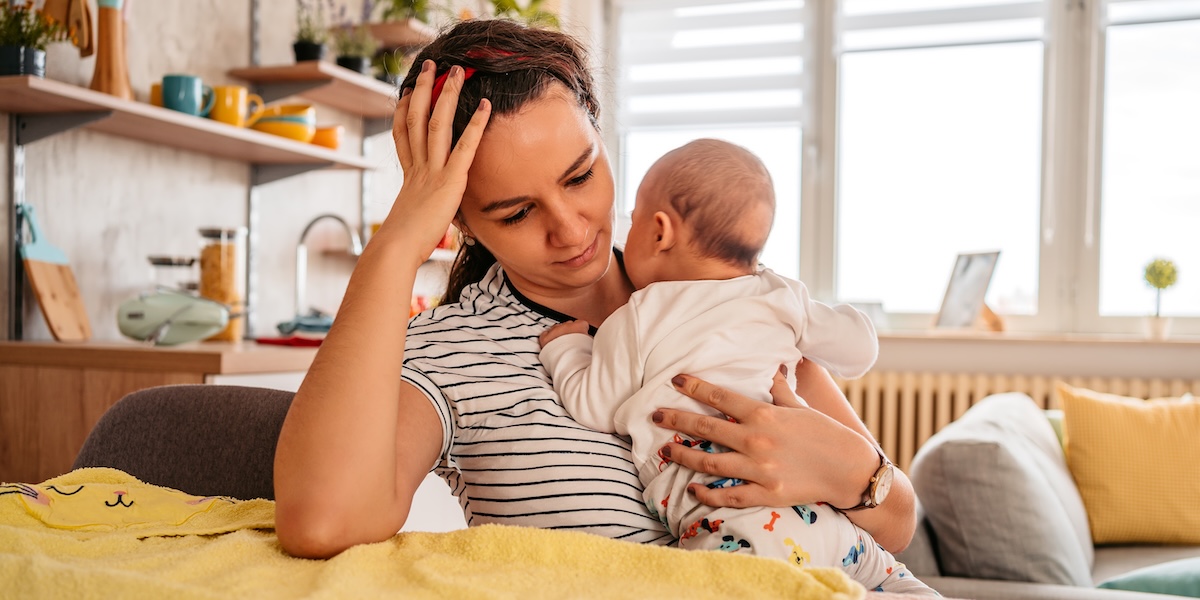


South Philadelphian Lidia Cabrales was pregnant with her third child, but there was still a lot she was uncertain about.
Yes, she’d given birth before, but this time, her husband was planning to stay at home to care for their older children, and she’d be going it alone. She was nervous about being by herself in the hospital, especially since she’d struggled emotionally right after the birth of her eldest.
Listen to the audio edition here:
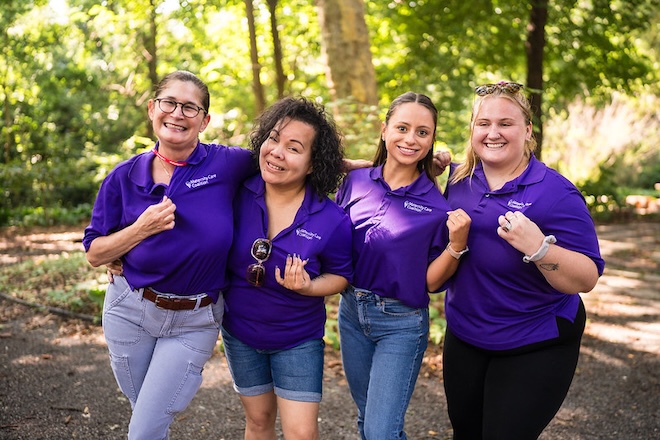
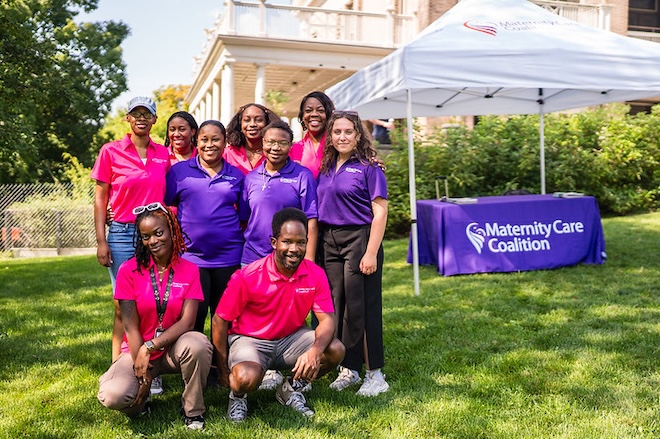
Thankfully, Cabrales had found Maternity Care Coalition (MCC). The Philadelphia nonprofit provides a variety of reproductive healthcare services, including doula services, lactation support, mental health resources, childcare, parenting classes and more.
Cabrales’ older children were in MCC’s childcare programs. She signed up for their pregnancy program and was matched with a doula who was able to support her during her birth.
Then, after she brought her new baby home, one of MCC’s advocates visited her to check in and make sure she and the baby were doing okay. The advocate helped Cabrales ensure she had scheduled follow-up well child and postpartum appointments.
Between visits, Cabrales could text her advocate questions about her infant son’s health. If he got sick, she’d reach for her phone to make sure what she was seeing was normal and didn’t need to take him to the hospital.
“She was wonderful,” Cabrales says. “She always asked me questions and gave me resources. I felt that if I ever needed to talk to someone I could.”
MCC’s program is one of several postpartum home visit programs in the region. The City of Philadelphia launched one in partnership with Jefferson Einstein in 2024 that has served 2,500 families so far. MCC’s program serves more than 5,000 families yearly. Nationwide, these types of programs are associated with better adherence to follow-up appointments, reduced unnecessary emergency room visits, better breastfeeding success, and lower instances of postpartum anxiety and depression. (Postpartum mental health has been in the news as of late, because of the ongoing trial of Lindsay Clancy, a mother diagnosed with postpartum psychosis who took her three children’s lives and attempted to take her own. Clancy’s legal team has argued that the lack of communication among her healthcare providers could have contributed to her illness.)
In New Jersey, a state law has made postpartum home visits universal. Maybe Pennsylvania will take advantage of our network of postpartum helpers and follow suit for its 150,000 births per year?
Making postpartum home visits universal
Postpartum home visits have long been the norm in other countries. Mothers in the Netherlands welcome kraamzorgs, nurses who frequently visit parents at home in their newborns’ first few weeks. Specialized maternal and pediatric care nurses visit new parents’ homes in Hungary. Midwives do the same for families in Austria.
These programs are not meant to replace in-person visits to physicians for the child or parent: They are just another resource. After all, it can be hard for parents to squeeze all their questions into a single doctor’s appointment.
Back in Philadelphia, the idea, says Lonnese Bodison, acting vice president of programs at MCC, isn’t to replace traditional medical services, but to “supplement” them. “We’re reinforcing things that you hear at your doctor’s office during your pregnancy and after.” MCC’s home visiting programs support families until the child is three years old. They’re in Philadelphia, Berks County, Bucks County, Chester County, Delaware County, Lehigh County, Montgomery County, Northampton County and all of Delaware.
Duke University developed a model called Family Connects to bring postpartum home visits to the U.S. in 2008. It’s now in a scattershot of counties in 21 states. (Philadelphia and New Jersey both have Family Connects programs.) Nonprofits like MCC have run home visiting programs for longer — their program is more than 40 years old — but they’re more localized. Few states have followed European countries’ examples and made these initiatives universal.
Oregon is one of those states. In 2019 when OR Governor Tina Kotek signed the first universal postpartum home visiting bill into law. Three years later, New Jersey passed a similar measure and have since been working to scale the program statewide. It’s now in 17 out of 21 NJ counties and has served more than 14,000 families.
What to expect when you’re expecting … a home visit
Each home visit program functions a bit differently. Some are nurse-led. Others send community health advocates into homes. MCC has offshoots of their traditional home visiting program focused on specific issues, like helping mothers struggling with addiction or offering support to women who had previously had complicated pregnancies.
Philadelphia’s Family Connects program sends nurses to visit families between two or three weeks after the baby is born. Nurses pull up with a bag of goodies — thermometers, stethoscopes, a blood pressure cuff and baby scale. The City partnered with Jefferson Einstein because they serve “higher risk zipcodes,” says Dr. Aasta Mehta, director of the Division of Reproductive, Adolescent and Child Health for the City of Philadelphia. More than 48 percent of patients are insured through Medicaid.
The nurses do basic medical checks for both mom and baby, but they’re also there to help with any questions new parents might have. Babies don’t come with an instruction manual. The internet constantly tells new parents that they must do/buy any number of things or their kids will be physically, or at least emotionally, scarred. It’s hard to know what’s true, especially since even seemingly safe things can be dangerous for new little humans. For instance, did you know babies can’t have water until they’re six months old? Parents or other caregivers might feel more comfortable asking embarrassing questions in their homes.
“At a time where misinformation is so prominent online and on social media, it’s really wonderful to have that warm connection with a clinical healthcare specialist,” says Dr. Kate Stampler, the department chair of obstetrics and gynecology at Jefferson Einstein Philadelphia. “Even after the visit, they can message with the nurse.”
Home visits can be beneficial for repeat parents as well as new moms. Postpartum visits weren’t widespread in New Jersey when Brandie Benson, the state’s universal home visiting program director, had her first child nearly 14 years ago. Nine years later, when her son was born, she signed up to have a postpartum home visit from a nurse.
“Even as a mom who was a labor and delivery nurse who had all of that access, all that expertise, I still struggled with my pregnancies and throughout that postpartum journey,” Benson says. “It wasn’t like a nurse or a stranger coming to my home. It was like a friend coming and having a conversation with me.”
Lifesaving care
Nurses aren’t just popping babies on scales or helping breastfeeding moms perfect their latches. They are also referring them to critical treatment, says Dr. Felix Muchomba, an associate professor in the Rutgers school of social work, who has researched the first year of the Family Connects program.
“Imagine a mom who has just given birth: She’s feeling exhausted, she’s overwhelmed, she’s lost sleep, so she assumes her headache or swelling is normal. But when a nurse comes in for a visit and takes her blood pressure, she recognizes this is a symptom of dangerous hypertension,” Muchomba says.
“They were spotting signs of postpartum infections or mental health struggles before they became tragedies.”
It bears repeating: At home postpartum care is life saving care. Out of more than 500,000 live births between 2019 and 2023 in New Jersey, 258 mothers died. NJ’s maternal mortality review committee believes 86.7 percent of those deaths were preventable. Philadelphia has a similarly high maternal mortality rate — 20 deaths per 100,000 live births. Home visits are one way to start to bring those numbers down. Muchomba’s research found that New Jersey Family Connects nurses referred 16 percent of families to doctors for immediate physical or mental health concerns.
Another life changing (if not saving) intervention? Social services. Nurses connected 50 percent of families to support systems like food and diaper pantries. They’re helping make sure families have the resources they need to survive.
“The family’s life is different than it was when they didn’t have the baby,” Mehta says. “Being able to bring those resources to the home so that folks don’t have to figure out how to get somewhere can be really helpful.”
Can we scale home visiting programs statewide?
Mehta says she “would love to scale a program like this to other places in the city.” She sees potential to partner with other health systems and reach more parents with new babies. So far, they’ve reached 2,500 families.
Funding, as ever, is a challenge. Philly’s current iteration got its start with $1.3 million in state dollars. In her 2027 budget, New Jersey Governor Mikie Sherrill allocated more than $14 million to the home visiting program. These programs come with a massive ROI, however. Researchers have estimated that states will save $3.17 for every dollar they invest in the program.
Our neighbor across the river offers some other lessons for how to successfully scale a postpartum home visiting program, too. For one, Benson recommends starting out in a few counties, developing partnerships, and then expanding. That’s allowed them to build out the needed infrastructure, evaluate how the program is working, and make necessary changes. It’s currently in 85 percent of all counties and will be statewide by January 2027.
New Jersey also found a number of champions, including former state First Lady Tammy Murphy, who helped get legislation passed for a universal program. (Ahem, Lori Shapiro, maybe you’d like to take up the mantle?)
“Maybe our neighbor state will prompt this program to really expand?” Stampler says.
Maybe. Either way, you can’t say there’s no good ideas coming out of New Jersey.
Correction: Dr. Aasta Mehta is the director of the Division of Reproductive, Adolescent and Child Health for the City of Philadelphia.
 MORE IDEAS WE SHOULD STEAL