



In 2011, Richmond, Virginia was grappling with a scourge it shared with Philadelphia: deeply entrenched poverty. Twenty-seven percent — twice the national average — of the city’s 206,487 residents were earning $10,890 or less per year (the federal poverty guideline for a one-person household). This level of poverty had plenty of human consequences. But it was also impacting the city’s overall economic health.
“We were struggling to really attract jobs, to attract business, to upskill our workers,” recalls current Richmond Mayor Danny Avula. Municipal leaders were concerned about the city’s bond rating getting downgraded, which would only exacerbate the situation.
Listen to the audio edition here:
“It’s about taking risks. You don’t know what the answers or the outcomes are going to be 10 years later, 20 years later, but you’ve got to get out there and take calculated risks.” — former Richmond Mayor Levar Stoney
Under three consecutive mayors, Richmond’s city government has deliberately worked to fulfill an ambitious goal set by then-Mayor Dwight C. Jones in 2011: Cut the poverty rate to 15 percent by 2030, through data, time-tested solutions and novel innovations. Thirteen years later, Richmond is well on its way. Today, the city’s poverty rate is down 10 points to 17.1 percent, across all demographics. Residents are working — and getting paid — more. Employers have moved in. The vicious cycle of intergenerational poverty appears to have reversed itself.
Philadelphia’s population — 1.5 million people — is 6.5 times larger than Richmond’s, but we’ve faced similar struggles with entrenched poverty, a lack of high-paying jobs, and a city government that tends to operate in silos rather than working together toward a common goal — all while ranking dead last in economic mobility. Could America’s poorest large city learn from Richmond’s example?
A goal to cut poverty — and a challenge
Jones’s first act after setting his city’s poverty-reduction goal was to assemble a commission of community leaders and residents living in poverty to study the problem and issue recommendations. He issued Richmond leaders a clear directive: “If this is something we can’t do, we don’t deserve to be here.”
The commission first found generational poverty was most rampant in public housing, where residents lacked the education and workforce training to secure steady, well-paying jobs. The problems affected adults but began with young people, who had little job readiness preparation while in high school — and few work options afterwards.
Job training programs for adults are a cornerstone of most anti-poverty initiatives. Richmond added job training programs for teenagers with Youth Works RVA. But that was just a first step. The city realized they’d also need to tackle issues related to public health, childcare, housing … work that would necessarily involve various city agencies and departments.
“Every individual and every family, requires multiple levers to be able to move them from crisis to thriving,” Avula says.
So, in 2014, Richmond created the Office of Community Wealth Building, a first-in-the-nation department to work on breaking down silos, to help disparate municipal offices better communicate and work together around economic growth. The office organized the preexisting anti-poverty initiatives and offered a springboard for piloting new solutions. Importantly, once Jones left office, the Office’s work continued under his successor, Mayor Levar Stoney, and now, under Avula.
A living wage
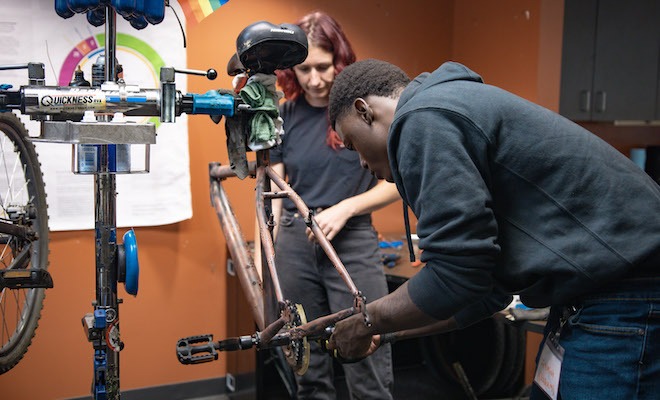
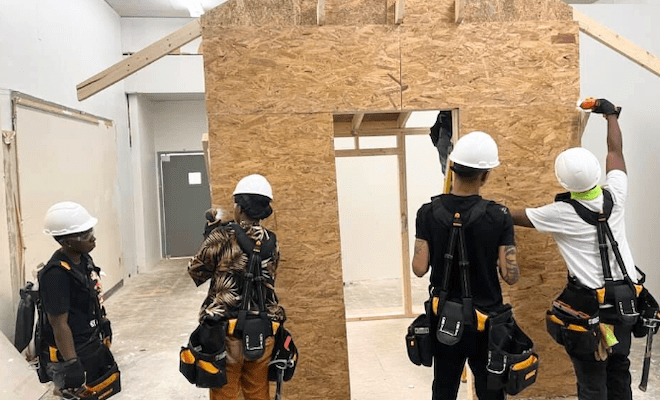
With a $4.6 million budget (as of 2024), the Office of Community Wealth Building offers no-cost career counseling, work-based learning, adult education, vocational training — from traditional construction to solar panel installation to doula work — and other job services to residents. Since the office’s inception, more than 2,420 citizens have participated and found higher paying jobs through these programs, according to data from the Mayor’s office.

In tandem with these efforts, both Richmond and the Commonwealth of Virginia as a whole have encouraged business leaders to commit to paying their employees a living wage. This year, Richmond led the way, paying city workers a minimum of $20 per hour. (In Philly, where the cost of living is about 9 percent higher than Richmond’s, the hourly rate of pay for a municipal worker starts at $16.35.) Fifty businesses have since joined them in this commitment.
VA’s capital city has also attracted companies that pay higher wages. CoStar, the real estate tech group behind Homes.com, built a new corporate campus in the city in 2021 that brought 2,000 jobs to the area. In spring of 2025, Richmond had 20 percent more job postings than it did prior to the pandemic.
Avula calls these developments “one of the big success stories of the last few years,” and is confident higher wages play a role in “low-income families being able to move out of poverty.”
“Every individual and every family, requires multiple levers to be able to move them from crisis to thriving.” — Richmond Mayor Danny Avula
For those who don’t earn a living wage, Richmond has conducted three guaranteed income pilots since 2019, giving families $500 per month to supplement their income for 24 months. The program, known as the Richmond Resilience Initiative (RRI), has distributed nearly $1.1 million to 94 families.
Although guaranteed income programs have netted inconclusive results in other places, folks behind the RRI say it has helped participants pay down debt, save for emergencies, pursue additional education and make progress towards goals like homeownership, which can increase wealth in the long term, according to a 2024 study of the program from University of Pennsylvania’s Center for Guaranteed Income Research. Researchers think programs aimed at particular populations look more promising, but they’re still being studied. Richmond will soon embark on a fourth RRI cohort, targeted toward single parents.
The city has also given leadership roles to people whose own lives mirror those it’s serving. Caprichia Smith Spellman directs the Office of Community Wealth Building. “I used to be a single parent, so I know what it’s like,” she says. “It’s an opportunity for me to give back to that space.”

They’re ensuring these efforts reach the next generation, too. The City works with the school district to ensure high schoolers have career counseling focused on teaching them how to nail job interviews and applications so they can secure jobs after graduation. They also offer help with financial aid for those heading to college. The Commonwealth has made community college free for students going into in-demand fields like healthcare, manufacturing, trades, early childhood education, public safety and IT.
Within the city, Stoney created the Richmond Pathways program, which used municipal funds to make community college free for all Richmond 12th graders, regardless of their area of study. By comparison, Community College of Philadelphia costs about $2,684 for a Philadelphia resident taking 13 credits.
“It’s about taking risks,” Stoney said of his city’s economic growth on The Citizen’s How to Really Run a City podcast. “You don’t know what the answers or the outcomes are going to be 10 years later, 20 years later, but you’ve got to get out there and take calculated risks.”
Anti-poverty beyond City Hall
Smith Spellman’s department has also made it easier for people to get to work. Richmond’s public transportation is free — and has been since 2020. The City leveraged state grants and money from donors to make this happen. This past April, they secured $6.8 million to continue the program through July 2026. “We saw ridership improve so much, and we saw low-income families get access to so many more jobs as a result of that,” Avula says. (Imagine that: State-funded transit — and free to boot.)
Richmond’s anti-poverty initiatives also succeed because they meet people where they are, literally. In 2010, when he was director of the Richmond and Henrico Health Districts, Avula saw that public housing residents distrusted City Hall and the housing authority.
“Individuals in the community … get a say in whether or not the program’s working … whether or not we need to go back to the drawing board.” — Office of Community Wealth Building Director Caprichia Smith Spellman
But they did trust the health department, which had recently transformed vacant public housing units into resource centers where residents could get screened for chronic health conditions and receive family planning services and STD testing. So, the City brought some anti-poverty efforts — help with housing and employment initiatives — there.
“We had a lot of deep relationships with residents on the ground. We were bringing a lot of holistic perspective about what actually drives health outcomes,” Avula says. Mayor Stoney later expanded on this idea, building four recreation and community centers featuring job and childcare resources to high-poverty neighborhoods.
“We make sure that the individuals in the community have an elevated voice,” Smith Spellman says. “They get a say in whether or not the program’s working, whether or not the program that exists is something that should, whether or not we need to go back to the drawing board.”
Building wealth
These initiatives are working. Poverty has declined not only among every racial and ethnic group in Richmond. It’s also gone down more than twice the rate of VA overall, putting it well on the way to achieving its goal of reducing poverty to 15 percent by 2030. The City’s economic health has improved, too. It received its first AAA bond rating last year.
Again, one key element to Richmond’s success has been all-in buy-in from Jones’s successors — something that is all too rare in city government. Here in Philly, we’re more likely to see a mayor dismantle the successful pilot programs of their predecessors. Mayor Jim Kenney ended Mayor Michael Nutter’s focused deterrence pilot program, which contributed to reducing shootings 35 percent over two years. Unlike Kenney, Mayor Parker does not participate in Mayors for a Guaranteed Income (a program Richmond is part of to help share their success with other cities).
Richmond’s example also illustrates the power of setting a goal — and banding together to achieve it. Part of why the City created the Office of Community Wealth Building was to break down silos and get City departments, even those like public health that aren’t commonly thought of as drivers of economic mobility, to work together to come up with innovative solutions to address poverty. Then, they got the state, educational institutions and businesses on board. It’s a remarkable example of an entire community rallying around a common goal.
Parker talks a whole lot about “One Philly,” but if she really wants to leave a mark on the city, unity can’t just be a slogan or something we pull out one day a year for an Eagles parade.
“If this is something we can’t do, we don’t deserve to be here.” — former Richmond Mayor Dwight C. Jones (in 2011)
Setting a goal to end poverty — or litter, or gun violence, or a low literacy rate, or any of the issues that bring Philly down — and rallying the entire city together to achieve it could give her the kind of legacy that lasts beyond a single mayoral administration. Perhaps centralizing our anti-poverty efforts, like in Richmond or could help us get there.
“It’s really important to put that aspirational number out there, and then to make sure that we’re revisiting that as a community,” Avula says.
Philly has, it should be noted, made progress reducing poverty in recent years. Our rate has decreased from 26.3 percent in 2013 to 20.3 percent in 2023, according to Pew Charitable Trusts. Last year, Philly Joy Bank launched a program that gave pregnant women a guaranteed income of $1,000 for 18 months. And now, any Philadelphia family with an adjusted gross income of $65,000 or less can send their child who’s gotten into Temple University there for free.
But growth in middle wage jobs, those that pay a living salary and allow people to build careers, has remained stagnant. Instead, we have a lot of minimum and low wage jobs that keep families stuck in entrenched poverty and high business taxes that deter well-paying companies from moving to the City. While the poverty rate has gone down, disparities based on race have persisted. Twenty-six percent of Hispanic residents, 24.5 percent of Black residents and 19 percent of Asian residents live in poverty, compared to just 12.5 percent of White residents, per reporting from WHYY.
As for creating a city department that explicitly centralizes municipal efforts to combat poverty and build intergenerational wealth — or sending our elected-official-in-chief to network with other mayors dealing with similar issues? We’re not there yet.
 Every Voice, Every Vote funds Philadelphia media and community organizations to expand access to civic news and information. The coalition is led by The Lenfest Institute for Journalism. Lead support for Every Voice, Every Vote in 2024 and 2025 is provided by the William Penn Foundation with additional funding from The Lenfest Institute for Journalism, Comcast NBC Universal, The John S. and James L. Knight Foundation, Henry L. Kimelman Family Foundation, Judy and Peter Leone, Arctos Foundation, Wyncote Foundation, 25th Century Foundation, and Dolfinger-McMahon Foundation.

MORE ON REDUCING POVERTY, BUILDING WEALTH
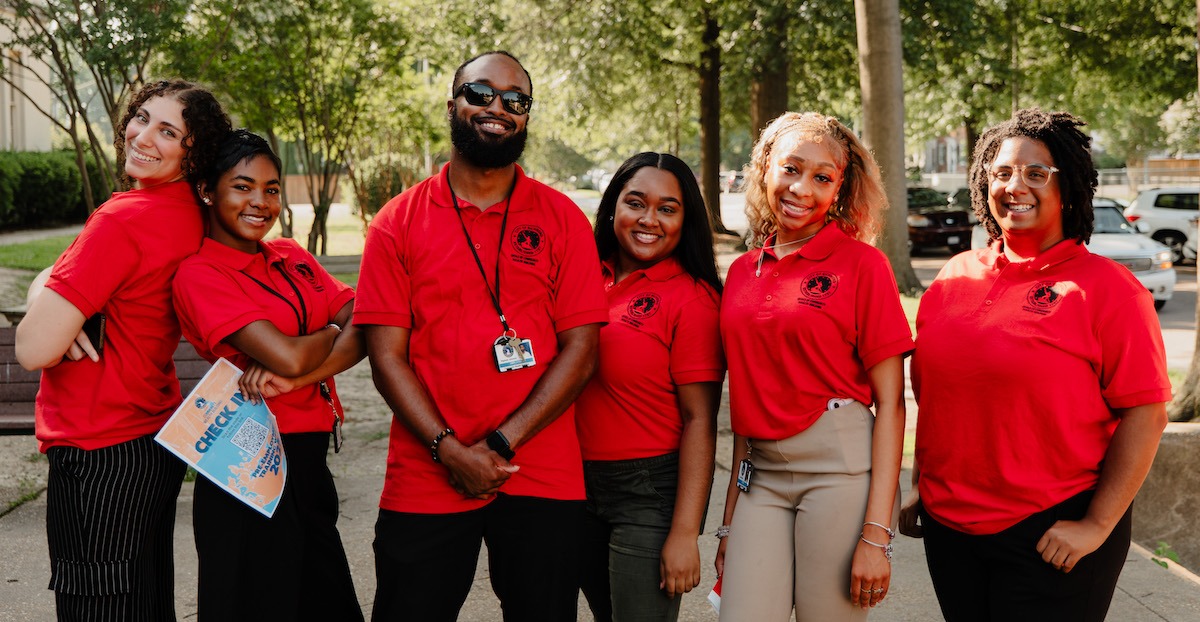
Career Coaches from the Youth Works RVA program — the largest youth employer in Central Virginia — mentored more than 750 students during the summer of 2025.