

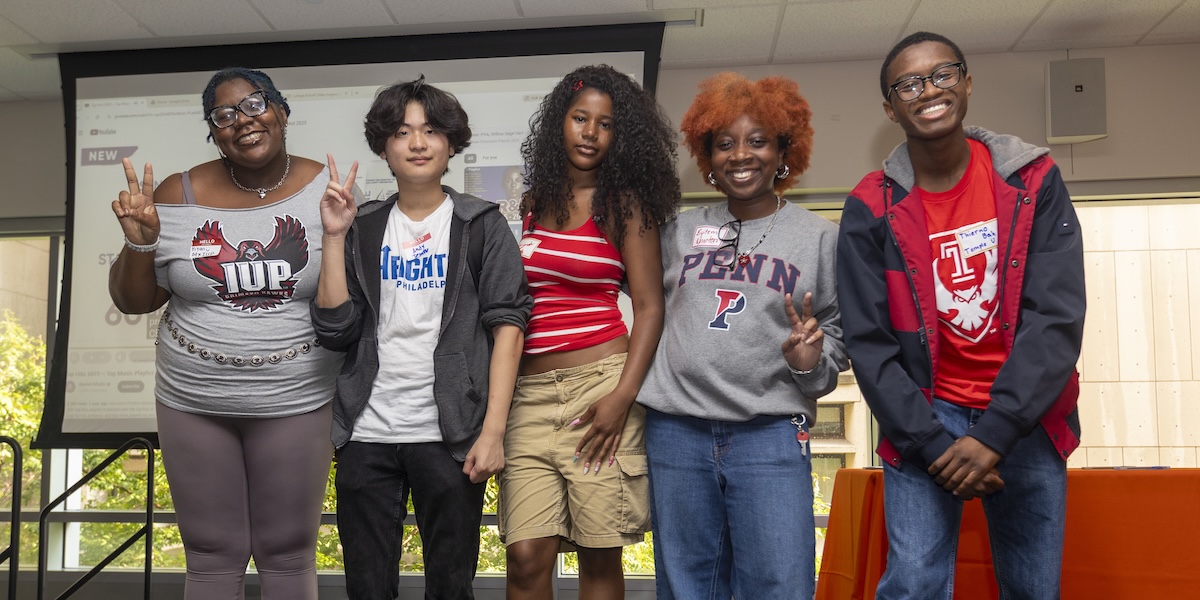


Every June, Heights Philadelphia, a nonprofit that describes itself as an “economic mobility catalyst” for local youth, puts on a combined middle and high-school graduation celebration that’s so large, they hold it at Citizens Bank Park.
About 1,000 students who’ve participated in Heights’ mentoring programs, both rising ninth graders and nearly-there high school graduates, file onto the Phillies’ field. For the seniors, this is their opening day: Nearly 90 percent of them have committed to colleges, universities and trade schools. Their future is bright.
Still, the organizers behind the event understand that these promising students’ path forward is far from guaranteed. Last year, 42.5 percent of Philadelphia high school graduates who planned to attend college failed to enroll come fall. Additional students — according to a 2018 Pew Report, 17 percent or about 127,00 — will begin their postsecondary education, but not complete their studies. The students who are most at risk for not continuing their studies tend to be first-generation, low-income and Black or Latino —a population that makes up most of Heights students.
That’s why Heights provides their graduated students the opportunity to continue with the organization, during and beyond that first summer between high school and college. They’re fighting, says Stephanie Pérez-Jarmul, the organization’s managing director of college success, the “summer melt.” So far, they’ve succeeded.
Heights can’t 100 percent claim that they’re the sole reason students in their program matriculate to college at a rate nearly twice that of other Philadelphia graduates who’d planned to attend college. But they can say, of the approximately 3,300 students who’ve participated in Heights’ post-high school programming annually, 75 percent do immediately matriculate to college. They can also report that by sophomore year, 95 percent of Heights college students have declared a major — putting them on track to graduate in four years or less.
New Heights
Heights Philadelphia came about as the result of the 2022 merger of Philadelphia Futures, a circa 1989 nonprofit that provided low-income, first generation students with the resources to help them succeed in college, and Steppingstone Scholars, a Boston-based organization with a local branch that connected underserved Philadelphia students with college and workforce opportunities through educational partnerships.
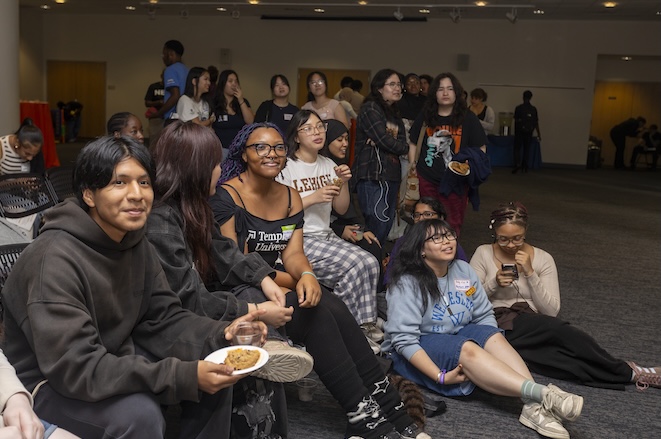
Once combined, the nonprofit’s joint mission became promoting long-term student success across college entry, matriculation, and career development. Heights programs start in middle school with academic advising during the school year and summer programs held at Temple University and the University of Pennsylvania. In the early years, Heights looks for students who seem receptive to building a long-term relationship focused on educational and career growth, who have guardian support, and whose academic needs fit what the organization is able to provide.
Once they’re in high school, Heights students can access academic enrichment,such as college-level STEM enrichment opportunities; career exposure; through 1:1 counseling on topics like resumé writing and job search strategies; and college preparation through paid internships and dual enrollment. The team helps students navigate often complex financial aid applications and packages too.
“There are many college access programs, but very few college persistence programs.
This summer’s program for Heights high schoolers included a Shark Tank-like pitch competition, where students who’d spent their summer learning about business planning, marketing strategy and financial literacy proposed their ideas to a panel of judges representing the Federal Reserve, Comcast and wealth management firms.
During the school year, Heights teams physically go to high schools to work with students in small groups. Heights has three core entry points: fifth grade, where students can join Steppingstone Academy, seventh grade, which marks the start of the Temple Future Scholars program, and 10th grade, when students can enter into school-based cohort enrichment programs.
Why Philly students need Heights
For years, District schools in Philadelphia have dealt with a shortage of guidance counselors, who are especially valuable to students whose parents don’t speak English, or haven’t been to college. Most public schools have about one counselor per every 200 to 400 students. Heights regards its role as stepping in to “help expose [students] to college, to help them make informed decisions about what they want to study,” says Pérez-Jarmul.
That’s what happened for Hager Gomma. When she was a junior at Central High School, Gomma complied when her Heights college coordinator pushed her to consider out-of-state schools that weren’t on her radar. Gomma assumed she’d follow her older siblings, who both attended college in-state. But her coordinator found an all-expenses-paid fly-in program at MIT that introduces prospective students to college life. She tried it out, loved MIT, and worked with Heights mentors to apply.
“When he brought up the idea of attending MIT, I was just like, Oh no, I don’t know about that school. Like, that seems like a very far reach. But he was like: just give it a try,” Gomma says. “Without my coordinator’s push and him also doing research on the side, I don’t think I would have ended up at the school where I am right now.” (Where she is right now: an MIT senior studying mechanical and biomedical engineering.)
Just as importantly, whereas a guidance counselor finishes working with students upon high school graduation, Heights’ staff stays in the mix.
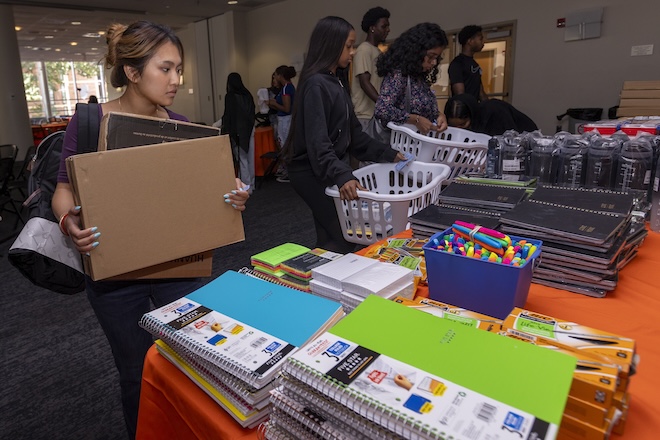
Pérez-Jarmul says the first summer between high school and college “can be very, very challenging and a bit deceiving.” There are doctors appointments to make, paperwork to send, correspondence to keep up with, orientations to attend — not to mention all the add-on expenses that scholarships and financial aid don’t cover, like things kids need for their dorms, computers, books, school supplies — and the general uncertainty of going off on your own for the first time.
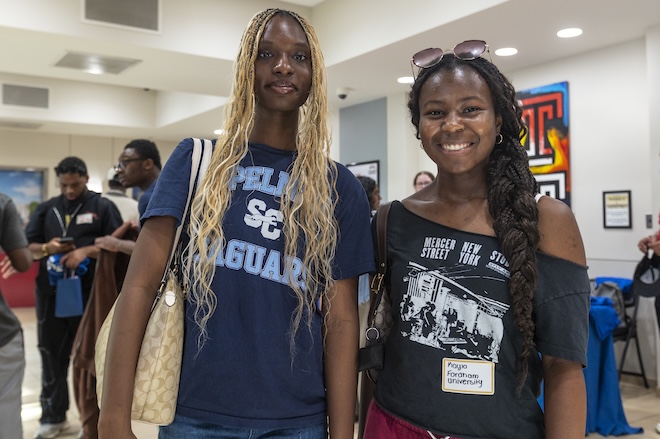
“Some of the most prominent reasons for summer melt is that loss of access to a counselor,” Pérez-Jarmul continues. “There are many college access programs, but very few college persistence programs. So many programs will get you in, and then that’s it … Quite often, (the student) will no longer have a point person to go to with the questions that they have, and so it reduces their chances of actually seeing it through.”
At the beginning of the summer, Heights assigns an advisor and main point of contact to each graduate. In addition to providing practical advice, that person provides emotional support.
“A huge reason for the summer melt is imposter syndrome. Students think, Oh, I got in on a whim. I’m not material for this. I’m definitely not smart enough to do this,” Pérez-Jarmul says. “We work hard to combat that. We use a strength-based model when we are advising — looking for the strengths in the students and highlighting those strengths.”
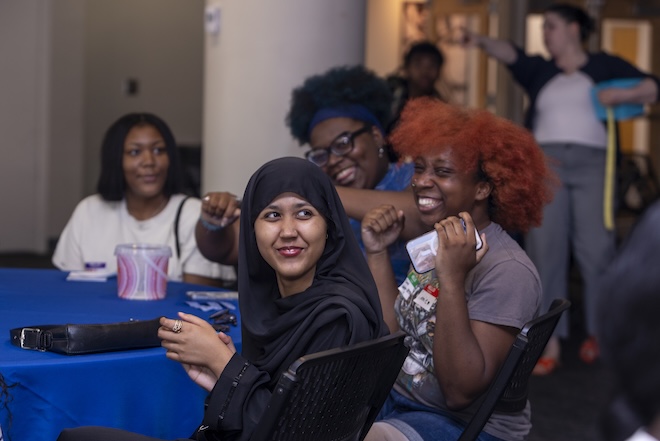
During the summer before students start college, Heights provides first-generation freshmen with additional support through events where staff and Heights alumni talk about their own college experiences. “I had multiple people that I could go to to ask [questions about college],” says Pérez-Jarmul. “A lot of our students don’t have that network, so we have to create that network for them.”
Gomma has become one of those mentors. Her official role involves teaching chemistry to Heights students about to enter their freshman year of college through the program’s summer institute. Unofficially, she’s taken some high school grads under her wing.
“Since I’m closer in age than the other instructors are, I can give them that real life experience and just any advice that they need,” Gomma says. Going to school so far away from home, “there wasn’t anyone like that [for me]. I wish I had someone who told me what to expect.”
Keeping college students on track
From freshman year on, Heights continues to offer students guidance on majors, course registration and, once again, financial aid. (Their goal: Help their students graduate without the burden of student debt.) Heights students meet with their advisors biannually, checking in on topics such as academic goals, personal challenges, and school debt.
In between these meetings, students are also welcome to check in with their advisors about any issues that come up. For those who attend schools with large populations of Heights students, the organization also offers group advising and connection to on-campus peer coaches.
Despite the organization’s “economic catalyst” mission, Pérez-Jarmul says that Heights’ goal isn’t to push students to earn “tons of money.” Rather, they aim to give students the tools they need to make a living wage and “make a step for the generations behind them.” By 2029, they would like to have had 5,000 students participate in their post-high school program.
“It’s amazing what a student can accomplish when they are exposed to opportunities,” Pérez-Jarmul says.
Correction: A previous version of this post has been corrected to reflect the proper spelling of Stephanie Pérez-Jarmul’s surname.
 MORE ON PHILLY IN COLLEGE