

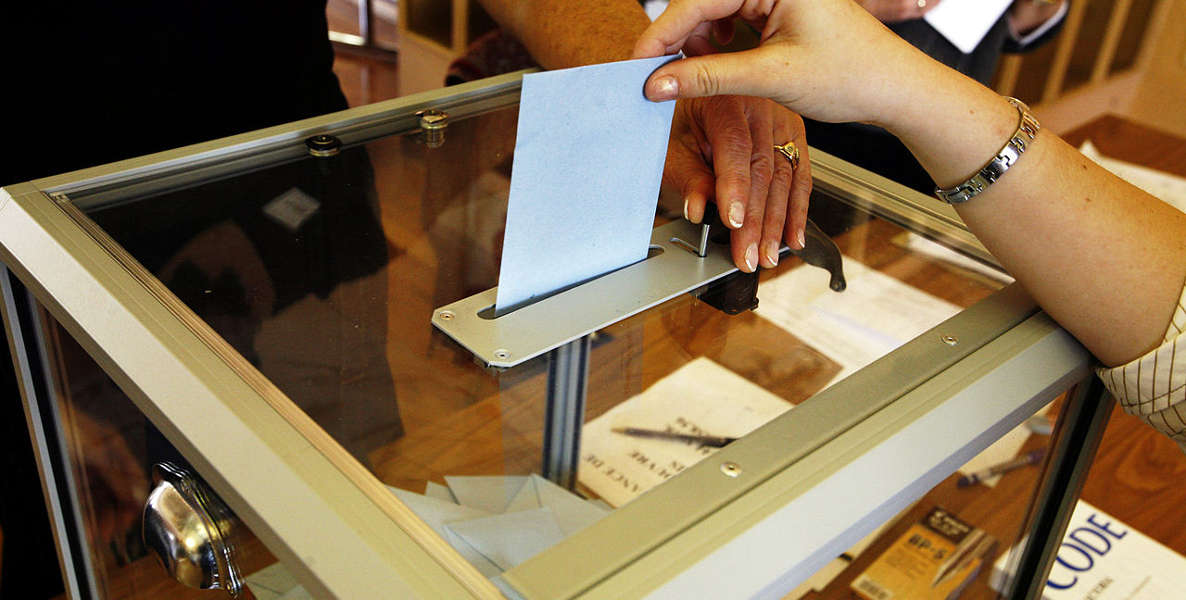


By Pennsylvania law, voters are only required to show identification if it is their first time voting at a specific precinct or polling location. Yet in the 2025 primary election this May, an Arabic-speaking community member in Philadelphia was asked to provide identification at the polling place because a poll worker thought his name “was too difficult to understand” — even though he had been casting his ballot at the same precinct and location for years.
Fortunately, this voter knew his rights and exercised his right to vote. But this case highlights how voter disenfranchisement can and does happen, even here in Pennsylvania. In fact, we rank 29th in ease of voting, based on the 2024 Cost of Voting Index, which measures and compares how accessible it is to vote in each state.
Today, Pennsylvanians continue to benefit from the federal Voting Rights Act of 1965 which, among other protections, includes rules for language access to ensure every eligible citizen has the right to vote. For districts that have many citizens aged 18+ that need assistance in a language other than English, the board of elections is required to provide voter materials in that preferred language.
So far in Pennsylvania, this means that Berks, Lehigh, and Philadelphia Counties provide Spanish-language voting materials, and Philadelphia County provides Mandarin-language voting materials.
However, this landmark legislation only included coverage for American Indians, Asian Americans, Alaskan Natives, and Spanish-heritage citizens. This means that dozens of languages, including those from African, Middle Eastern, and European origins, are not legally required to be provided, even if it means a lot of citizens in a region cannot access their right to vote.
Large cities have already taken steps to make their voting systems more accessible to those for whom English is not their first language.
At the Council on American Islamic Relations (CAIR) Philadelphia, we serve Muslim American community members, many of whom speak languages not included in the 1965 federal Voting Rights Act. For example, in Pennsylvania, there are at least 35,000 Arabic speakers, at least 10,000 of whom live in Philadelphia. From our work within the region, we also know there are sizable West African communities in Southwest and West Philly, and Arab American communities in Northeast and South Philadelphia.
It is not fitting for our city to rely on internet-based translations of critical information like voting materials, either. However much they may have improved, Google translate and similar services are not always accurate in conveying critical information about elections. We assisted a voter who needed an actual human to convey the difference between mail-in-ballots and absentee ballots last year, a concept that can be confusing even for native speakers.
In 2024, the PA Department of State began providing forms for voter registration, mail-in ballot applications, absentee ballot applications, Designated Agents, and Declaration of the Need of Assistance to Vote in Russian, Nepali, Korean, Arabic, Bengali, Italian, Gujarati, French, and Cambodian (Khmer). Philadelphia has an opportunity to build upon this inclusion, by offering additional materials and assistance such as more language options on voting machines and mail-in ballots and translators at polling locations that serve large populations of neighbors who speak languages other than English.
Philadelphia would not be alone in this language inclusion. Large cities have already taken steps to make their voting systems more accessible to those for whom English is not their first language. In 2019, Chicago passed an ordinance that makes voting materials available in up to 11 different languages, which is estimated to make voting easier for roughly 35 percent of its population. Los Angeles offers voting materials translated in 18 different languages, and also has hotlines and poll workers set up to assist residents who speak these languages.
There is no reason that Philadelphia County can’t follow the lead of these other peer cities and work to make voting more accessible for all Philadelphians, strengthening our democracy in the place it was born.
Ahmet Selim Tekelioglu, PhD. is Executive Director of the Council on American Islamic Relations of Philadelphia.
The Citizen welcomes guest commentary from community members who represent that it is their own work and their own opinion based on true facts that they know firsthand.
 MORE ON HOW TO IMPROVE VOTING IN PHILLY