




“From solitary to the stage — how did I get there?”
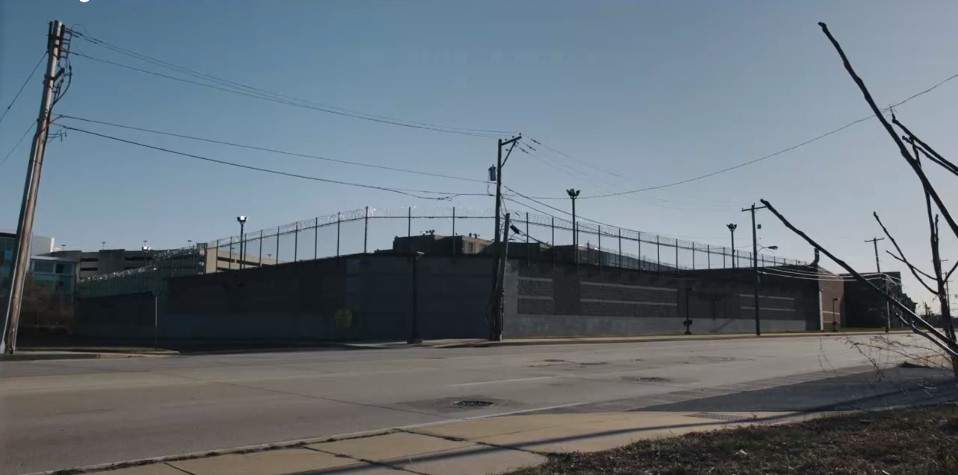
This is the question Major* asks himself as he recalls the room filled with correctional staff, volunteers, and community partners at State Correctional Institution (SCI) Chester’s Volunteer Appreciation Dinner on October 23, 2025. At 75 years old, Major is one of more than 11,000 people in Pennsylvania Department of Corrections custody who are over the age of 50. Major has been incarcerated for 40 years. For two decades of his incarceration, he lived in restrictive housing due to the perceived threat he posed to the prison’s security. Now he is at SCI Chester, a prison known both for its proximity to Philadelphia and for its innovative Little Scandinavia rehabilitative unit. And on this night, Major stands on stage as a respected collaborator.
[*Editor’s note: At the request of the Department of Corrections, SCI Chester residents in the post go by their first names only.]
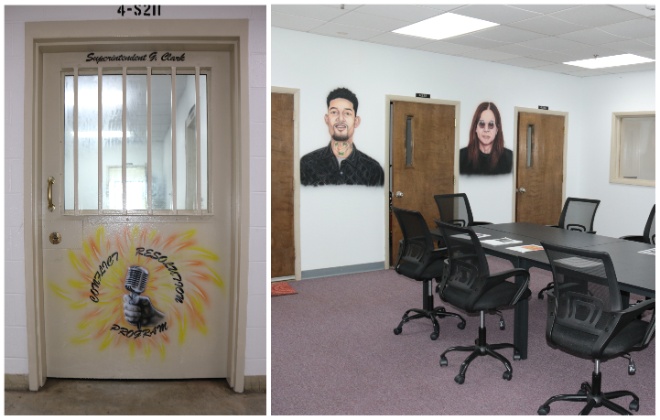
Beside him stands Superintendent Gina Clark, one of the Pennsylvania DOC’s more experienced and progressive leaders. Together, they were introducing a new initiative at SCI Chester: a Conflict Resolution Program (CRP) designed to reach younger men in the facility with a creative and practical space for growth.
I am in the crowd amidst familiar faces. As the former director of Eastern University’s Prison Education Program and current administrative director of the Penn Prison Education and Reentry Initiative, I am no stranger to the commitment and intellectual capacity in the room, but I am just getting to know Major as he helps organize and facilitate the workshops, recruiting participants and ensuring we have our supplies. On some days, he walks in fatigued, with a slight limp, due to medical complications with his leg, shaking his head and saying, “I went through hell to get these photocopies.” While he is not joking, we all laugh, because no one misses the note of pride in his tone and slight smile as he moves to get stuff done.
Major is no stranger to leadership. He is known throughout the state for developing the Senior Life Enhancement Program (S.L.E.P.), which supports aging incarcerated people and has become a model of peer-driven care and mentorship. Superintendent Clark, whose career reflects decades of service to the Commonwealth, recognized something essential in Major’s work: a reason to trust what he brings to the table.
The CRP they are building together represents a shift in how rehabilitative programming occurs. Meeting in two refurbished music rooms — and with aspirations of becoming a dedicated housing unit — the program offers workshops in hip hop, podcasting, advocacy, design thinking, and negotiation. These are not extracurriculars aimed at “killing time”; they are intentional entry points for reflection and transformation.
As Clark explains, one goal is to help young men “find a thing” — something that wakes them up, keeps them focused, steers them away from violence and substance abuse, and helps them imagine a future beyond prison. Another is to bridge generational divides and improve communication, she says, between “Boomers and Gen X and Millennials and Gen Z.” Prison is a total institution and time is served intergenerationally. Without intervention, generational differences can spark conflicts in an already tense environment, arising from false attributions and misinterpreted social cues. The CRP aims to spark creativity and facilitate communication.
To share one example, over the course of a 6-week workshop called “The Directions of Hip Hop” taught by Rev. Dr. Charles Howard and Daina Richie-Troy, two professors from Penn’s Department of Africana Studies, the early days of hip hop were recalled alongside the origins of contemporary genres like drill. Young participants could freely say “that sounds corny” and older participants could freely offer wisdom only hindsight can teach. In one session a young person named Jahjaun wowed the class by sharing an original rap.
Creating a beat on the table and singing the chorus, Jahjuan boldly prefaced the performance with the claim, “the song captures everything we’re talking about.” Another session, an older participant meticulously described the iconic drum machine Roland TR-808 as if it were in the room, and detailed how he used to make beats for a major record label during what he called the “Golden Era” of hip hop. In both cases, the room was awed by capacity and knowledge.
The CRP’s influence extends beyond SCI Chester. It has the endorsement of two globally recognized voices who served time in the same prison: Philadelphia rapper Meek Mill, an outspoken advocate for criminal justice reform and inspiration behind REFORM Alliance, and YouTuber Wallo267, whose messages of accountability and growth reach millions daily. The CRP is also supported by the University of Pennsylvania through the program I am developing which brings faculty from across Penn’s schools — including Wharton, Carey Law, and Perelman Medicine — into the facility.
For Major, the moment onstage prompted reflection. What is the basis of this collaboration?
“Trust. Mutual respect,” he shares. “A leader who sees value in what we’re doing.”
Those words may sound familiar, but behind prison walls, they are alien. The aims of Corrections are often described as the “three Cs”: care, custody, and control. Care is a challenge. Trust and respect do not start with “C.” So, explains Derrick, 62, an incarcerated colleague of Major’s, when incarcerated people attempt to build programs, their efforts are often misread through a punitive lens. “Sometimes efforts are mistaken for arrogance,” he says.
That hasn’t stopped them. “If we didn’t do these things,” Derrick asks, “who would?”
The CRP is a novel program seeking the “prev-entry” of conflict from a basis of trust and mutual respect. Should it develop into an experimental housing unit, like the Little Scandinavia Unit, we should not neglect its birth and this stage.
What makes the CRP possible is leadership that welcomes collaboration. As Major notes, “Superintendent Clark could shut this down in a second if she wanted to. Instead, she sees the value — and she wants to make a difference and collaborate.”
Such collaboration is worth celebrating. The effects of programs like CRP don’t remain inside prison. As 95 percent of those who are incarcerated return home, innovative programs — evaluated by a variety of stakeholders including the incarcerated people they profess to serve — promise safer communities, lower costs, and stronger reentry outcomes.
As Dr. Leeland McGee, a former judge and current professor at Penn’s Graduate School of Education, recently reflected on teaching in the CRP: “Old debates about whether incarceration is for punishment vs. rehabilitation was a false choice and has long since been abandoned. The policy and civic commitment has fallen squarely on the side of punishment.” The goal, according to Dr. McGee, ought to be “‘prev-entry’ — preventing marginalized young men from heading down a path towards incarceration, and facilitating healthy re-entry into society as contributors.”
The CRP is a novel program seeking the “prev-entry” of conflict from a basis of trust and mutual respect. Should it develop into an experimental housing unit, like the Little Scandinavia Unit, we should not neglect its birth and this stage. But before applauding Major, as we should, it is necessary to name the elephant in the room. Pennsylvania’s incarcerated population continues to age and healthcare costs rise. Prisons are not designed to care for the elderly. Major and Derrick, like many others, desire to continue serving their communities, but should do so at home, through compassionate release and other sensible, humane policies that avoid cruel and unusual punishment and abide by standards of adequate medical care.
Pennsylvanians should applaud the Conflict Resolution Program and not neglect its basis. Innovation, trust, and respect are not foolish gestures, they form the basis of smart and ethical public investment. If we don’t support these moves, who will?
John P. Fantuzzo, Ph.D., is Administrative Director of Prison Education at the University of Pennsylvania’s Civic House, where he leads the Penn Prison Education and Reentry Initiative (Penn PERI). Formerly director of Eastern University’s Prison Education Program at SCI-Chester, he has over 15 years experience in higher education and justice and publishes on topics in philosophy of education, including human dignity and prison education.
The Citizen welcomes guest commentary from community members who represent that it is their own work and their own opinion based on true facts that they know firsthand.
 MORE ON BETTER PRISONS FROM THE CITIZEN