



While Americans across the country deal with the consequences of the federal government shutdown, residents of Pennsylvania are being hit with a double blow.
PA has been without a state budget for over 100 days — and remains the only state currently operating without a budget.
As a political scientist at Penn State who studies state politics and policy, I see how PA’s budget impasse has ripple effects that are compounded by the current budget problems in Washington, D.C.
Let’s look at the present budget problems in PA and what we can learn from past battles over the state budget.
A double crisis
Double government budget crises, like the one PA faces now, are rare. One reason is that 46 states, including PA, begin their new fiscal year on July 1. The federal government’s fiscal year begins on October 1. Even a state like PA, where the state budget has been late for eight of the last 10 years, would have to be very late in passing a budget for it to potentially coincide with a federal budget impasse. And, of course, federal government shutdowns do not happen all the time.
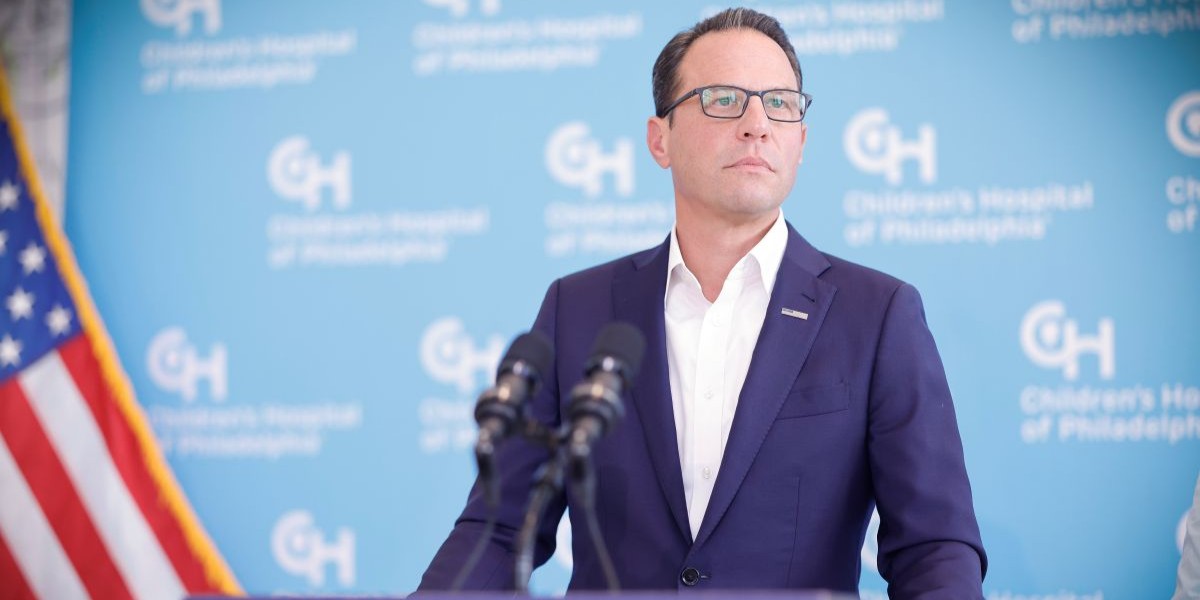
PA’s Democratic Governor Josh Shapiro faces a delicate political environment in Harrisburg — as he has since his first budget in 2023. The Democrats control the state House by a single seat, whereas the Republicans have a comfortable majority in the Senate.
The parties have been debating over the last several budget cycles how to handle funding surpluses — much of which came from Biden-era legislation like the Infrastructure Investment and Jobs Act — and when and how to deal with the inevitable end to those surpluses.
This year, the two sides are far apart on their views of the proper spending level.
The Democrats in the House passed a $50.3 billion spending plan, but Senate Republicans want to keep state spending flat at $47.6 billion. The two sides have clashed over proposals surrounding school vouchers, marijuana legalization and more.
As for the federal government, Republicans have a trifecta — control of the White House, Senate and House of Representatives — but do not have the 60 votes in the Senate required to overcome a filibuster. Democrats have dug in over reversing cuts to healthcare from the earlier passed “one big beautiful bill” and expiring Obamacare subsidies.
There is little sign of an immediate end to either impasse.
In PA, there is growing frustration on both sides about an inability to compromise. Nationally, Republican House Speaker Mike Johnson has speculated that this may end up being the longest federal government shutdown in history. In neither case, though, does there seem to be a great deal of urgency in coming to a compromise.
Effects on Pennsylvania
These dual crises are affecting Pennsylvanians in many ways. The state government continues to function even without a budget, but counties, school districts and nonprofit organizations that rely on state funding are being forced to make difficult operating choices.
Counties like Westmoreland and Northampton are beginning the process of furloughing employees. School districts are taking out loans, freezing hiring and deferring spending. The state already owes school districts more than $3 billion in missed payments for the past three months.
PA has been without a state budget for over 100 days — and remains the only state currently operating without a budget.
The social safety net is also fraying as social service organizations such as rape crisis centers and mental health providers are also expending reserves, taking out loans and furloughing employees.
Then comes the federal shutdown.
Military families nationwide have been hit particularly hard, with many turning to food pantries to help meet their needs. The recent money maneuvers at the Department of Defense to pay active-duty and activated National Guard and Reserves personnel is temporary. The Commonwealth also has the eighth highest population of federal civilian employees; more than 66,000 are going without pay.
Services like food banks are especially vulnerable in this situation, as they are seeing greater demand — which may increase due to federal workers going unpaid — but rely on both the state and federal governments for subsidies. Just this week, it was announced that Pennsylvanians buying healthcare through the state’s Affordable Care Act marketplace for 2026 should expect a 22 percent increase in premiums on average. Part of that increase is due to expectations around the expiring Obamacare subsidies at the center of the Democrats’ demands in this shutdown.
All of these forces are coming together to pinch PA residents.
Echoes of the past
While the compounding pain of the federal shutdown is unique, long budget delays in PA are not.
In 2023, Shapiro’s first budget was not fully passed until December 14. That budget was fundamentally delayed by the acrimonious implosion of a deal on school voucher spending between the Governor and Senate Republicans. The budget negotiations ended after some horse-trading on specific programs, like removing the popular Whole-Home Repairs Program started during the Covid pandemic but adding funding for lead and asbestos abatement in schools.
The difference between then and now, however, is that back then, the Governor and General Assembly agreed on the overall budget, but typical bargaining was needed to get the votes needed to pass the spending bills after the voucher blowup. This time, the parties are almost $3 billion apart in what should even be spent.
In the end, however, both PA and the federal government will pass budgets, and I expect that each will be the result of protracted negotiations over multiple spending items, as Americans have seen in the past. The question is: How much pain will citizens, nonprofits and local governments face in the interim?
Daniel J. Mallinson is Associate Professor of Public Policy and Administration at Penn State.
This article is republished from The Conversation under a Creative Commons license. Read the original article.
The Citizen welcomes guest commentary from community members who represent that it is their own work and their own opinion based on true facts that they know firsthand.
 MORE ON THE DUAL GOVERNMENT CRISES