



Another cyclist was killed here in Philadelphia last week. The driver was speeding. The rider never had a chance.
The victim has now been identified as a 67-year-old cycling advocate. That sad irony — that someone who spent his life focusing on rider safety lost his life to the very dangers he fought against — should hit us all like a gut punch.
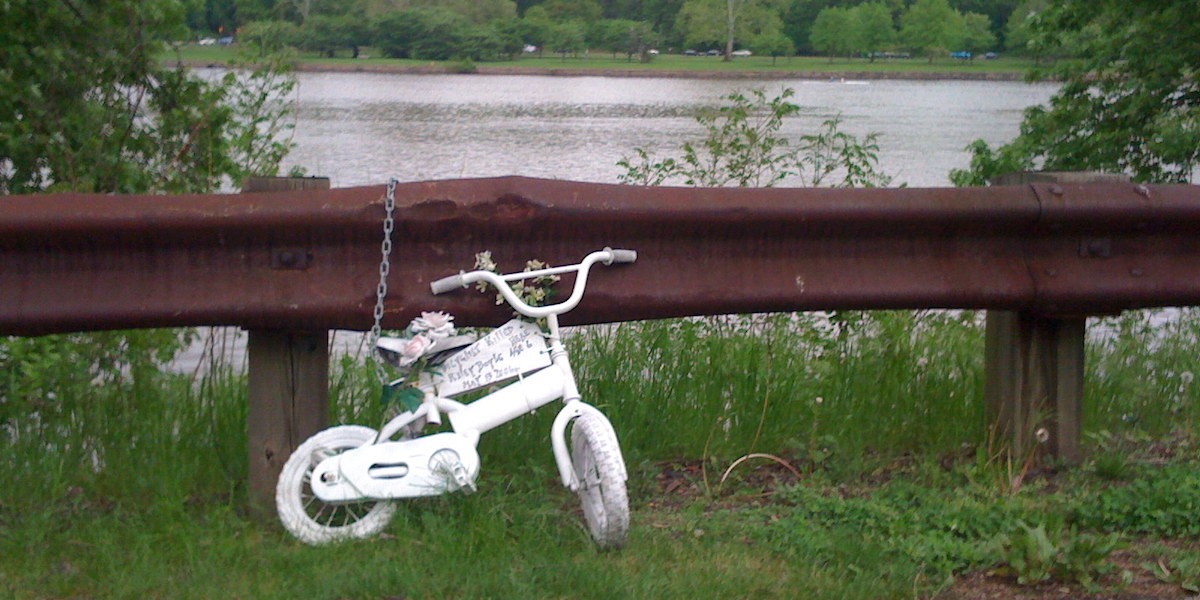
It is the second high-profile bike fatality in our city in the past year, but certainly not only the second bike fatality, and it should stop us all in our tracks. But too often, tragedies like this fade quickly from the headlines. They become another statistic, another ghost bike chained to a lamppost, another family shattered.
For me, this isn’t abstract. Four years ago, I was badly injured in a bike crash. I was riding my bike in a residential community when a car plowed me into the asphalt. As a lawyer, I have represented people who were far worse off than me — individuals left with life-altering injuries, families left behind after preventable deaths. I carry those stories into every courtroom. I know firsthand the experience of photophobia, post-concussive migraines, social fog and PTSD, and can describe them all in painstaking detail. While, fortunately, I recovered, many do not.
Now, as Philadelphia kids return to school, it’s not just cyclists we need to think about. It’s every child walking, riding, or bussing their way through streets designed to move cars quickly, not people safely.
A tale of two cities
Philadelphia is a paradox. We are a city that prides itself on walkable neighborhoods, on corner stores and rowhomes, on the idea that you can live most of your life within a bike ride. But the reality on our streets tells another story.
Infrastructure improvements have been slow, piecemeal and rarely enforced. Protected bike lanes, while present, are often ignored by drivers. Intersections remain dangerous for pedestrians and cyclists alike. Enforcement of speeding and reckless driving is scarce. The result? Vulnerable road users — children on their way to school, parents running errands by bike, delivery workers hustling to make a living — trying to follow the rules, but the rules aren’t followed or enforced by others.
The data is sobering. Nationally, bike fatalities have climbed steadily in the past decade. Children and teenagers are among the most at-risk, particularly in urban areas where traffic volume is high but safe infrastructure lags behind.
The human cost
Numbers tell part of the story, but the human cost is harder to quantify. In my practice, I’ve sat across from parents describing the moment their child was struck on a bike ride home from school. I’ve heard from seasoned cyclists who will never ride again because the injuries were too severe. I am involved in the lives of families who lost their loved ones to failures in enforcing cycling rules by others.
We need to stop treating bike fatalities as random tragedies and start treating them as what they are: the natural outcome of a system that prioritizes cars above people.
And now, we add another name to the list: a man who didn’t just ride bikes but worked tirelessly to make biking safer for others. His death is not just a personal tragedy. It is a civic failure.
A bike accident is not just “an accident.” It is often the predictable result of failures: failures by cities not to invest in safe infrastructure, by lawmakers not to prioritize vulnerable road users, by companies designing traffic systems that are confusing to most, and by drivers who are on cell phones and constantly distracted.
Back to school, back to reality
This moment — September, when schools reopen and the streets fill with yellow buses and young riders — is the time to talk about safety. Bus drivers and cyclists share the same narrow corridors. Drivers rush to get to work on time. Kids ride and walk to school, learning traffic rules for the first time.
If we can’t get serious about bike safety now, when our children are the ones most at risk, then when will we?
-
- Protected bike lanes that are physically separated from cars, not just painted lines that are easy to disregard.
- Traffic calming measures like speed humps, narrowed lanes, and raised crosswalks near schools.
- Vision Zero enforcement, holding drivers accountable for speeding and reckless behavior.
- Education campaigns in schools teaching kids bike safety — and reminding drivers to expect cyclists on the road.
- Just as importantly, bikers themselves must take responsibility for following the rules of the road, signaling properly, and sharing space with cars, buses and pedestrians.
- Collaboration between bus systems and bike advocates, ensuring routes and stops don’t create choke points of conflict.
As our kids return to school this fall, let’s commit to more than backpacks and sharpened pencils. Let’s commit to making sure they can walk, ride, and bus to class without fear.
Why the courts matter
The courtroom is often the only place where real accountability happens. When a cyclist is injured or killed, lawsuits can shine a light on negligence — by drivers, by companies, even by municipalities that failed to act. Verdicts can push individuals, insurers, and corporations to take safety more seriously.
But lawsuits, important as they are, are not prevention. They are effective and often necessary. True prevention requires policy and infrastructure built to value human life over speed and convenience.
A call to action
This month’s death was not inevitable. Neither were the ones before it.
We need to stop treating bike fatalities as random tragedies and start treating them as what they are: the natural outcome of a system that prioritizes cars above people. Bike riders have as much right to be on the road as vehicle operators — but with that right comes responsibility. Everyone, whether behind a wheel or on two wheels, has to play their part in making the streets safe.
As our kids return to school this fall, let’s commit to more than backpacks and sharpened pencils. Let’s commit to making sure they can walk, ride, and bus to class without fear. Let’s make sure Philadelphia lives up to its promise as a city for people, for the safety of those within it.
I know the sound of impact. I know the pain of recovery. I know the stories of families who will never see their loved one come home again. That is why I write this. Because we can — and must — do better.
The streets belong to all of us. And all of us deserve to survive the ride; I fortunately did.
Sarah Filippi Dooley is an attorney with Fulginiti Law. She was honored on Pennsylvania’s Rising Stars list, and ranks among the top 2.5 percent of young attorneys statewide.
The Citizen welcomes guest commentary from community members who represent that it is their own work and their own opinion based on true facts that they know firsthand.
 MORE ON MAKING THE STREETS SAFE TO BIKE AND WALK