



When Tierra Agnew was 16, she went to her school’s health resource center with what she thought was a stomach bug — and instead learned she was pregnant.
Health resource centers are more than a school nurse’s office. Staffed by nurse practitioners or physician assistants, these centers provide contraceptive education and STI and pregnancy tests, treat asthma attacks and other emergencies, and make dental and primary healthcare referrals as needed. Basically, they’re in-school urgent care.
The center at Agnew’s school, Building 21, connected her with an OB-GYN who cared for her throughout her pregnancy and son’s birth. The center also counseled her on contraception, offering condoms and educational materials about the pros and cons of different birth control methods.
“They have everything you need going in. They tell you how the body works,” Agnew says. “If we feel like we’re not feeling good, and we think something’s wrong, and we’re at school, we can go to them, and they’ll go through it with us, and let us know and tell us what we can do about it.”
In a city where schools have struggled on and off with nursing shortages and where one in five residents don’t have primary care physicians, school health clinics provide critical services to students.
“This is healthcare, and healthcare is life and death.” — Kendra Brooks, City Council
Now a senior, Agnew worries this level of care will soon become unavailable to students like her. Last year, the Trump administration withheld Title X funds from any publicly-funded clinic that provided family planning as part of their healthcare services. As a result, earlier this year, the clinic at Building 21’s Title X funding had to pause for four months, and became unable to restock condoms, pregnancy tests or other critical supplies. The funds were eventually unfrozen, but the clinic at Building 21 couldn’t order condoms, pregnancy tests and other critical supplies during that period. Other school-based health clinics in the state had to shorten their hours due to the pause.
Many are worried they may lose Title X dollars entirely this year. The Trump administration has proposed eliminating the program as part of ongoing budget negotiations while quietly issuing guidelines to Title X clinics encouraging the use of less reliable, less safe, “natural family planning” methods, like ovulation tracking.
Last year, Trump’s Big Beautiful Bill pulled Medicaid funding from any organization that offers abortion services and receives more than $800,000 in reimbursements — a redundant move, since in 1997, the Hyde Amendment already banned the use of Medicaid dollars for abortions except in cases of rape, incest and endangerment of the mother’s life. But to providers, the message was clear. “I think we’ll continue to see the Trump administration continue to find very cruel ways to decimate access,” says Signe Espinoza, speaking on behalf of both Planned Parenthood Pennsylvania Advocates and Planned Parenthood Southeastern Pennsylvania.
Closer to home, last year, Mayor Parker cut the $1.2 million the City had been using since Roe v. Wade was overturned to help cover reproductive healthcare from the annual budget.
The situation could, however, improve this year, if City Council’s champions of reproductive healthcare have their say.
What are the gaps in Philly’s reproductive healthcare landscape?
Philadelphians have long struggled to access reproductive healthcare. Between 1997 and 2019, 14 out of 19 of the region’s maternity facilities closed their doors. Bryn Mawr’s Lifecycle Birth and Wellness Center closed this year. DelCo’s Crozer Health system shuttered in 2025. Meanwhile, OB-GYNs continue to go out of business.
Even if Philadelphia had enough providers, there would still be a need for sexual health education, which is not mandated in Pennsylvania public schools. Students I spoke with said that lessons about reproductive health were often confined to a single class session — if at all.
“When people can’t access reproductive health care, they don’t have control over their lives. We don’t have to stand for it as the City of Philadelphia.” — Katie Monroe
“At my school, you’re only permitted to take one-and-a-half credits of health class, and sex ed is integrated with that,” says Jazeera Bynum, a senior at Academy at Palumbo, who describes her experience as the typical condoms-on-bananas lesson … and not much more. “When it comes to information about sex — since we can’t really gather it from school — people go online, and there’s a lot of misinformation.”
Some critics argue that federal and local tax dollars shouldn’t go toward healthcare, but a lack of access contributes to some worrisome public health trends: Philadelphia is the city with the nation’s second highest rate of sexually transmitted diseases and a maternal mortality rate at 20 per 100,000 live births, 2.6 percent higher than the national rate.
Many of these issues predate current funding challenges, so losing critical dollars is “unsettling our already fragile system,” says Julie Cousler, who directs the PA School-Based Health Alliance, a nonprofit that supports school-based clinics in the Commonwealth.
Planned Parenthood Keystone, which covers Bucks, Lehigh, Dauphin, Berks, York and Luzerne counties, announced that they’d stop providing most services to Medicaid recipients in February due to recent cuts. Among sexual and reproductive health care providers, the common feeling is, again, that more cuts are coming.
Even organizations that have primarily operated with private funding are in jeopardy. The Philadelphia Sexual Assault Response Center (PSARC), previously funded by Hahnemann University Hospital and now supported by Drexel University, employs Sexual Assault Nurse Examiners to administer rape kits for those 16-years-of-age and older in Philadelphia and provides trauma-informed care to survivors of sexual assault. PSARC is the primary source for this care in Philly.
PSARC receives $1,000 per patient in state funding, but that doesn’t cover the costs of operating the clinic, which is open 24 hours a day. The program is currently operating at a deficit; unless help arrives, it will close on June 30.
In the past, Drexel had made up gaps their funding, but with the university dealing with its own fiscal issues, it’s hard to imagine they’ll come back to the rescue. (A Drexel spokesperson declined to make someone from PSARC available for an interview.) As a result, PSARC is going to a funder that’s never helped before, requesting $300,000 from the City to keep their doors open.
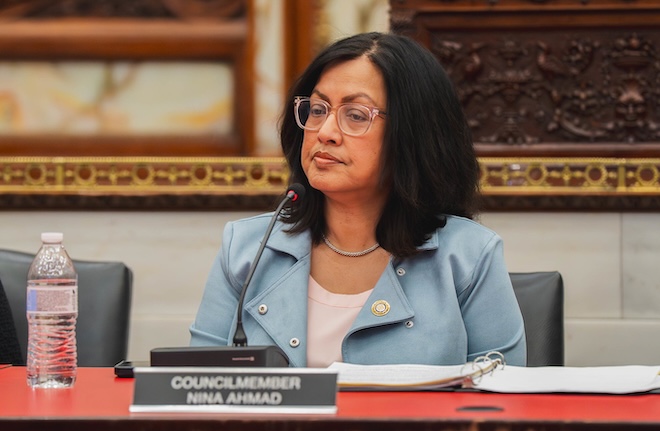
In March, Councilmember At-Large Nina Ahmad called a City Council hearing on Philly’s reproductive healthcare landscape. At the hearing, Lila Slovak, director of the Philadelphia office for the Women’s Law Project, said, “We are on the precipice of really expanding gaps in the ways that we’re servicing the needs of sexual assault survivors here in the City. Survivors of sexual violence are a frequently overlooked aspect of reproductive health and justice.”
Families falling through the cracks
Dr. Diana Montoya-Williams, a Children’s Hospital of Philadelphia neonatologist and Penn professor of pediatrics, points out that cutbacks to reproductive healthcare come at the very worst time for immigrant families. New Medicaid eligibility restrictions prevent refugees and asylum seekers in the U.S. from being insured through the program, which leads people to delay preventative care services, and then seek more costly emergency services.
She says a lack of access to care is intersecting with fears over increased immigration enforcement, resulting in a “chilling effect,” where immigrants, and especially mixed-status immigrant families, avoid healthcare and federal benefits they may be eligible for because of fears over deportation and family separation.
For pregnant adults, these delays can result in myriad complications, including higher rates of maternal anemia, where mothers don’t have enough healthy red blood cells, and lower birthweight for babies born to Latina mothers. It’s also emotionally devastating: Montoya-Williams knows of families whose fears about immigration enforcement have kept them from visiting their babies in the NICU.
She is, she says, “watching families start to fall through the cracks.”
Small, trusted community-based health organizations — like Planned Parenthoods, doulas, and school health clinics — have historically stepped in to help educate families about shifting eligibility requirements and to provide care when families might be anxious about or unable to afford care from a major health system. If they can’t afford to operate, already vulnerable communities will have fewer places to go.
Dayle Steinberg, president and CEO of Planned Parenthood Southeastern Pennsylvania, says, “Our patients don’t come to us for political reasons. They come to get confidential, high quality care, and we’re committed to keep providing that.”
Young people, too, are likely to experience major impacts if clinics close. When Title X funding was restricted in 2019, 1.8 millions Americans between age 15 and 17 were left without access to confidential healthcare services, CHOP doctors note. Even when funding was restored in 2022, many small clinics struggled to reestablish care.
The same impacts can happen after shorter reprieves from funding, like the nearly four-month period when some local organizations lost their Title X funds last year, says Ayana Bradshaw, president and CEO of AccessMatters, a nonprofit public health organization that helps run school-based Health Resource Centers, including the one at Building 21. She says they saw about 5,000 fewer patients across their healthcare network as a result of the freeze.
“You feel those impacts for a longer period than just the four month withholding period,” she says. “It was devastating.”
Steinberg says local Planned Parenthoods will continue seeing Medicaid patients free of charge, even though they’re no longer receiving reimbursements, resulting in $3.1 million in losses, as those insured via Medicaid make up about one-third of their patients. She warns that the model is unsustainable long-term. Planned Parenthood has turned to donors to close some of these gaps, but, while “donor response has been really, really strong,” Steinberg says, “it’s not possible for philanthropy to replace” all of the funds lost.
A call to fund critical services now
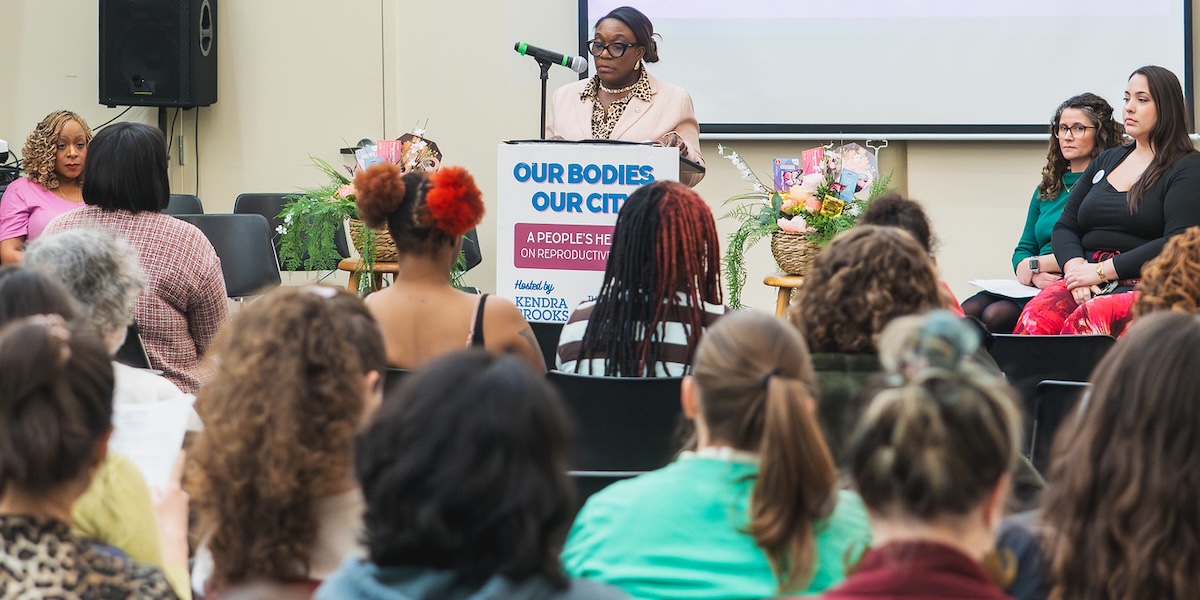
In March, Philadelphia’s Reproductive Freedom Task Force and At-Large City Councilmember Kendra Brooks organized the “People’s Hearing” three days after Council’s hearing on reproductive care. The purpose: Galvanize more community members to ask the City to restore, and maybe even increase, funding, in time for budget talks.
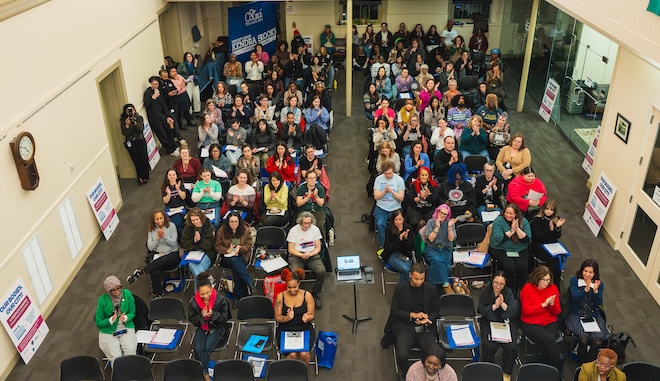
The cause resonated: The room was packed — so much so, volunteers had to turn away latecomers — and not just because it was planned at a convenient evening hour, and provided food and childcare. Among the speakers was Agnew, who shared the story of her pregnancy, the invaluable help she received at Building 21’s Health Resource Center, and her hope for the future of reproductive healthcare in Philadelphia.
South Philadelphia resident and Planned Parenthood patient Katie Monroe came to support the cause. “When people can’t access reproductive health care, they don’t have control over their lives,” she said. “We don’t have to stand for it as the City of Philadelphia.”
She, along with other organizers, encouraged folks to come to City Hall on April 9 for a lobby day consisting of a rally, a press conference with Brooks, At-Large Councilmember Rue Landau, and 3rd District Councilmember Jamie Gauthier, and opportunities to talk to members of Council.
“Having that funding restored would change so many lives and open up so many doors to many different women.” — Tierra Agnew
For both Brooks and Nina Ahmad, these issues are personal. Brooks remembers going to Planned Parenthood as a teenager to get pamphlets on sexual health to share with her friends. Ahmad grew up during the War of Liberation for Bangladesh, when 250,000 women and girls were sexually assaulted.
Brooks says she’ll continue to focus on pushing for City funding. “Funding cuts to these services will be detrimental to communities,” she says. “This is healthcare, and healthcare is life and death.”
Ahmad spoke with Governor Josh Shapiro about her concerns for PSARC and worked with Mayor Parker to secure $300,000 for PSARC for this year. That doesn’t solve for future years, however, and PSARC advocates say they’ve consistently been operating on a deficit. Ahmad has yet to identify future funding sources.
Nor does that $300,000 solve for the $1.2 million organizations like Planned Parenthood lost in City funding last year, the cuts they’ve faced as a result of slashes to Medicaid, or the gaps Title X clinics — which haven’t received municipal support in the past — face now that the federal government is attacking their budget dollars.
Ahmad says she’s taking a “fine tooth comb” to the budget during hearings to look for any extra dollars for the cause and is seeking other funding solutions, including philanthropic contributions to the cause. She’s also working on an interactive map to help people find reproductive health resources — and is meeting with Penn to help find a student to develop it. Last year, she introduced and passed legislation offering workplace protections for those in menopause.
“We’re galvanized,” Ahmad says. “With the cuts coming in 2027 to Medicaid, our health centers are going to be very overburdened … whether it’s reproductive health care or healthcare in general, all of us are going to be suffering.”
At times, these efforts can feel to organizers like plugging a boat full of holes, hoping it won’t sink. But advocates who believe reproductive health should be a priority understand they have to start somewhere. “Having that funding restored would change so many lives and open up so many doors to many different women,” Agnew says.
 REPRODUCTIVE CARE IN A POST-ROE UNITED STATES