


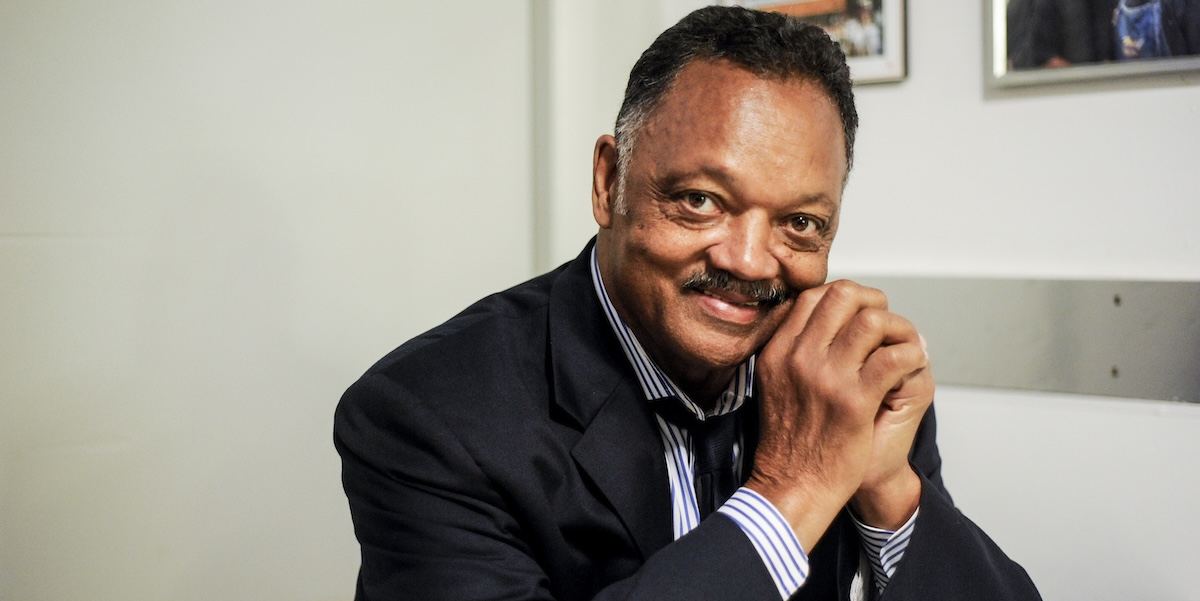


I must confess to you that I am sad. I wept tears, deep tears, writing this eulogy. A man I have known and loved for nearly four decades has perished. A few days after his death, on February 17, I saw him, lying peacefully, quietly, in his glass covered casket. Eyes that once burned with incurable mischief were now closed. Fingers that often punctuated his points by slicing the air or rapped the pulpit after consolidating as a fist were now frozen in place. Lips which I witnessed lovingly kiss his sons on their lips because he loved them and was unafraid to show it were now permanently closed. And the height that towered and impressed was now laid horizontal for us to view his once formidable frame and his handsome face.
I want the world to take more notice, but it is distracted by irritating trolls on social media and demagogues flexing their imperial muscles in destructive displays of war. It reminds me of the 1938 poem by W.H. Auden, “Musée des Beaux Arts,” where he brilliantly shows how human beings ignore the suffering of others even when it happens right in view of their ordinary lives. I want to tell the world just how important he was, just how courageous and majestic he often stood when others cowered — whether insisting that Palestinians deserve our compassion and support, or that Black South Africans are human and deserve to be free. I want to tell the world about his wicked and sometimes brutal humor, but then, those on the front line of truth against lies and love against hate often develop thick skin and gallows humor.
I want the world to know that he was hardly the self-aggrandizing caricature drawn by some critics. I saw him work from way early in the morning and then not retire until late at night. I saw him get so exhausted that he had to repair in a hospital room, not unlike his legendary mentor, Martin Luther King, Jr., but in that icon’s case, depression besieged his mind and ravaged his soul. I saw him give love, which in his case, was attention, to poor White folks as much as he did to his Black brothers and sisters. I saw him love Black folk with a splendidly incautious love that kept him going until the day he died. He also knew about the withdrawal and withholding of love by our own folks.
For the sake of his people and this nation, even as we confront our toughest days, we must fight, as he often said, to “keep hope alive.”
“Dyson, one day some Negroes gonna understand that they got more in common with some White folks than they realize,” he said to me once.
“What’s that Reverend?” I asked.
“They both can’t stand Negroes.”
That recognition is love from him too, yes, a tough love, but a nagging, tenacious love no less.
I want the world to know that those were not crocodile tears that he cried at Grant Park the night Barack Obama won the presidency. Whatever difference he had at times with our first Black president, Reverend Jackson understood that when Obama won it was the result of centuries of struggle, and that victory was made possible in large part by the efforts of the man once known as the Country Preacher. He cried when we watched The Five Heartbeats together, and we drank in the husky melody of Marvin Junior, the lead singer of The Mighty Dells who supplied the film’s soundtrack. Reverend Jackson loved music; when we were in the car, he’d play the cassette tape, then the compact disk of his favorites, including Ray Charles and Aretha Franklin. We sat once on the front row to catch the performance of Frankie Beverly and Maze. Reverend Jackson admired the thumps and licks of the lead guitarist and took great delight in his musical gifts. And the musicians loved him and were drawn to him. We spent a lovely night in the lobby of a London Hotel chatting amiably with Patti LaBelle, Anita Baker, Tracy Chapman, Terence Trent D’Arby and the late Natalie Cole.
I think the world knows he was unapologetically Black, that he had unmesswithable Blackness, incontrovertible Blackness, as Black as the food he ate, as Black as the people he worked tirelessly to lift.
The world should know he was one of the smartest human beings in the nation. He didn’t have the formal polish of Dr. King, but he was an organic intellectual with astonishing range and depth. He was impossibly curious about the world and unrelenting in his desire to conquer ignorance with knowledge, whether it came from the university or the streets. He offered me a bit of advice that came as a warning about how to communicate: “If you say something I can’t understand, that’s a failure of your education, not mine.”
Let me say something you can understand about the character and scope of a colossal life, as characterized by these words from the New International Version of Isaiah 11: 1, “A shoot will come up from the stump of Jesse; from his roots a Branch will bear fruit.” And from the World English Bible, “A shoot will come out of the stock of Jesse, and a branch out of his roots will bear fruit.”
Allow me to briefly reflect on the subject, “A Eulogy for Jesse.”
I.
“Where are you heading, Reverend?” I asked Jesse Jackson as we sped to Chicago’s O’Hare airport in the spring of 1990. I was in the backseat, tape recording him and taking notes as I worked on his book.
“I’m heading to Harvard,” he casually replied.
“What are you doing there?
“I’m participating in a debate.”
“What’s the topic, and who are you debating?”
Without missing a beat, he offered this delightfully icy reply.
“It really doesn’t matter.”
My man. Our man. So full of Black self-confidence. So full of Black masculine swagger. His body vibrated with a necessary and beautiful Black bravado. It really didn’t matter to him because his preparation was thorough, his knowledge, vast; his analysis, keen; his rhetorical skills, unexcelled.
I first met Reverend Jackson briefly in 1984 on Easter Sunday when he was 42 years old and making his historic first run for the presidency. He had come to Knoxville College in Tennessee where I began my higher education journey in 1979, when I was 21 years old. Although I had moved to a different college, I was honored that morning to say a prayer on the program. The six feet three inch charismatic leader cut a dashing figure as he offered a stirring sermon criticizing President Reagan’s military budget, with its priority on missiles and weapons, arguing that the document represented a “protracted crucifixion” of the poor.
“We need a real war on poverty for the hurt and the hungry and the destitute,” Reverend Jackson thundered. “The poor must have a way out. We must end extended crucifixion, allow the poor to have a resurrection as well.” He declared that people “want honest and fair leadership.” He said, “The poor don’t mind suffering,” but “there must be a sharing of the pain.” Reverend Jackson drew a direct line between Christ’s crucifixion and the predicament of the poor when he cried out that the “nails never stop coming, the hammers never stop beating.”
“If you say something I can’t understand, that’s a failure of your education, not mine.” — Jesse Jackson
I met him in a more meaningful way in 1989 when I taught his namesake son at Chicago Theological Seminary and soon thereafter signed on to write his autobiography, which sadly we never finished. I had not yet written a single book, but Reverend Jackson took a chance on me. I traveled extensively with him in the nearly 40 years I knew him well. Just two months after Nelson Mandela’s release in February 1990 from decades unjustly locked away in a South African prison, I flew with Reverend Jackson to greet Nelson and Winnie Mandela in the small London flat of fellow freedom fighters Oliver and Adelaide Tambo.
I flew with him to San Antonio when he fought for the rights of White workers. I accompanied him in the summer of 1991when he returned to Memphis at the site of Martin Luther King’s death at the Lorraine Motel in April 1968, now transformed into the National Civil Rights Museum. Reverend Jackson also spoke at the citywide worship service to launch the week’s activities at Mason Temple, the very spot where Dr. King offered his last, immortal, and greatest speech, “I See the Promised Land.” It was Reverend Jackson and Reverend Ralph Abernathy into whose arms King deposited himself after speaking his immortal last will and testament. That day in 1991 Reverend Jackson couched the museum in terms of the Christian calendar with its liturgical seasons of suffering and celebration.
“To not have this museum in Memphis would be like the Christians celebrating Christmas and never celebrating Easter,” Reverend Jackson declared to a thousand congregants. “Memphis, his last sermon. Memphis, the vision of the mountaintop. Memphis, the last march. Memphis, the last interruption. Memphis, the last breath,” Reverend Jackson rhythmically pounded out his point.
Now, we mourn the passing of another great man who has taken his last breath and yet breathed so much life into our people and our country and this civilization. The death of the Reverend Jesse Jackson sadly ends one of the most monumental and consequential American lives. Jesse Jackson was born in 1941 in segregated South Carolina. He was ordained as a minister in 1968 by Reverend Clay Evans at Chicago’s Fellowship Missionary Baptist Church where the ordination sermon was delivered by the legendary whooping evangelist and Aretha’s Daddy, C. L. Franklin.
II.
His star first shone brightly that same year, in the shadow of Dr. King Jr.’s ghastly assassination. Reverend Jackson, Dr. King’s ambitious apprentice — the secure and protected kind of apprentice, not one who was victim to unceremonious firing by a noxious narcissist and a nerdless nitwit — was 26, the same age Dr. King had been when he rose to prominence. Reverend Jackson captured the nation’s attention for nearly 60 years with his tireless social activism, his pioneering political performances, and his dazzling oratory. The astonishing range of Reverend Jackson’s influence can be measured in the fact that neither the Reverend Al Sharpton, our greatest contemporary Black leader, nor President Barack Obama, our leading Democratic politician, would enjoy their perches without Jackson’s groundbreaking civil rights activism and political achievements.
Jackson met Dr. King in Alabama in 1965 after the epic “Bloody Sunday” voting rights march was violently thwarted from its goal of Selma to Montgomery, Alabama. Reverend Jackson was already driven to clip the vicious wings of Jim Crow, having grown up in segregated South Carolina, where he faced firsthand the bitter legacy of American apartheid. Like all Black Southerners of his generation, as a young man, Reverend Jackson was denied equal access to public libraries, public transportation, public accommodations, department stores, restaurants, water fountains and voting booths. That experience was seared into the psyche of this future leader.
I spent several memorable days in Greenville, South Carolina with Reverend Jackson as he pointed to the places that once frowned on his presence but that now greeted him in pride. But it was not all peaches as the official state fruit suggested; we spotted in a local cemetery the Greenville County Confederate Monument erected a century before, a real statue of limitation. But let me confess that I was a bit nervous, not because of the persistence of bigotry in that menacing sculpture, but because Reverend Jackson was driving, something I had never before witnessed him do, or even later in the nearly 40 years I knew him. I was more confident of his strong will than his steering wheel.
By the time he sat at the feet of America’s greatest civil rights leader, the energetic acolyte was eager to put Dr. King’s ideas, as well as his own, into action. He quickly became the head of Operation Breadbasket, the arm of Dr. King’s Southern Christian Leadership Conference (SCLC) dedicated to economic uplift, diversifying business interests and democratizing access to capital, goals that Reverend Jackson preached and pursued for the rest of his life.
I think the world knows he was unapologetically Black, that he had unmesswithable Blackness, incontrovertible Blackness, as Black as the food he ate, as Black as the people he worked tirelessly to lift.
Reverend Jackson was the only Black leader quoted in Dr. King’s soaring 1968 “Mountaintop” speech, delivered the night before he was killed. As he talked about the striking sanitation workers whom he was in Memphis to support, Dr. King offered this populist summation: “As Jesse Jackson has said, ‘Up to now, only the garbage men have been feeling pain; now we must kind of redistribute the pain.’”
When King went down, Reverend Jackson almost immediately seized leadership. And since then, at every moment of Black crisis, struggle, strategy and resistance, Reverend Jackson answered the call. As leader of his own organization, Operation PUSH, founded in 1971, he grew his iconic Afro and expanded his considerable influence. He headlined the National Black Political Convention, the heralded 1972 gathering of Black activists and leaders in Gary, Indiana that aimed to increase Black office holders, develop a Black Agenda, and deepen independent Black politics. “What time is it?” Jackson demanded in his thick Southern brogue. “Nation time” the crowd roared.
The same year, Jackson penned the introduction to and was featured in two chapters of psychiatrist Alvin Poussaint’s book, Why Blacks Kill Blacks, offering an analysis of the thorny issue of so-called Black-on-Black crime that contained a substance utterly lacking in most of the spurious discussions on the subject that have followed. He balanced the emphasis on personal responsibility with a focus as well on structural features and systemic issues. Reverend Jackson explained that the book explored “how our racist institutions affect the personal, emotional lives of each of us” while suggesting that mental health “does not mean treating individuals solely, but treating society and changing the system that produces illness as well.”
III.
Reverend Jackson confronted the hurdles faced by Black Americans: He filed a civil rights suit claiming that the voting rights of Blacks in Florida were violated in the 2000 presidential election. He led boycotts of Coca-Cola, Anheuser-Busch, Kentucky Fried Chicken, Burger King, Nike and CBS television affiliates to force them to hire more Black workers, establish contracts with more Black-owned businesses, and to generate greater investment in Black communities. The success of his efforts put a lot more Black faces in important places and a lot more money in Black pockets. When the Supreme Court severely weakened affirmative action in its 1978 Bakke decision, Reverend Jackson called it “a devastating blow to our civil-rights struggle.” From the 60s until today, Reverend Jackson addressed voter suppression, labor rights, economic empowerment, fair housing, universal health care, poverty, criminal justice reform, racial injustice, diversity in boardrooms, sports, educational apartheid, and a host of other pressing social, political and moral issues.
Reverend Jackson also had a string of successes as an American diplomat in rescuing Americans on foreign soil in Cuba, Iraq, Yugoslavia, Syria, Gambia and Liberia. In 1984, an American delegation led by Reverend Jackson negotiated the release of Robert Goodman, an Air Force officer whose plane had been shot down in Syria. That same year, Reverend Jackson negotiated the release of American and Cuban prisoners from Cuba. He did it again in 1990, bringing home several hundred hostages from Iraqi occupied Kuwait.
In 1984 and especially in 1988, Reverend Jackson transformed the political landscape with his two historic runs for the presidency. His first presidential run in 1984 opened the doors of Black political participation and strongly encouraged the Democratic Party to embrace Jackson’s populist politics that cut across racial, sexual, gender and class lines and brought together a progressive rainbow coalition. As America’s first serious Black presidential candidate, Reverend Jackson won more than 3 million votes and scored primary and caucus victories in Louisiana, Washington, D.C., South Carolina, Virginia and Mississippi.
If we are to honor Jesse Jackson, we must stand for justice, stand for equality, stand for truth.
But in 1988 Reverend Jackson literally changed the political game when he won 11 Democratic contests and garnered nearly 7 million votes. Jackson and his delegates pushed the party to discard its “winner-take-all” primary scheme and adopt a system in which pledged delegates in each state are awarded proportionally among all candidates that receive at least 15 percent of the vote. The top vote getter no longer took most, or all of a state’s delegates. The rules change allowed Barack Obama to prevail 20 years later in his quest to become the first Black major-party presidential nominee. Without the seismic shift created by Reverend Jackson’s 1988 campaign, supporting both the math and the message of Black political transformation, Obama likely never would have become president.
In both campaigns Reverend Jackson’s sublime rhetorical gifts arguably marked him as the most talented political speaker the nation has heard. In 1984, Jackson reminded the nation in his thrilling Democratic National Convention speech that “Our Time Has Come.” In his speech before the Democratic National Convention in 1988, he repeatedly urged Americans to find “Common Ground,” a phrase that foreshadowed President Obama’s famous 2004 D.N.C. speech in which he said Americans from all walks of life are “connected as one people.”
Reverend Jackson outlined a true populism that stands in sharp contrast to the faux populism of today. In that speech, he dispatched Reaganomics as “the belief that the rich had too little money and the poor had too much.” And he said:
We find common ground at the plant gate that closes on workers without notice. We find common ground at the farm auction, where a good farmer loses his or her land to bad loans or diminishing markets. Common ground at the school yard where teachers cannot get adequate pay, and students cannot get a scholarship, and can’t make a loan. Common ground at the hospital admitting room, where somebody tonight is dying because they cannot afford to go upstairs to a bed that’s empty waiting for someone with insurance to get sick. We are a better nation than that.
You could give this speech today.
Ronald Reagan, Bill Clinton and Obama are enormously skilled talkers, but none match the sheer verbal artistry that Reverend Jackson gleaned from his grounding in Black sacred rhetoric in the Black church.
Reverend Jackson’s oratorical artistry possessed varied velocities, spellbinding cadences, compelling tones, fiery salvos and hushed and whispered articulations. His arsenal included rhyming admonitions — “Down with dope, up with hope.” It featured antiphonal call-and-response expression — “I am,” he would proclaim; “Somebody!” his audience would respond. Reverend Jackson’s words winced and winked in the battle against white supremacy, even as he returned fire with every weapon in his impressive rhetorical arsenal: gutbucket metaphors, urban parables, extended analogies, street slang, country grammar, theological sophistication, Southern diction, preacherly pacing, biting wit and humor, and an imperishable will to clarity. His rhyming speech was an unavoidable homage to Muhammad Ali and forerunner to hip hop, as Jesse Jackson played rebel badman and strutting reverend with equal vigor.
His brilliant forensic analysis of contemporary social and political issues teemed with statistics and flowed in illuminating facts to make his case. His rhetoric revealed a brilliant mind at work, a public moralist and a public intellectual who took on the most controversial issues of the day, even as he fearlessly debated figures like conservative standard bearer William F. Buckley Jr. and former KKK grand wizard David Duke.
I listened to him preach many sermons, give many speeches, and shared many telephone conversations with him wherein he barely said hello before waxing profoundly on the issues of the day for a spell and then hanging up without fanfare. “Dyson, this is your brother,” he’d often start an early morning phone conversation. He was laser-focused on edifying our people and repairing this nation. You weren’t going to get up earlier than him or work harder and lay down later than he did. The notion that he was in it for himself is claptrap; he loved his people, and his nation, with inexhaustible passion.
His voice may now be silenced and his body returned to dust as his spirit has ascended to his God and the ancestors, but his legacy as one of our greatest freedom fighters and greatest patriots is undiminished.
IV.
Reverend Jackson was the poet laureate of Black grief as he offered eulogies for several famous Black folks, everyone from baseball legend Jackie Robinson, and the great preacher C. L. Franklin, to his daughter, Aretha, at whose funeral Reverend Jackson also spoke. I saw him the day after he spoke at Sammy Davis Jr.’s funeral. “Let Mr. Bojangles rest,” Reverend Jackson famously pled at Sammy’s funeral, alluding to arguably the most famous song he recorded and performed. Reverend Jackson also delivered the eulogy at Rosa Parks’ homegoing in Detroit. This is what he asked at her funeral:
Is this a sentimental ceremony or is this a freedom rally? Her legacy is secure, her work unfinished. I came into Detroit last night, 75,000 Negros walking in the cold to see her body. If they don’t vote on Tuesday, they wasted her time. You mean in Detroit you elected Engler as governor by not voting? You mean in Detroit, Motown hip hip Detroit, you mean … 20 percent voted a month ago? You mean you could have a national performance watching a dead sister and then don’t vote? ‘I don’t believe in voting.’ You believe in Medicare. You believe in Medicaid. You believe in public education. You believe in Pell Grants. So, you must believe in voting!
You mean you could have a national performance for a dead brother and not protest how they are trying to destroy DEI? We all heard the so-called leader of the free world brag the other day that “We ended DEI in America.” We all know that “they” are part of the “we” that he was speaking about — and that “they” have benefitted from a version of reparations, affirmative action and DEI. Right as slavery was ending, Abraham Lincoln signed the 1862 District of Columbia Compensated Emancipation Act, directing the federal government to pay loyal slaveholders up to $300 per person for the release of their enslaved folks, while formerly enslaved folks received no compensation and no resources or land. The act paid over $930,000 — roughly 25 million today — to more than 3,100 owners for their “loss of property.”
To this day, “they” don’t want us to have reparations, yet they built their recovery from unjust slavery on unjust social policy that paid them reparations and didn’t give us a dime. And “they” bitterly oppose affirmative action, which is compensation to “us” for “their” wrongdoing. And now they oppose DEI because it exposes their wish to make this country white again — a white workforce by firing more than 330,000 Black women, a white government by firing an overqualified 4-star Black general as the Chairman of the Joint Chiefs of Staff, only the second Black officer to hold that position, claiming they want to get rid of “woke” officers and focus the military on “meritocracy,” said without humor by a man who was a FOX News contributor one weekend and nominated as Secretary of Defense the next. And his boss is just as bad. That is why I had to call out his fatal incompetence by using words I knew he wouldn’t understand but that everyone would know were not compliments. That’s why on CNN I called him an imperial ninnyhammer, an autocratic mooncalf, and an inveterate featherbrain.
As Jesse Jackson argued in his eulogy for Rosa Parks, we cannot honor the legacy of a fallen sister or brother in the movement without voting. We must vote like our lives, our culture, our democracy, our way of life, depends on it, because it does.
You mean we could have a national performance for a dead brother and not talk about ICE? How they are undermining the law and sending so-called officers into homes and other places without legal warrants to hunt folks down. The hatred of immigrants is a cancer to our society. Besides our unpaid Black labor, this nation was also built on the sweat and brawn of immigrants. Now our cowardly head of government is leading the charge to expel folks who deserve to be here, some of whom have given this country far more service than he ever did. ICE needs to melt under the pressure of our resistance to his vicious policies.
You mean we could have a national performance for a dead brother and not talk about how our so-called leader routinely insults women, calling them stupid and piggy, and we don’t say a thing?
You mean we could have a national performance for a dead brother and not speak about how the president called the Obamas, and by implication, the rest of us Black folks, “apes,” spewing his bigotry for the world to see? He probably didn’t read the news the other day: DNA reveals that Neanderthal males and human females had babies together. When ancient humans mated, Dad was a Neanderthal, and Mom was Homo sapiens, the same as modern humans. That’s what they call “archaic introgression,” when ancient species of human beings interbred and exchanged genes. Let’s just be nice and say in this equation, he ain’t the homo sapiens part of the equation. We still trying to figure out exactly what species he is from and what kinds of folks bred him.
You mean we could have a national performance for a dead brother and not speak against how state legislators in Tennessee are attempting to make women who have babies eligible for the death penalty, legislation that is supported by some white evangelical leaders?
You mean we could have a national performance for a dead brother and not speak against this latest military action in Iran? Our unfortunate commander-in-chief didn’t go to Congress seeking its approval, as the Constitution says. Instead, he killed a horrible despot for sure, but then, being a horrible despot can’t possibly be the condition we need to satisfy to kill a leader. Being a thug cannot be the only reason we take folk out of office, because if it were, Lucy, you got some splainin’ to do — and some housecleaning too. But he also killed hundreds of civilians, including more than a hundred schoolgirls. We have no shame, no aim, no conscience.
If we are to honor Jesse Jackson, we must stand for justice, stand for equality, stand for truth. They wouldn’t lie him in state in Washington, D.C., because they are lying in state, in city, and in nation. Telling lies about being concerned about democracy. Telling lies about being committed to fairness, justice and equality. Telling lies about being true to the Constitution, the Declaration of Independence, the Bill of Rights.
As Jesse Jackson argued in his eulogy for Rosa Parks, we cannot honor the legacy of a fallen sister or brother in the movement without voting. We must vote like our lives, our culture, our democracy, our way of life, depends on it, because it does. We must keep that hope alive and insist that we are somebodies worthy of a democracy.
The last time I saw him, I took Reverend Jackson’s hand, as he lay on his bed, eyes closed, but still able to hear and understand. I said to him, “I am, Somebody. I may be on my bed of affliction, but I am Somebody. I may not be able to speak, but I am Somebody.” He squeezed my hand, and I stepped away to cry. Yes, we cry today, but then we fight, we protest, we resist.
For nearly half of his 84 years he heard a version of “Run, Jesse, Run.” Now it must be “Rest, Jesse, Rest.” And for the sake of his people and this nation, even as we confront our toughest days, we must fight, as he often said, to “keep hope alive.”
 IN MEMORIAM