



Jake Sitler was a latecomer to professional cycling, though he quickly made up for lost time. Within a few years of joining the sport in his mid-20s, he was competing at top international events, like the Rás Tailteann (Ireland’s most-prestigious race), where he finished second in a 2017 group stage.
Sitler also had an abrupt exit from the sport. The year after he set personal records, he got T-boned by an SUV at an intersection. He was riding at 40 miles per hour. The car, which blew through a red light, was going equally fast. After a gruesome vertebrae injury, he began using products derived from hemp — a subcategory of cannabis sativa (the plant from which we get marijuana) with low levels of THC, the chemical compound that produces a “high” — for pain relief.
“Hemp saved my life, man,” Sitler says. “I got into it for recovery, instead of laying around, taking opioids.”
For decades before his injury, hemp and marijuana were treated virtually the same in the eyes of the law. But in 2018, the federal government declassified the plant as a narcotic. That shift — which was the result of a farm bill authored by Senator Mitch McConnell (R-Kentucky) — made it possible for hemp products to travel across state lines, fueling a national boom in growing and manufacturing of the plant. Hemp is estimated to be a $28 billion industry at present.
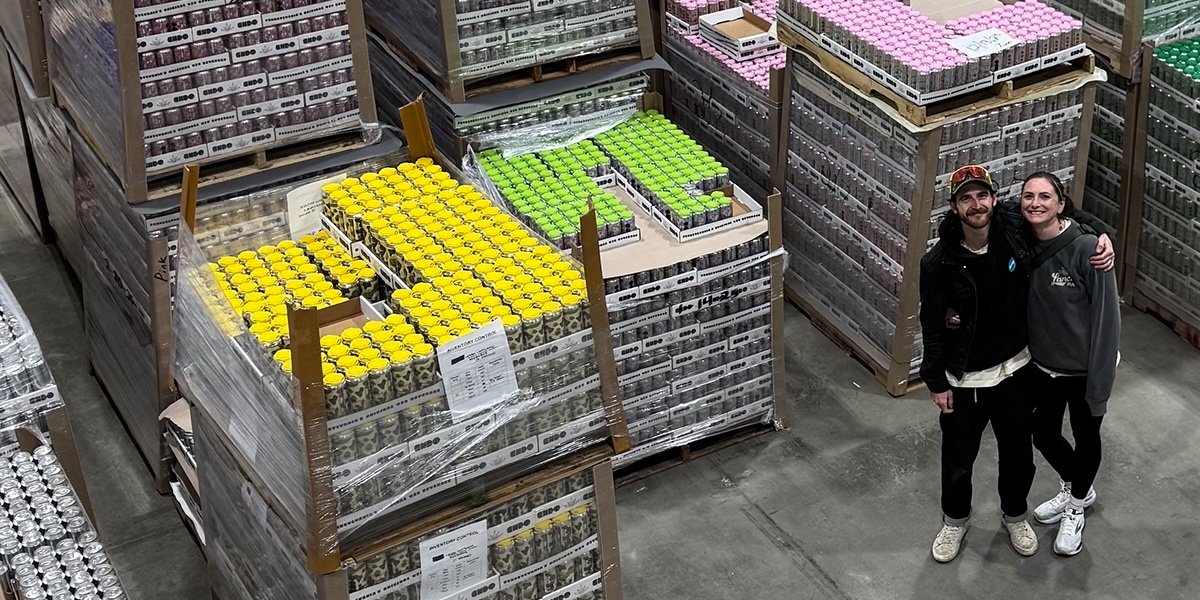
One of the entrepreneurs in this space is Sitler, who, in 2020, launched a line of hemp-based sparkling waters along with his wife, called Endo Tune Ups. They began selling their products at a coffee shop they co-own in Lancaster, PA, before quickly expanding to a national market. After selling more than a million cans of Endo sparkling waters, the Sitlers recently signed a deal with Total Wine to stock their drinks, which has tripled their sales.
“Instead of daddy going to a brewery and drinking three 9 percent IPAs, he can come to Endo and have one tune up, which calms you down a bit,” he says.

That option may soon disappear for customers in Pennsylvania. This past week, the Senate voted to rewrite the rules on hemp again, this time electing to recriminalize the plant according to federal law. It happened under the guise of ending the government shutdown: the hemp provision was tucked into the long-awaited funding bill that President Trump signed into law on Wednesday night, reopening the federal government.
Those who supported the sudden reversal, including Sen. McConnell, argued that hemp-based products are being marketed towards children, lack labeling standards, and exist without proper oversight and quality control to ensure consumer safety. Now, the products will be banned after a one-year grace period, unless lawmakers choose to revisit the issue later on. “It doesn’t feel constitutional,” says Sitler. “Every Pennsylvania hemp farmer is going to be out of business in a year.”
Especially in Pennsylvania, hemp business-owners like Sitler are left without a lifeline. Currently, Sitler sells his low-dose THC sparkling waters in 15 states, but barely distributes them within Pennsylvania. While other states have established a clear regulatory framework for hemp since the 2018 Farm Bill, defining where they can and can’t be sold, Pennsylvania has failed to offer such clarity. That ambiguity has allowed the state police to occasionally raid hemp manufacturers, even as Sitler continues selling them in Lancaster.
With the “loophole” closed, the state government could still act — passing a law to legalize and legitimize hemp retailers within The Commonwealth — and provide some degree of relief for the industry. There could be a future where PA legalizes recreational marijuana and hemp simultaneously, paving the way for adult-use dispensaries to sell both kinds of products. Or, what would be Sitler’s preference is this: a law that establishes clear regulations for the hemp industry, but one that allows small businesses to sell directly to consumers — or, in the case of beverages, inside beer and wine stores.
Given the ongoing paralysis on adult-use marijuana in Harrisburg, none of those scenarios feel imminent. As things stand, Pennsylvania will lose up to 9,500 jobs and about $50 million in tax revenue from the hemp industry, according to a report submitted in July to the PA Hemp Steering Committee by a cannabis research group.
If the problem with hemp-based products is a lack of regulation and oversight, then why erase an entire industry? Why punish good actors in Pennsylvania just because the state government has dropped the ball on solutions to go after the bad ones? That’s what Sitler wants to know.
“The state had plenty of time to pass their own legislative law. The reality is that by doing nothing, they have created the current consequence of where we’re at,” says Sitler. “And do you know what the craziest thing is? We’ve been asking for regulation.”
The loophole
Seltzers, like those made by Sitler, are not viewed as the poster children for consumer danger in the hemp marketplace. That role belongs to gummies and smokeable products.
In August, the Inquirer published an investigation into some of these products, which are commonly sold at smoke shops and gas stations in the Philadelphia area. With the help of an independent tester, the paper found that 90 percent of the hemp products they tested had higher levels of THC than their packaging suggested and exceeded the federal limit in the 2018 farm bill — “meaning that legally speaking, they’re just weed,” Ryan Briggs and Max Marin wrote.
Except that wasn’t all: The majority of the hemp flowers also contained a dangerous mold, and some of them tested positive for illicit pesticides.
A few months later, the district attorneys of three collar counties (Montgomery, Bucks, and Chester) released a 107-page report as part of a grand jury probe. Investigators found that hemp products sold at smoke shops and gas stations often mimic the color and packing of common kids’ snack products, like Starburst Gummies and Flaming Hot Cheetos.
The reason that these products are widely available over the counter is due to what Sen. McConnell refers to as a “loophole” in the law. (A law he architected.) The 2018 Farm Bill was supposed to help the struggling agricultural sector by expanding the legal, non-intoxicating uses of hemp — such as fiber, grain, and pure CBD. However, the law was written with a lack of understanding over how to properly test for and remove THC from the equation.
Although it’s commonly believed to be a single chemical, THC, or tetrahydrocannabinol, is actually a family of more than 100 psychoactive compounds found in cannabis. Only one of those compounds, delta-9 THC, was explicitly restricted under the 2018 Farm Bill. (Any product containing more than 0.3 percent delta-9 THC is classified as marijuana, not hemp.) This has created a vast legal gray area for all the other compounds.
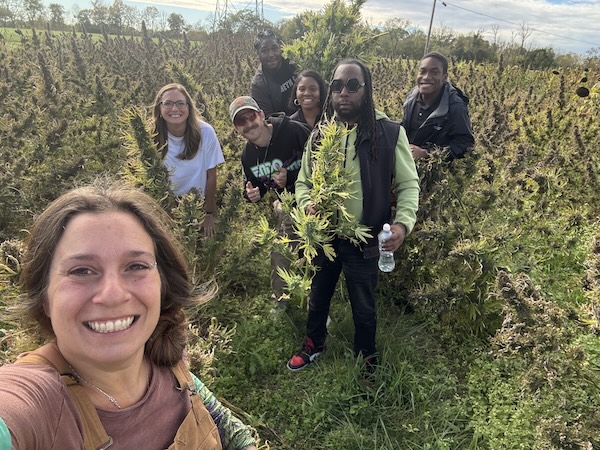
But a lot of hemp entrepreneurs bristle at the coverage in The Inky and elsewhere, feeling as though a vast industry has been defined by only the bad apples. “Are there bad players? Yes. Are there problems? Yes. But come on, man, we shouldn’t all be lumped into that,” says Sitler.
Another business that’s imperiled by the rescheduling of hemp is Choice Extraction in Washington, PA. They sell everything from beverages to chocolate bars to gummies infused with hemp, some containing THC, and others without. According to manager Jessica Ritchie, all of their products are made in an ISO-certified laboratory and receive rigorous third-party testing — on par with the standards in the medical marijuana industry. “Somebody like us, doing the right stuff, doesn’t get any attention,” says Ritchie.
Pennsylvania could have gone the route of establishing better regulations that might have mitigated the existing dangers in the market, such as more rigorous testing and labeling standards. Ritchie fears that her entire livelihood could go up in smoke instead. “We want regulation, not overregulation,” she says.
Only a handful of elected officials in Harrisburg have shown any interest in creating a framework for hemp regulations over the past several years. And now the industry has powerful opponents, like Pennsylvania Attorney General Dave Sunday, who recently signed onto a letter sent to Congress advocating for a total ban of hemp-based products. In the letter, Sunday and 37 other attorneys general wrote that hemp products “have inundated communities” and “are leveraging [the loophole] to pursue profits at the expense of public safety and health.”
What’s being missed in this debate, says Sitler, are all of the small-business owners who have been following the rules (in the true spirit of the law) and now stand to be punished.
“What we’re not hearing is that there are legitimate industry farmers operating in an equitable structure that allows people to get access to cannabis products, doing it appropriately, and also trying to create a living for themselves,” he says.
PA paralysis
Closing the farm-bill loophole deals a major blow to the hemp industry, even in states with recreational marijuana. Entrepreneurs will no longer be able to legally move products across state lines, shrinking their market significantly. In Pennsylvania though, the situation is even more dire due to the state government’s inability to pass a recreational weed bill.
For the past two years, Governor Josh Shapiro has made marijuana a legislative priority — to no avail. While there appears to be enough bipartisan support for legalization in principle, both the Republican-controlled State Senate and the Democrat-controlled House have struggled to find a compromise on the finer details of a plan.
Among the major sticking points in arriving at a compromise have been disagreements over the role that big, out-of-state businesses will play in the new market. Some legislators would like to prioritize licenses for small entrepreneurs and people harmed by the war on drugs while others would have large corporations move in immediately. Another issue has been structuring a regulatory body and taxation structure that satisfies members of both parties. Meanwhile, bordering states New Jersey, New York, Maryland, Delaware and Ohio have all made recreational marijuana legal — and are benefitting from the tax revenue associated with that.
“The state had plenty of time to pass their own legislative law. The reality is that by doing nothing, they have created the current consequence of where we’re at.” — Jake Sitler
As a result, Pennsylvania can’t go the route of California. After Governor Gavin Newsom, a Democrat, issued a temporary ban on hemp products earlier this year, the state legislature passed a bill that essentially integrated those products into the supply chain of dispensaries across the state.
Not only is that option presently off the table in Pennsylvania, but the anxiety over hemp has further stalled efforts to pass recreational marijuana. “Hemp is impacting the legislative conversation on adult-use marijuana,” says Meredith Buettner, executive director of the Pennsylvania Cannabis Coalition. (Adult-use and recreational are synonyms, in this case.) “There are some legislators who’ve seen these products proliferating in their districts to such an extent that they don’t even want to have a conversation about adult-use, until this hemp issue is dealt with.”
In a sense, Buettner is echoing a sentiment that Sitler also expressed: Inaction from elected officials in Harrisburg — who have neither dealt with hemp nor adult-use in a comprehensive way — has resulted in a messier situation. She believes that many bad actors selling intoxicating hemp products would have gone by the wayside in an adult-use landscape.
“I think you’ll see a lot of consumers navigate away from the gray market when you get adult-use,” says Buettner. “But in the meantime, people are getting sick. People are getting lung injuries. People are failing drug tests because they’re not being told the truth about what’s in these products.”
Looking forward
Earlier this year, Sitler founded the Pennsylvania Hemp & Cannabis Guild to advocate for a path forward that protects both consumers and businesses in the space. He’s grown frustrated with officials in Harrisburg who, from his perspective, decry the dangers of hemp while refusing to find a solution.
“I’ve sat in a room with the Liquor Control Board, the Department of Agriculture and the Pennsylvania State Police, and begged them to help. I said, ‘How can I help you get clarity on alignment around this?” says Sitler. The agencies wanted the legislature to act first, but elected officials never did.
It’s been a busy week for Sitler, who has been communicating with the offices of federal lawmakers, including Sen. John Fetterman (D-PA), about the potential impact of reclassifying hemp as a narcotic. “The American people don’t realize what they’ll be losing,” he says. “This doesn’t just affect intoxicating products; it affects grandma’s CBD tinctures.”
After proliferating for years, legally, America’s hemp industry is suddenly in limbo. Federally, Sitler believes that hemp advocates in Congress, such as Senator Rand Paul (R-Kentucky), could potentially find a way to reverse McConnell’s reversal in 2026, or to buy more time until they eventually find a middle ground — hemp legalization that fixes the mistakes of the 2018 Farm Bill — but the clock is ticking. There’s only a one-year grace period for hemp businesses to continue operating, before they risk legal repercussions.
In the meantime, Sitler will continue to push for an adult-use bill in Pennsylvania that includes an on-ramp for hemp growers, manufacturers and retailers.
“I believe that Pennsylvania citizens should be able to enter the cannabis market and be given a fighting chance to succeed [in a recreational landscape], just as much as the medical marijuana operators did,” says Sitler. “We can both get what we want, but we are going to have to work together to get a bill done.”
 MORE ON THE FIGHT OVER RECREATIONAL MARIJUANA