


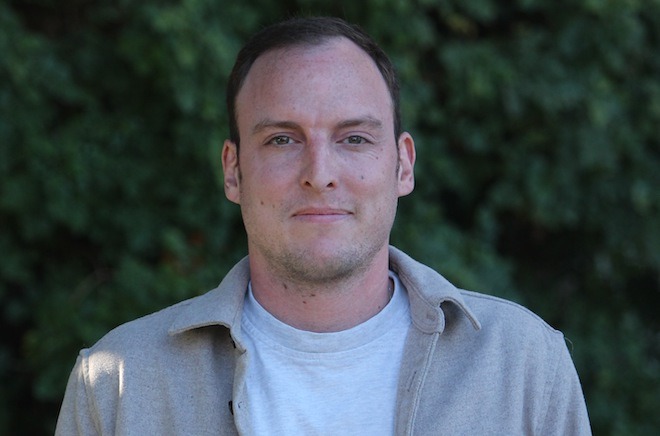
Growing up in Bucks County, Isaac Saul felt like he was at the epicenter of the American political spectrum — a bellwether county in a bellwether state that is, as he puts it, the most important place to be during presidential elections. He recalls CNN interviewing parents outside his high school, Pennsbury, during election season, and having friends and family members whose views were widely disparate. “I thought that was normal,” he says.
That started to change about 10 years ago. “I witnessed firsthand and experienced online that these groups of people that used to disagree with each other, but could sit around the table and have dinner or share a beer or whatever, became incapable of sharing space together,” Saul recalls. “It was like a religion, adherence to these views, and they were just getting their information from completely different places.”
Listen to the interview edition here:
That — as I don’t have to tell you — has only gotten worse in the years since. But Saul, a journalist who works and lives in South Philly, may have an antidote: Tangle, a newsletter that offers a daily deep dive into one news story a day by summarizing and linking to articles from across the political and media spectrum, then ending with Saul’s educated take on the issue. Those takes are intentionally nuanced and unpredictable, a reflection of Saul’s own political thinking. They are self-reflective, with Saul openly changing his mind about an issue over time, or admitting mistakes and missteps — a way to engender trust among his readers.
I’m open-minded, and I’m willing to change my mind. And sometimes I write a piece, and everybody writes in and explains why I’m wrong, and I’m like, Oh shit, I was wrong.
Now 34, Saul did stints at the left-leaning Huffington Post and right-leaning Independent Journal Review. “I saw how the sausage was made on the inside, and I didn’t like it,” he says. “It gave me an icky feeling.” He spent seven years with Ashton Kutcher’s solutions journalism foray, A Plus, before launching Tangle in 2019 with 50 email addresses.
Today over 400,000 people around the country subscribe to the newsletter, with 70,000 paying subscribers contributing nearly $4 million in revenue this year — up from $1 million last year, when This American Life featured Saul and his team in the run-up to the 2024 election. “That was a total game-changer for us,” Saul says.
I caught up with Saul at Tangle’s co-working space in Newbold to talk more about the state of traditional media, the problems he hopes to solve and the emotional toll of trying to navigate our political moment.
Like The Citizen, Tangle steers clear of the term “unbiased,” which has long been a term that journalists like to use to describe themselves and their work. How do you think about that instead?
Humans are not objective, and so I don’t think qualifying something as “biased” or “unbiased” is a proper standard. I think there are people who are fair and people who are unfair, and there are journalists who are fair and unfair, and there are media outlets who are honest and dishonest.
I know that I have all these biases. We have a format that tones it down as much as you can, but everybody on our team has certain biases, and we’re probably biased towards things we don’t even understand in terms of how we choose what writers to feature or whatever. We’re nonpartisan in that we are not playing for a team, we’re not ideological. We’re not here to benefit one side or the other, and we are going to introduce as much viewpoint diversity as you possibly can in a 10-minute read.
I’m also open-minded, and I’m willing to change my mind. And sometimes I write a piece, and everybody writes in and explains why I’m wrong, and I’m like, Oh shit, I was wrong.
Give me an example of changing your mind.
I used to be really against voter ID laws, and now I actually think that they would be good for a few reasons. One, when you dig into the evidence about the way it disenfranchises voters, it’s actually not that strong; in places where they’ve instituted voter ID laws, there’s been modest to zero change in turnout. In fact, in most instances, turnout has been higher because everybody on the left juices the idea that voter ID is going to crush turnout, and then that motivates people to show up and vote against the bills and prove that they’re going to be there.
The other part of it is that every other Western civilization, basically, has voter ID laws. And it feels weird that we’re the anomaly to that, and that we’re doing it because we’re claiming that it disenfranchises people, when there isn’t actually evidence that it does.
Every time we have a correction, we still get emails from new readers who see it for the first time and are like, This is awesome. Thanks for doing this. People just want the transparency.
And the third thing is that our trust in election results has cratered, and we really need to reverse that. And this is something that a lot of people understand, and it’s really simple and straightforward. I need an ID to buy booze; I should need an ID to vote.
I actually wrote a piece about that, like, why I changed my mind, and a lot of people were pissed about it, and a lot of people were really happy about it, but everybody was like, I respect you showing your work, just like explaining how this happens.
Since you started this six years ago, do you think bias in media has gotten worse or better?
I think there are more places that are trying to appeal to both conservative and liberal audiences at the same time, and I think that that’s good. But the fracturing of the media has resulted in a lot more overtly partisan sources, and it’s easier than it’s ever been to find news that just affirms your views.
So in that sense, I think it’s worse. Unfortunately, there are a lot of really great writers, heterodox people who started a lot of the indie newsletter trends or indie podcast trends, who are just totally audience-captured now.
Like whom?
Glenn Greenwald and Matt Taibbi are people who I respect, journalists who have done more than I will ever do in terms of their accomplishments and stories they’ve broken and influences they had. I’m not denigrating them, but I watched them write the same, like, eight pieces over and over again. Even media organizations like The Free Press, who is the big dog in our space, have an obvious ideological tilt now; I don’t see as much ideological diversity in the pages of the stuff they publish as I used to. I think that’s because they’ve learned that their audience really likes certain things. They like really critical articles about the trans movement. They like really pro-Israel stuff. They like stories that are hammering the ails of big government. They’re not going to publish a story about, like, the best case for expanding Medicaid or whatever.
I’m always asking: Are we doing this? You know, sometimes we really piss people off with the decision of what we cover. Like the Biden autopen story. All the liberal readers are mad at us, like, This is a non-story. I can’t believe you’re covering this. And then two days later, there’s this Tulsi Gabbard thing, which we know they’re going to react the same way to, but it’s the story everybody’s talking about. We could easily make the decision that we don’t want to upset these readers twice in the same week. But we have to remove that from the equation. That’s hard to do, and I’m sure it costs us a ton of money every year, but it’s the whole purpose of why we’re doing what we’re doing.
What’s the hardest part of doing Tangle?
One, it’s a daily; I have to write a column basically every single day, and the drumbeat never stops. It doesn’t matter what’s going on in my life, or how much I need a break. I wake up at 6am and I open my computer and I’m on, and I have to be really on my game now, because our audience is so big.
The second thing is that the criticisms, I think, are often very unfair. It gets really exhausting seeing the same cycle happen over and over again: Somebody discovers our work. They read one newsletter, and they run into an opinion that they don’t like, and they unsubscribe and write in some nasty email about how we said we were independent, but really we shared this opinion that they can’t believe we would publish. But we’re being very clear about the value proposition, which is that we’re gonna get you out of your bubble, and you’re gonna see a wide range of views in one newsletter. And people think that they want that, and then they come and it turns out they don’t actually want that.
What fostered your love of politics? Do you love politics?
I love-hate politics. There are days when I feel like I’m doing the most important work that anybody can be doing. Everybody lives under the rule of our government; we all pay taxes, and there’s no other bigger, more important news story than what the federal government and our state governments are doing. Then there are days when I’m just like, I am writing seriously about something that is basically just theater, and we’re watching a show, and everybody’s acting, and they’re all full of shit. And I can’t believe I spend so much time caring about this.
I grew up in a really political household. My dad was reading me the newspaper every morning when I was a kid out loud at the kitchen table. [My parents] really cared, so I always had an understanding that politics mattered. I grew up in this really politically charged place, Bucks County, where everybody felt differently about every issue. Then I spent time in Israel, which honestly had a big impact on me, because I saw the impact of the United States. Our role in that region is everywhere, and it’s so profound. Everybody you meet cares about what we’re doing. That made me want to write more about politics more broadly.
There are days when I feel like I’m doing the most important work that anybody can be doing.
I think the government actually matters, we have a great deal of influence on it as people, and we underestimate our power. That’s how I feel on optimistic days. People generally either don’t care or don’t understand. I have really smart friends: They’re in the middle of their careers, and they are really successful. Then we’ll talk about politics, and I’m just like, Oh, you literally know nothing.
Tangle’s laudable aim is to get people out of their political and media silos. But how do you get it in front of people who need it the most — those who aren’t already looking for alternate views?
I would say the pitch to conservatives is different than the pitch to liberals. When I’m talking to a liberal, they’re like, I have no idea why somebody would ever vote for Donald Trump. I can’t stand him. I think [his supporters] are just idiots, or they’re insane or whatever. And they want to read Tangle because they want to understand the conservative view, or they want to understand, like, their uncle.
Conservative readers are like, I don’t trust the media. The system’s broken. You guys are all liars. And I’m not going to get my news from legacy, mainstream sources. So they come to Tangle for free speech, open dialogue, that kind of thing. I’m a journalist who left the mainstream media because I think it’s broken. I started something new, and this is what I built. They’re interested in that.
Over the last several weeks, you’ve let your readers see your struggles with the politics of Israel. You wrote that “I think I’m leaving Zionism, or Zionism is leaving me.” Tell me about that journey.
I was raised in an explicitly Jewish household. My mom grew up in Maryland in the 1950s and 60s, and she was actively discriminated against for being a Jew. She always saw anti-Semitism everywhere. I grew up in an era where Jews lived in relative safety and prosperity, where Israel has been strong and powerful and an economic powerhouse with one of the best militaries in the world backed by the U.S. It’s not going anywhere.
Ten years ago, I went and lived in a yeshiva in Israel for six months. I loved the country, in part because it was this beacon of freedom and diversity in the Middle East, at least the way that I saw it and experienced it. I was living in East Jerusalem, which is a very contested area, and I have friends that I made through playing pickup basketball that were Palestinians, Arabs from Egypt, from Jordan, from Gaza, from Hebron, whatever. I heard their stories, and understood very clearly they were living a different life than I was, but at the same time, they loved the country, and cherished it, felt like it was still really dire in a lot of ways, but at least felt like there was hope and like a lot of people were aligned on the same goals.
And then October 7 happened, and all these conflicting things happened at once for me. My worst fears about Israel became reality. I watched the country respond to October 7 with a war that’s gone on for years, that has caused far more destruction to the Palestinians than it has to Israelis, and has completely eroded and collapsed the moral high ground the Israeli government had over groups like Hamas, and has put Jews everywhere in more danger than they were pre-October 7.
At the same time, I’ve experienced more anti-Semitism in the last two years than in my entire life: overt, in person, face to face, online, in my emails. The people who hate Jews are very, very, very conscious of the fact that they have the wind at their backs right now, in part because of what Israel is doing. For a lot of Jews who are Zionists, that is proof of the necessity of a Jewish state. And then I think there are things that are total delusions, like Zohran Mamdani winning the Democratic primary does not mean a jihadist mayor is taking over New York City.
How has that been, personally, for you?
Exhausting and upsetting and really difficult in my personal life. I have friends of mine who are Orthodox Jews, and friends of mine who are Palestinian-American Muslims who have all these really varied relationships with the state of Israel and the history behind the conflict. With most of them, I’m really struggling to manage the relationship, despite being, I think, really good at what I do, which is hearing and holding multiple perspectives.
I’ve heard from a lot of them that I don’t think I can keep reading your newsletter, or, I don’t want to talk about this with you anymore, because of what I wrote. I have Jews who are writing in telling me that I am spreading blood libel about Jews, and Muslim readers writing in, saying that I’m a mouthpiece for a genocidal state, and complicit in the deaths of Gaza and children because I won’t speak in clear terms about what’s happening. And they read the same freaking article.
I mean I do get a lot of positive feedback, too. There are a lot of people who write in and say, Thank you so much. Your views mirror mine so much. I have all these conflicting feelings about these things that are happening.
How do you decide what you’re going to feature?
From a tactical standpoint, that’s the hardest part. Media bias is expressed through story selection all the time. Like, an immigrant comes here illegally and gets in a car accident and kills 10 people driving drunk. Fox News is going to cover that story 10 times out of 10. Every single time. The New York Times will maybe cover it, but probably not. An immigrant comes here legally and starts Google. The New York Times is doing that story, 10 times out of 10. Fox News, zero out of 10. Never.
So we know that what we choose to expose our readers to matters. We have a few barometers. The one that is most dominant, that is reflected most in our coverage, is when there is one story that’s on the homepage of every news outlet and that everybody’s chasing and is being debated by all the pundits and all the podcasts and whatever. Today we covered the stuff that’s happening in Gaza with the new aid system being broken and starvation spiking — Fox News is covering that, The New York Times, Wall Street Journal, Washington Post. It’s all over Twitter, it’s an easy layup.
On the days where that isn’t as clear, we try to focus more on policy stuff than culture war drama. Culture and politics are really closely associated, but like all things being equal, I’d rather write about a piece of legislation that’s being proposed than a comment some actor made that everybody’s arguing over.
I don’t think qualifying something as “biased” or “unbiased” is a proper standard. There are people who are fair and people who are unfair, and there are journalists who are fair and unfair, and there are media outlets who are honest and dishonest.
Then there’s sort of the last one, which I think is the trickiest one: stories that we feel are not getting the kind of attention they should be getting. The most recent one was about the rescissions package. It got a lot of attention in left leaning media. Most conservative commentary was in response to what liberals had been writing. But I would say most Americans were probably unaware of it outside of knowing that PBS and NPR funding is getting cut. That’s a big deal, but the bigger story was that they just created a workaround for clawing back money that had been appropriated by Congress, and they’re going to do that more.
And we just did a whole piece about what climate change models are actually telling us. We have gotten a lot of requests from readers for more climate change content, from conservatives and liberals, with conservatives writing in saying, You guys are so trusted. You could be the ones to tell everybody that climate change isn’t real. We don’t think that’s what the evidence says, but we can certainly explain how some of the concerns are maybe overstated in the press oftentimes. Like, the models are changing, and the outcome is a lot more optimistic than it was 10 or 15 years ago. We got a lot of really positive feedback on that piece, which was cool.
You are very clear when you have made a mistake, even announcing it at the top of your newsletter. Why do that?
I had my first correction issue in the newsletter probably a month into doing it. [The newsletter] was going to like 200 people, and I had a real question of how I should do this? It was at the time, in 2019 / 2020, when The New York Times and Wall Street Journal and Washington Post, were getting a ton of shit for ghost-editing stories where people would call out corrections on Twitter, and then the editors would go in and change the story without issuing a correction, or they’d just put it in tiny italics at the end of the story, or something. I hate when they do that.
So when we made a mistake, I just put it as the top section in the newsletter the next day and explained actually how it happened — like, I made a mistake porting over some data. And then I said that I’ve only made one correction in a month to contextualize it. And every response to the email was about the correction. There were people who were like, This is so cool. I’ve never seen a newsroom do this.
Now every time we do that — every time we have a correction — we still get emails from new readers who see it for the first time and are like, This is awesome. Thanks for doing this. People just want the transparency.
Correction: An earlier version of this story mentioned that Tangle is on Substack. Tangle left the platform in 2021.
 MORE ON POLITICS AND THE MEDIA FROM THE CITIZEN
