




Among once-great industrial cities that fell on hard times, Detroit is often praised for its turnaround. The Motor City’s progress is modest, however, compared with that of Philadelphia, which has shown how a struggling industrial city can truly reinvent itself.
At the turn of the millennium, the city was on the ropes, having lost a quarter of its residents since 1950. Whole blocks of once-proud rowhouses sat abandoned. More than 36,000 townhome lots lay vacant, depressing property values by billions of dollars and fueling crime. Nearing fiscal collapse, the city needed state intervention just to open its schools in 2000.
Yet over the next two decades, Philadelphia pulled off one of America’s most remarkable urban comebacks. The catalyst was not top-down, flashy megaprojects or massive federal subsidies. It was far simpler: a bottom-up, 10-year property tax abatement on new residential construction.
Recovery began in the late 1990s with tax abatements on office-to-residential conversions in Center City, a policy that quickly reduced the glut of empty commercial space. But the real breakthrough came in 2000, when lawmakers expanded the abatement citywide to vacant lots.
The approach was straightforward: For 10 years, owners of new homes paid no tax on improvements, though land remained taxable. The resulting savings lifted home values and closed the appraisal gap that had long stalled construction. The abatement unlocked projects for large and small builders alike, and for the first time in decades, Philadelphia could compete with its suburbs.
The lesson from Philadelphia is clear: keep abatements simple and predictable, let the private market lead — and watch tax bases and neighborhoods grow.
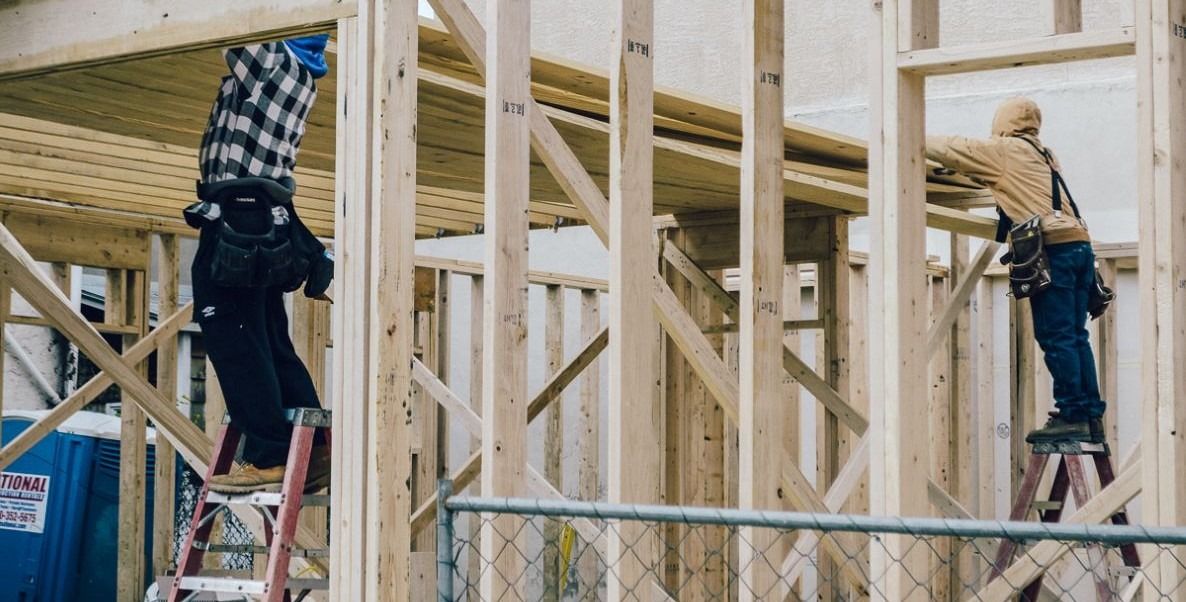
The results were transformative. From 2000 to 2023, Philadelphia added more than 60,000 housing units, much of it modest townhomes that filled the “missing teeth” in aging blocks. Growth radiated predictably outward from Center City, spreading block by block into surrounding neighborhoods. Eight of 10 Council districts saw reductions in vacant lots. After five decades of decline, the city’s population finally grew again — by 1 percent in the 2000s and 5 percent in the 2010s.
The best proof of the abatement’s effectiveness comes from looking across the Delaware River. Camden, New Jersey began the 2000s with similar housing stock, incomes, and vacancy rates. But Camden relied on a top-down subsidy program launched in 2013. The outcomes diverged sharply. From 2000 to 2020, greater downtown Philadelphia’s population rose 13 percent, while Camden’s fell 10 percent. Philly’s vacant lot share dropped; Camden’s rose. Home prices in Philadelphia’s core increased sevenfold; Camden’s, just threefold.
Despite Philadelphia’s clear gains, critics have maligned the abatement for decades. Their criticisms rely on four key myths.
Critics’ tax abatement myths
The first is that developers pocketed windfall profits. In fact, most new townhomes were built by small-scale firms. Profit margins were modest, and without the abatement, most projects would not have been feasible.
The second myth is that new townhomes weren’t affordable. On a per-bedroom basis, they were actually far cheaper than condos in large apartment buildings. Mostly inhabited by families, owner-occupied townhomes became an accessible path to homeownership and wealth-building.
The third myth is that abatement-fueled construction displaced longtime residents. In reality, nearly all new townhomes replaced vacant lots or decrepit structures. Census data show little evidence of accelerated displacement among lower-income or minority residents in older rowhouses. In fact, Philadelphia has more minority homeowners today than in 2000, and those owners saw their accumulated wealth rise by roughly $10 billion thanks to higher property values. The City also expanded homestead and senior exemptions to protect low-income households.
The fourth and final myth is that abatements robbed capital from schools and city services. Quite the opposite. By attracting residents and investment, the program expanded the tax base. Expired abatements alone generated $137 million annually by 2023, and total property tax collections surged. School spending rose in line with state spending, while the City, no longer needing to maintain thousands of vacant lots, saved millions.
Despite this record, in 2022 City Council halved the abatement to five years and imposed a 1 percent development tax. Permitting for townhomes — the backbone of the revival — collapsed, while large rental projects by big developers rushed in to fill the gap. The shift now threatens Philadelphia’s traditionally high homeownership rate.
Townhomes built under the abatement not only housed newcomers; they also stabilized neighborhoods, raised values of older homes, and spread amenities like supermarkets and coffee shops to underserved areas.
At the same time, City Hall embarked on costly, top-down projects. The $400 million Neighborhood Preservation Initiative (2021) and the new $2 billion Housing Opportunities Made Easy program (2025) aim to micromanage development with subsidies. But Philadelphia has tried this before: Its 2001 Neighborhood Transformation Initiative spent heavily with little to show for it. Camden’s failures with state subsidies underscore the same lesson — such programs invite waste, politicization, and corruption as evidenced by the Norcross trial, in which a brother of a State Senator was indicted for racketeering involving lucrative waterfront real estate rights.
Philadelphia’s experience shows that bottom-up renewal works. Townhomes built under the abatement not only housed newcomers; they also stabilized neighborhoods, raised values of older homes, and spread amenities like supermarkets and coffee shops to underserved areas.
If the city wants to sustain this revival, it should restore the full 10-year abatement, or even extend it to 20 years to offset today’s higher interest rates. To broaden support, the city should dedicate part of the resulting windfall to a gradual reduction of its punitive wage tax.
Other cities facing depopulation, blight, or commercial vacancies, but with growing suburbs, should take note. The lesson from Philadelphia is clear: Keep abatements simple and predictable; let the private market lead — and watch tax bases and neighborhoods grow.
Tobias Peter is a senior fellow and co-director of the American Enterprise Institute’s Housing Center. This story originally appeared in City Journal.
 MORE ON HOUSING AND DEVELOPMENT FROM THE CITIZEN