




As Philadelphia works on its long-range Philadelphia 2050 plan, a blueprint to shape housing, transportation, and neighborhood investment over the next 25 years, officials are asking residents to envision what the city could become.
But in Kensington, where open-air drug markets operate steps from elementary schools and the neighborhood’s reported poverty rate is more than 40 percent compared to just over 20 percent citywide, imagining 2050 is a luxury. The teens who will be in their 40s when that plan comes to fruition are struggling to stay alive, stay in school, and stay connected to the future the city expects them to inherit.
Kensington’s youth faces a constellation of risks unmatched elsewhere in the city. The area surrounding Allegheny and Kensington Avenues consistently has one of the highest concentrations of overdose deaths in Philadelphia, which remains the deadliest for overdoses in the U.S. The unemployment rate is significantly higher than the broader city average — roughly 1.5 times higher — highlighting the additional challenges for the teens in this neighborhood. In the School District of Philadelphia, only 62 percent of Kensington-area high school students graduate on time, one of the lowest rates in the city.
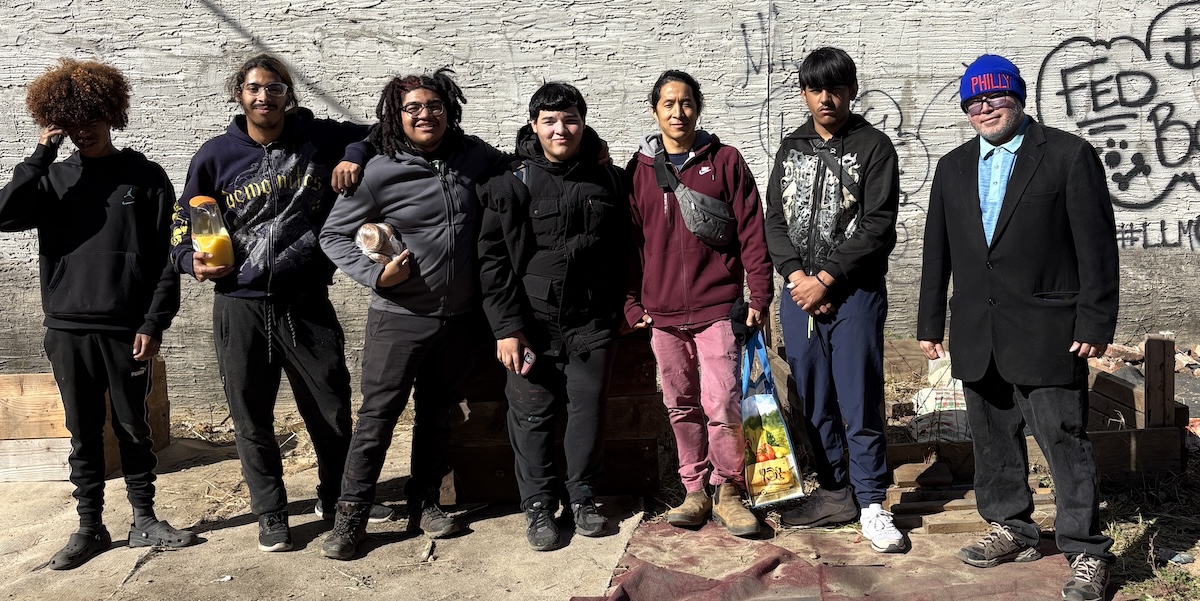
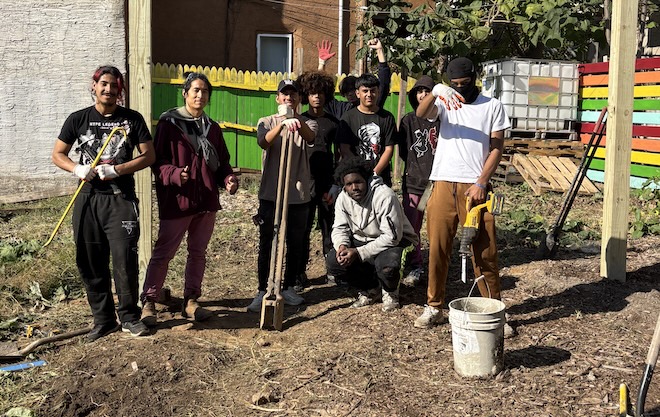
One of the few things keeping some students tied to that future is a small, hyperlocal program called Klean Kensington, founded by Jeremy Chen in 2020 to employ teens to clean blocks, tend gardens, and join workshops focused on developing job skills.
Jeremy Chen didn’t come to Kensington by accident. The Princeton graduate grew restless with talking about justice from a safe distance and moved into one of Philadelphia’s poorest neighborhoods. What started as a pandemic project — paying teens a few dollars to help clean up trash — became a throughline for these teenagers’ potential success.
“Only in the last year and a half have we really moved toward something holistic,” Chen says. “Thinking about their lives as a whole.”
In Kensington, that shift isn’t just helpful. It’s urgent.
Kensington’s teens are showing up. They are cleaning alleys, planting trees, leading meetings, navigating trauma, caring for siblings, saving money, applying for jobs, attending workshops, and imagining possibilities beyond their neighborhood’s boundaries.
They are doing their part.
In that context, a youth program offering $18 an hour — more than double the federal minimum wage, and more than three times Pennsylvania’s — does more than beautify blocks or plant gardens. It keeps kids out of open-air drug markets. It diverts them from the informal economy that pulls so many teens into danger. It buys them time.
Daniel Dorado understands that better than most.
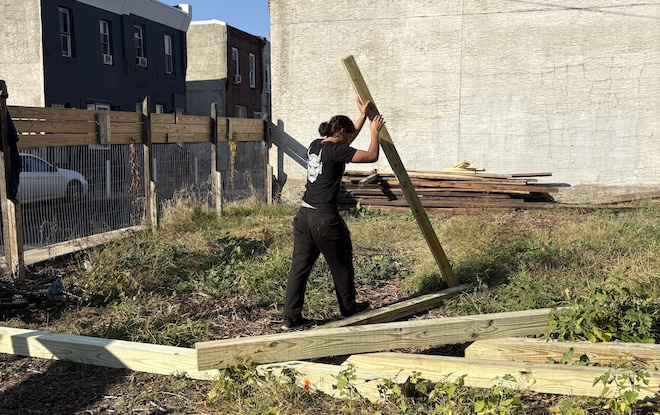
Now 19, he first met Chen on a sidewalk near his house. “Jeremy was carrying wood,” he recalls. “He asked me if I wanted $20 to help him move it.” That invitation led to another — “‘Come work with us.’” — and Daniel, skeptical at first, accepted. “I thought it was some weird job situation,” he says. “I had never heard of a nonprofit. But then I just kept showing up.”
He was 17 then. Today, he is a Klean Kensington fellow — one of the older teens who supervise others, plan workdays, and keep crews safe. He makes $25 an hour, leads neighborhood projects, and sees the teens’ potential in a way he never did before.
“I used to do it for the money,” he says. “Now, I’d keep helping even if I wasn’t paid. I enjoy the work. I enjoy seeing the neighborhood get better.”
Daniel is one of the 80 young people whom Chen works to put on a path to break the cycle long-term. And that reality weighs on Chen.
More barriers
“If the barrier is transportation — even if it’s an hour bus ride — they won’t do it,” Chen says. “It’s not the technical knowledge. It’s the existential feeling: Is this even realistic?”
In many Kensington households, car ownership is rare. While around 30 percent of Philadelphia households lack a vehicle, in parts of Kensington, that figure is likely above 40 percent. Without a car — and with bus routes that require multiple transfers, long waits, or unsafe walking conditions — teens struggle to access internships, apprenticeships, or training programs located in other parts of the city.
Chen has tried to bridge this gap creatively. Recently, he began searching for inexpensive used cars so he could help older teens purchase them through payment plans — something no traditional bank or workforce agency offers.
“Even if a teen saves $2,000, a family member might say, Why aren’t you helping us with bills? The money disappears,” he explains. “It’s not that they don’t understand savings. It’s that poverty makes planning feel impossible.”
Daniel sees this reality clearly. “People here get money, and they move,” he says. “It’s hard to stay when every day you see dead bodies, people suffering, houses abandoned.”
His realism doesn’t come from cynicism. It comes from watching Kensington change without its long-time residents.
“I’d love to see the neighborhood grow and thrive,” he says. “But gentrification is real. If rich people want to do something, they’re going to do it.”
The fragile program is holding together a fragile community.
Today, Chen runs the program full-time without paying himself (his wife, a dentist, is his household’s breadwinner), pouring his time and limited resources into teenagers who often have no one else in their corner. “Where would some of them be?” he says. “A couple might be dead in the streets.”
“Our organization is very lean,” Chen says. “We pay the kids. That’s how we’re able to do what we do.” Grants fund 80 percent of the program; individual donations fund the rest.
Over the past three years, Klean Kensington has created:
- A youth employment model
- A financial literacy partnership with a local credit union
- Résumé building and interview workshops
- Connections to the Carpenters Union and trade programs
- A year-round schedule of community greening projects
- Leadership pathways — like the fellowship Daniel now holds
The model is not just about jobs. It is about replacement — replacing the street corner with a day of work, replacing instability with structure, replacing isolation with mentors and friends.
Chris, a teen who recently graduated from high school after years in shelters and unstable housing, says Klean Kensington changed the way he saw himself.
“I was doing whatever I wanted. I never listened,” Chris says. “Then I came back to school. Graduated. No one from my family came.”
Except Chen.
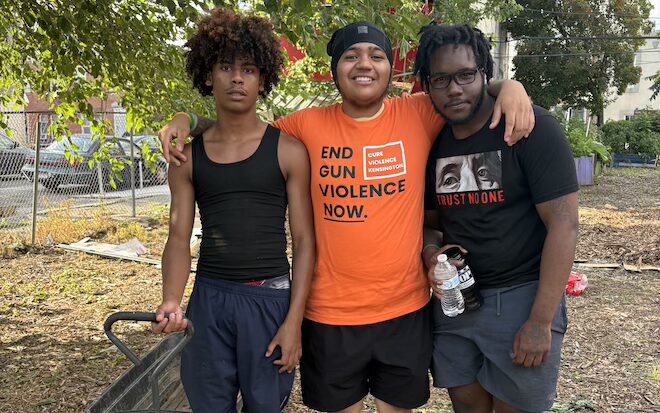
In Kensington, the difference between a teenager finding their way or falling through the cracks can be as small — and as profound — as one caring adult. One landmark study found teens with a supportive adult were 46 percent less likely to use drugs and significantly less likely to drink, fight, or skip school. That statistic isn’t theoretical on Kensington Avenue. It’s written in the faces of the kids who show up to programs like Klean Kensington every day — choosing work, community, and possibility over the danger waiting just outside.
What the city is asking — and what teens are actually living
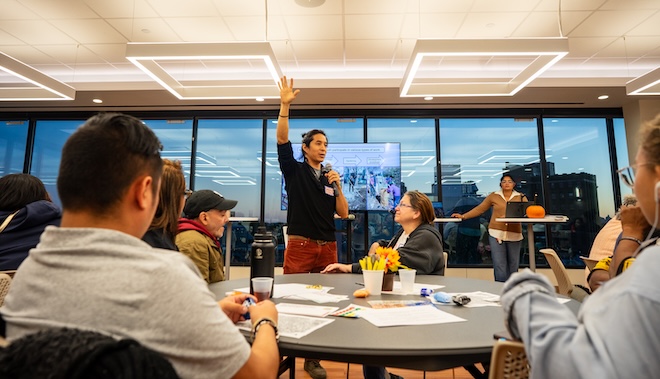
Philadelphia is collaborating with Klean Kensington, one of eight organizations, to gather input for its 2050 plan, which acknowledges that traditional engagement methods miss the most vulnerable residents. Teens facilitated discussions and led activities at the program’s first “Dreamers Dinner,” a community gathering held to collect residents’ visions for the future of Kensington.
But the feedback from Kensington was unlike anything collected in other parts of the city.
“In places like Center City, people talk about tax credits or bike lanes,” Chen says. “In Kensington, it’s trash. Drugs. Violence. Safety. They can’t even think about 2050. They can only think about the neglect right now.”
For the teens, being involved in these activities mattered. It shows them they have a voice. But it also reveals the gap between planning rhetoric and lived experience.
Daniel imagines a Kensington where neighbors own their homes, businesses thrive, trees line the blocks, and kids play in the street again. But he also knows what the last decade looked like.
“If the city shows it cares sooner rather than later, people will invest in the neighborhood.” — Jeremy Chen
“More abandoned houses. More people are moving out. More overdoses,” he says. “I’m realistic. I’ve seen what happens when the city wants something. They get it.”
If Kensington’s kids are going to make it to 2050, the systems around them must change now — not after another planning cycle.
If Philadelphia wants these teens in 2050, it must support them in 2025
Many ideas have been floated, but why not start with a couple that are laser-focused on the needs of these teens? For example, providing a teen transit pass for high-poverty neighborhoods — something other cities, such as Seattle/King County, WA, have implemented — would reduce the cost of travel to access opportunities across the city or for job interviews. Another urgent measure is to establish formal partnerships with unions, trade schools, and employers to streamline access and reduce barriers.
These are systemic, not symbolic, interventions. They are measurable. They are feasible. And most importantly, they are what Kensington’s youth are asking for.
Despite everything, the teens in Klean Kensington are not passive recipients of support. They have visions for their future — and for their neighborhood.
Some want to start contracting businesses. Others want to be welders, carpenters, landscapers, or media technicians. Several talk openly about wanting to help rebuild the homes and blocks where they grew up.
A city plan is a statement of intention. A youth program is a statement of action.
Kensington’s teens are showing up. They are cleaning alleys, planting trees, leading meetings, navigating trauma, caring for siblings, saving money, applying for jobs, attending workshops, and imagining possibilities beyond their neighborhood’s boundaries.
They are doing their part.
The question now is whether Philadelphia will meet them where they are — not where we hope they might be decades from now.
But many — including the most committed teens — also talk about leaving.
“To want to be here is to believe the neighborhood will change,” Daniel says. “But when things get worse for so long, it’s hard to see a future here.”
Still, he holds hope — the grounded, cautious kind.
“If the city shows it cares sooner rather than later, people will invest in the neighborhood. But right now, I don’t know,” he says. “I believe it could change. I just don’t know if they want it to.”
Chris puts it simply: “I’m making new connections. Just trying to be better.”
Because a 2050 plan means nothing if the kids intended to inherit it cannot make it there.
 MORE CITIZENS OF THE WEEK