



Philadelphia is one of the top dozen cities in the country for AI-focused job openings.
Yet Philadelphia is the worst city in the country for economic mobility.
How we choose to hire for these positions and other high-wage tech jobs will be critical to determining when — or if — we shake this undesired claim.
Employers have a local source for high-quality talent, but they’ll only find it if they look beyond their personal connections, referrals and inner network and orient their search more exclusively around skills and knowledge.
I’m talking about young people who graduated high school and made an intentional decision not to enroll in college — not because they lacked direction, but because they questioned the return on investment, especially in a system where Black and Brown students take on more debt and get less payoff.
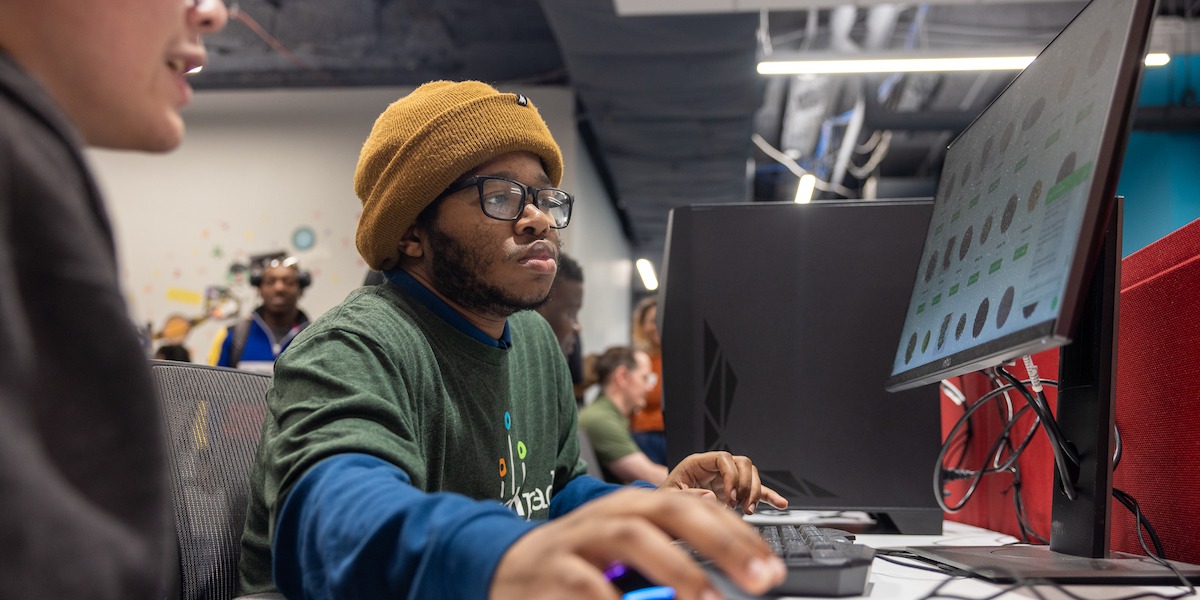
Some of these young people are teaching themselves to code on YouTube, building projects, freelancing, or gaining real-world experience through programs like Launchpad, the local nonprofit I lead that helps young adults build future-ready skills and job preparedness. Others may have started college and chosen not to finish, yet they have deeper content knowledge and stronger problem-solving skills than some degree holders. If we only look at credentials, we’ll miss the brilliance that’s already here — talent shaped not by tradition, but by necessity, creativity, and choice.
Encouraging hiring managers to take a broader view of talent sources — and dislodge the idea of college graduates as the one and only candidate pool — is a work in progress. When I was growing up in Nicetown, my mom believed degrees represented opportunity, so I went out and earned three degrees.
But the truth is, college didn’t just give people credentials, it gave them access — access to networks, mentors, job referrals, and that first foot in the door. The value wasn’t (and still isn’t) just the degree but the ecosystem around it. For many of us growing up in Philly, that ecosystem didn’t exist — especially if you were Black or Brown, especially if you didn’t come from money.
New pathways to work
These new pathways matter because they’re not just teaching skills, they’re rebuilding the kind of access that’s been unevenly distributed for generations.
In addition to the many self-taught opportunities available online, our city is home to a growing ecosystem of nontraditional pathways helping young people build skills and launch careers. From programs like Hopeworks to models like ours, Philadelphia offers a wide range of in-person and virtual opportunities — varying in format, length, and focus — all designed to meet young people where they are and help them take the next step toward thriving futures.
These initiatives are also primarily serving Black and Brown students, who make up a majority of the young adults in our city and who continue to be underrepresented in tech jobs. According to the U.S. Equal Employment Opportunity Commission, there was very little change in the representation of Black high-tech workers between 2005 and 2022. This period includes the time when these employers started to publicly focus on increased racial and gender representation — and before these same companies started walking back these goals during this new administration.
Despite shifting rhetoric and even shifts from elected leaders — both Governor Josh Shapiro and Mayor Cherelle Parker made a point to remove four-year college degree requirements for both city- and state-level government jobs — the need for equity hasn’t changed — and neither has the availability of skilled, career-ready talent. A growing number of programs are producing exceptional candidates. The question is whether employers are willing to act on what’s possible.
Will private employers consider candidates like Kristian Godinez, who graduated from Mastbaum High School and completed our program with his certification in entry-level Python, a coding language? He doesn’t have a bachelor’s degree, but he knows programming, version control, and AI integration — and he recently built an automated code reviewer that rates student code using our competency system and gives real-time feedback without correcting the code for them.
The emergence of nontraditional candidates like Kristian puts more pressure on employers to tear down the paper ceiling, the anachronistic requirement for job applicants to have certain degrees. Only 35 percent of adults in Philly have a bachelor’s degree, so this requirement immediately shrinks the hiring pool. Employers will have a broader and more diverse hiring pool by making this one change.
We’re providing the supply, but employers need to have the demand. By broadening their perspective on what makes someone qualified, Philadelphia’s employers can build a city where upward mobility is available to all — not just the credentialed few.
Dannyelle Austin is the Executive Director of Launchpad Philly. Launchpad’s mission is to build accelerated pathways connecting high school students to high-paying tech careers.
The Citizen welcomes guest commentary from community members who represent that it is their own work and their own opinion based on true facts that they know firsthand.
 MORE ON GROWING TECH IN PHILLY