



During the launch party for the Economy League’s Fair City Challenge in May, Vonetta Hawkins, founder of Home Sweet Home Realty Group, listened to an audience member express concern over home appraisals.
A Black man, he shared with the audience how, before putting their house on the market, he and his wife took down their family photos: They were afraid the images would affect their home’s appraisal value.
“He was literally planning to remove his Blackness from his own house in May of 2025. This is madness,” Hawkins says.
Listen to the audio edition here:
Appraisal bias — where homes owned by White people are deemed more valuable than those owned by people of color, despite being comparable properties — happens frequently both in Philly and nationwide. A 2024 report from the National Association of Real Estate Brokers found that since 1947, biased appraisals have caused Black homeowners to lose a combined $150 billion in home equity.
Locally, biased appraisals have contributed to a $57 billion gap in appreciation values between homes in majority White neighborhoods and those in neighborhoods that are predominantly people of color, per a report from the Economy League of Greater Philadelphia, a “think-and-do tank” that brings together business, nonprofit and civic leaders to work for the greater economic and municipal good.
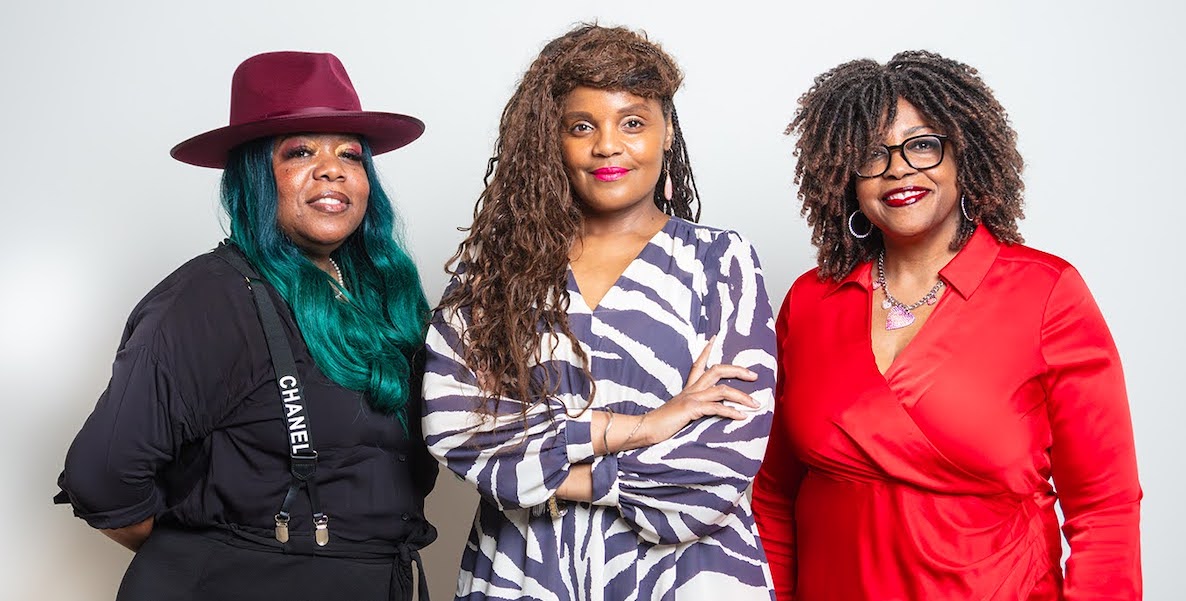
Hawkins is part of a trio of women who are trying to change that. Along with Dr. Almitra Tankersly, founder and CFO of Credit Fitness, and Clara Lyons-DeVaughn, owner of Pennsauken, NJ agency Lyonsview Realty, she formed the WEALTH Collective to work to end appraisal bias through technology and policy solutions.
The Collective is competing in the accelerator stage of the Economy League’s 2025 Fair City Challenge, a contest aimed at funding solutions that can help close Philly’s housing racial wealth gap. So far, they’ve received $10,000 to pilot their solution. If they win, they’ll get $50,000 to make it a reality.
Forming the WEALTH Collective
The Economy League launched their challenge model in 2019 to support Philadelphia problem solvers focused on issues ranging from physical and mental health and millennial mental health to hunger. The goal of the challenge is to identify and fund innovative solutions to civic problems. In past years, winners proposed Hey Auntie!, a platform that helps Black women find social and emotional support; College Together, which offers self-paced BA and associate’s degrees; and That Could Be Me Foundation, which focuses on mental health, technology, and digital arts education for the creator economy.
This year, their focus on the housing racial wealth gap calls for solutions in three categories: direct support for homeowners, support for neighborhoods, and policy change advocacy. The Economy League also required all solutions to acknowledge their potential problems or downsides.
“Our objective is to develop policy recommendations at all levels of government: local, state, and federal.” — Clara Lyons-DeVaughn.
“Our goal was how do you re-value properties and leave the bias out of the equation?” says League Executive Director Dr. Jeff Hornstein.
Hawkins knew she wanted to apply for the program. She’d worked with Lyons-DeVaughn, who, in addition to being a real estate broker, is regional vice president of the National Association of Real Estate Brokers, on real estate deals. Together, they’d seen how appraisal bias affected homebuyers and advocated for change through the Association. Lyons-DeVaughn brought in Tankersly, a credit specialist, who also has seen appraisal bias while working with prospective home buyers.
Technology, policy. community
The WEALTH Collective pitched a three-part strategy to tackling home appraisal bias: technology, policy and community.
The technology component — still in development — is the WEALTH App, which will allow users to upload and compare appraisals for comparable properties, and help them find resources to report and challenge a biased appraisal.
“If you take properties that have the same amenities, the same purchase price, and stack them side by side, people of color are experiencing different valuations,” says Lyons-DeVaughn. “It’s really blatant that racial bias is occurring for people of color. No matter if they’re buying a $100,000 home or they’re buying a $700,000 home.”
“The ultimate goal … is to allow the app to verify the fairness in people’s home valuation, challenge the low appraisal values, and really understand the true worth of their property,” Hawkins says.
The second area they’re focusing on is policy. As of the 2020 census, 95 percent of appraisers in Philly were White, and PA’s State Board of Certified Real Estate Appraisers — the body that licenses property appraisers — does lacks implicit bias training in its required education and supervised training.
A 2024 report from the National Association of Real Estate Brokers found that since 1947, biased appraisals have caused Black homeowners to lose a combined $150 billion in home equity.
Lyons-DeVaughn, Tankersly and Hawkins are working on creating an equity policy bureau to leverage the appraisal data they’re collecting to lobby for policy solutions that could help end appraisal bias. They’re already talking to state legislatures in New Jersey and Pennsylvania. Some, like PA State Representative Morgan Cephas, are already working on the issue. In 2022, Cephas introduced HB 1297 to require appraisers to complete training on bias and discrimination in order to renew or receive their license. (Cephas’s legislation is currently referred to the House’s Housing & Community Development Committee; it has not yet gone to vote.)
“Our objective is to develop policy recommendations at all levels of government: local, state, and federal,” Lyons-DeVaughn says.
The final element — community — is about empowering people to share their experiences with inaccurate appraisals. They’re working to pilot this now in West Philadelphia, holding focus groups with homeowners, realtors, appraisers and others. The WEALTH Collective believes putting this issue out there will lead to awareness and more accurate and fairer valuations.
“It’s giving that homeowner the opportunity to have a voice,” Tankersly says.
The trio is currently piloting their initiative with their “$150 Billion Take Back Tour” in West Philly. The tour will include additional focus groups that can help them collect the data they need for the app’s algorithm, so it can detect instances where an appraisal might be low due to bias.
How biased appraisals perpetuate the racial wealth gap
Advocates, including Mayor Cherelle Parker, have been trying to tackle appraisal bias in Philly for years. In 2021, when she was City Council Majority Leader, Parker worked with Ira Goldstein, president of Policy Solutions at Reinvestment Fund, to create the Philadelphia Home Appraisal Bias Task Force.
They released a report in 2022 that recommended increasing the collection of appraisal data at the local level, investigating appraisals in the city and requiring fair housing training for appraisers, amongst other things. They also made state and federal recommendations. In Mayor Parkers’ fiscal year 2025, the City set aside $2,758,676 of the $100 million dedicated to housing to help the Philadelphia Human Relations Commission work on educational and enforcement initiatives aimed at reducing appraisal bias. The Commission is also planning similarly focused educational efforts for homeowners.
The WEALTH Collective believes their three-pronged approach has the potential to go further. “Our ultimate goal with this framework is to reduce appraisal bias while restoring generational wealth in Black and Brown communities,” Hawkins says.
Their next focus group is being held virtually on August 4 at 7pm. On September 11, The Economy League is hosting a Community Showcase, where accelerator participants will share their work and the League will announce the winner of the Fair City Challenge.
 Every Voice, Every Vote funds Philadelphia media and community organizations to expand access to civic news and information. The coalition is led by The Lenfest Institute for Journalism. Lead support for Every Voice, Every Vote in 2024 and 2025 is provided by the William Penn Foundation with additional funding from The Lenfest Institute for Journalism, Comcast NBC Universal, The John S. and James L. Knight Foundation, Henry L. Kimelman Family Foundation, Judy and Peter Leone, Arctos Foundation, Wyncote Foundation, 25th Century Foundation, and Dolfinger-McMahon Foundation.
 MORE ON COMBATTING RACISM