



The world of educational children’s programming seems somewhat grim in this current algorithm-driven day. Chances are, your kids know all there is to know about Paw Patrol or Cocomelon or whatever AI-generated fruit soap opera playing out across a dozen TikTok posts. But did they know their local PBS partner station just released season one of a brand-new show all about how to be a better member of a community — and how to make a community better?
Listen to the audio edition here:
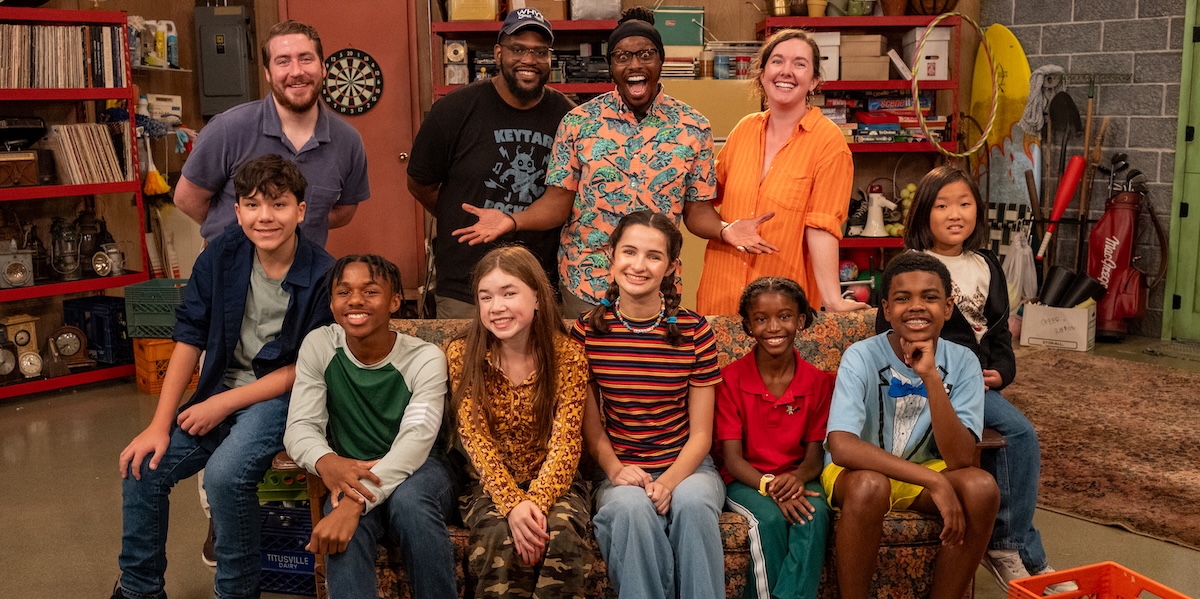
At 7:30am on Monday, June 1, WHYY-TV debuted Good Neighbor Club, the public television station’s latest addition to its cache of educational children’s programs. The series features 10 civics-centric episodes aimed at early elementary school viewers ages six to nine. Its cast includes some new faces, including kids from Pennsylvania, New Jersey, and Delaware recruited via an Instagram casting call, and old ones, such as actors Bianca Salerno and Marcely Jean-Pierre, reprising their roles as Freddie and Uncle Mars from the station’s 2023 arts-focused program The Infinite Art Hunt. Each 10- to 15-minute long episode (perfectly suited to an early elementary schooler’s attention span) sees the crew working together to solve real-world problems in their neighborhood, everything from neighborly disagreements to event planning to water conservation.
Aesthetically, the show calls back to an older era of TV — and that’s intentional. Inspired by the three-camera sitcoms of the 80s and 90s, Good Neighbor Club is live action, features a laugh track, rarely makes use of the internet or computers, and mainly takes place on a set decorated colorfully and tactilely with books, board games, tools and toys. The larger neighborhood where the show takes place is also visually based on Germantown, says Corkery. One episode even teaches viewers the benefits of setting up a community fridge, with appearances from Germantown’s own community fridges and residents who contribute to them speaking on their efforts to support neighbors in need, then ending with Freddie and friends setting up a fridge of their own at their local rec center.
Not only does the show offer its viewers a kind of entertainment not widely available on our televisions and phones anymore, it offers a kind of development not widely seen outside of the classroom. The literature on children’s media has widely suggested that educational content can effectively make young viewers more empathetic, nonviolent, and generally prosocial. In 2025, a study in the Journal of Children and Media found that educational television can even motivate children to explore intellectual topics further throughout their lives.
“We adopted this ‘Notice, Think, Do’ model,” says Caitlin Corkery, the show’s creator and Senior Manager of Series Production at WHYY. “Every episode has our characters noticing something in their neighborhood, thinking about it, and doing a little bit more research or digging into it and then coming up with a plan of action and doing something to improve the circumstances in their neighborhood.”
At the end of the day, we’re making something because we think it’s the thing that kids and families need — Caitlin Corkery
Establishing this episodic structure was one of the first steps to getting the idea off the ground, she says — right after securing grant funding, an effort in itself, as both local and federal arts programs struggle for government support.
Then came scripting, for which Corkery and her team brought on chief content and learning officer at the National Constitution Center, Julie Silverbrook, and Temple University associate professor in Teaching and Learning, Tim Patterson, as education consultants. The following months after this developmental stage — the auditioning, the prop and set design, costume sourcing, shooting, post-production, and creation of supplementary learning resources like worksheets — are demanding ones, especially for the miniscule team that produces this and all of WHYY’s TV programs, but it’s rewarding, Corkery says.
“At the very start of all of this, there are always like 20 meetings of us talking, just talking and talking and talking. Talking about What should kids know about. What would be helpful for kids? What would we want as kids? What do we want for the kids in our life?”
“There’s so much thought at every stage about knowing the responsibility of what we can make and making sure that it is the best thing possible for kids and family, especially at a local public media level,” says Corkery. “I think public media holds the privilege of making content that is non-commercial. Of course, we want a million kids to watch the show. But at the end of the day, we’re making something because we think it’s the thing that kids and families need. We think it’s messaging that they can become curious about, that they can learn something from, that makes them more compassionate or empathetic.”
All told, it took her team a little over a year to get Good Neighbor Club into viewing shape.
Philly’s public programming claim to fame
Corkery et al were not entirely reinventing the wheel, however.
Philly has a long history of public children’s programming. Some of the nation’s most tenured children’s show hosts got their start in Philly-based public programming: Jane Norman of Pixanne, Traynor Ora Halftown aka “Chief Halftown,” and radio host Wee Willi Webber. In the 60s, WPVI’s Captain Noah and His Magical Arc became kiddie must-see TV. Elvis, John Lennon, Jim Henson and the Phanatic, making his world debut, were featured during Noah’s 27-year run. (Sesame Street may have filmed in Queens, NY, but the original Gordon hailed from Mt. Airy, and his daughter Holly, who’d go on to become an actor herself, grew up assuming the street was in her diverse neighborhood.)
In the 80s, groundbreaking children’s game shows Double Dare and Finders Keepers were made in WHYY’s Old City studios (though both aired on Nickelodeon). But by the 90s, as viewers’ tastes shifted toward other kinds of programming and networks sought to cater to them, the age of weekday, educational public broadcast kid’s TV began to fizzle out, leaving only Saturday morning cartoons. Fast forward a few decades, and even Saturday cartoons aren’t much of a thing anymore either. Especially not when you can get Peppa, Bluey and Blippi on demand.
“Maybe news in the world is scary in some way and can make you feel helpless, but you can do something where you are that matters in your community.” — Caitlin Corkery
But at present day WHYY, amid a children’s media landscape infected by absentminded, shortform content, their production team seeks to keep the spirit of that bygone era alive.
“Sesame Street, Reading Rainbow, Mister Rogers — those shows were part of my core upbringing. So, when we had our daughter, I was very intentional about the kind of programming that she would watch,” says Marcely Jean-Pierre, who played the role of Uncle Mars on Good Neighbor Club and The Infinite Art Hunt. “Just making sure that she was able to watch things that weren’t brain rot and weren’t gonna waste her time. It really is a dream come true to be able to create and be a part of a TV show that I feel confident with my daughter watching.”
Jean-Pierre, trained as a therapist and currently an elementary school social worker and counselor, first delved into acting and improv in 2012, the same year as his graduation from University of Pennsylvania’s Social Policy masters program. For him, the show sits at the nexus of his work with children, fatherhood and his love of the stage.
The show also offers the youth of the Philadelphia region an opportunity that even adults don’t always take — to think and act communally, in spite of an increasingly polarized and difficult to explain country.
This opportunity is also set to be extended to kids across the country. Since the show has wrapped up its initial weekly Saturday morning run on WHYY-TV, all episodes are now published and available on-demand on their YouTube Channel, WHYY Kids. In October, the show will be available nationally for any public media station to air. Partner stations in Harrisburg, Detroit and Montana plan to air additional video shorts produced by their own education teams, with local students.
“The whole show has this running theme of doing something in your neighborhood,” says Corkery. “Maybe you can’t control things on a bigger scale. Maybe news in the world is scary in some way and can make you feel helpless, but you can do something where you are that matters in your community. And that’s all we can do, that’s all we can impart. We’re not going to help kids solve the world’s problems, at least not in this show. But maybe this is the seed that helps them grow that further down the line.”
Correction: Temple University associate professor in Teaching and Learning, Tim Patterson, was an education consultant on the show.
 MORE ON HELPING YOUTH BECOME BETTER CITIZENS