


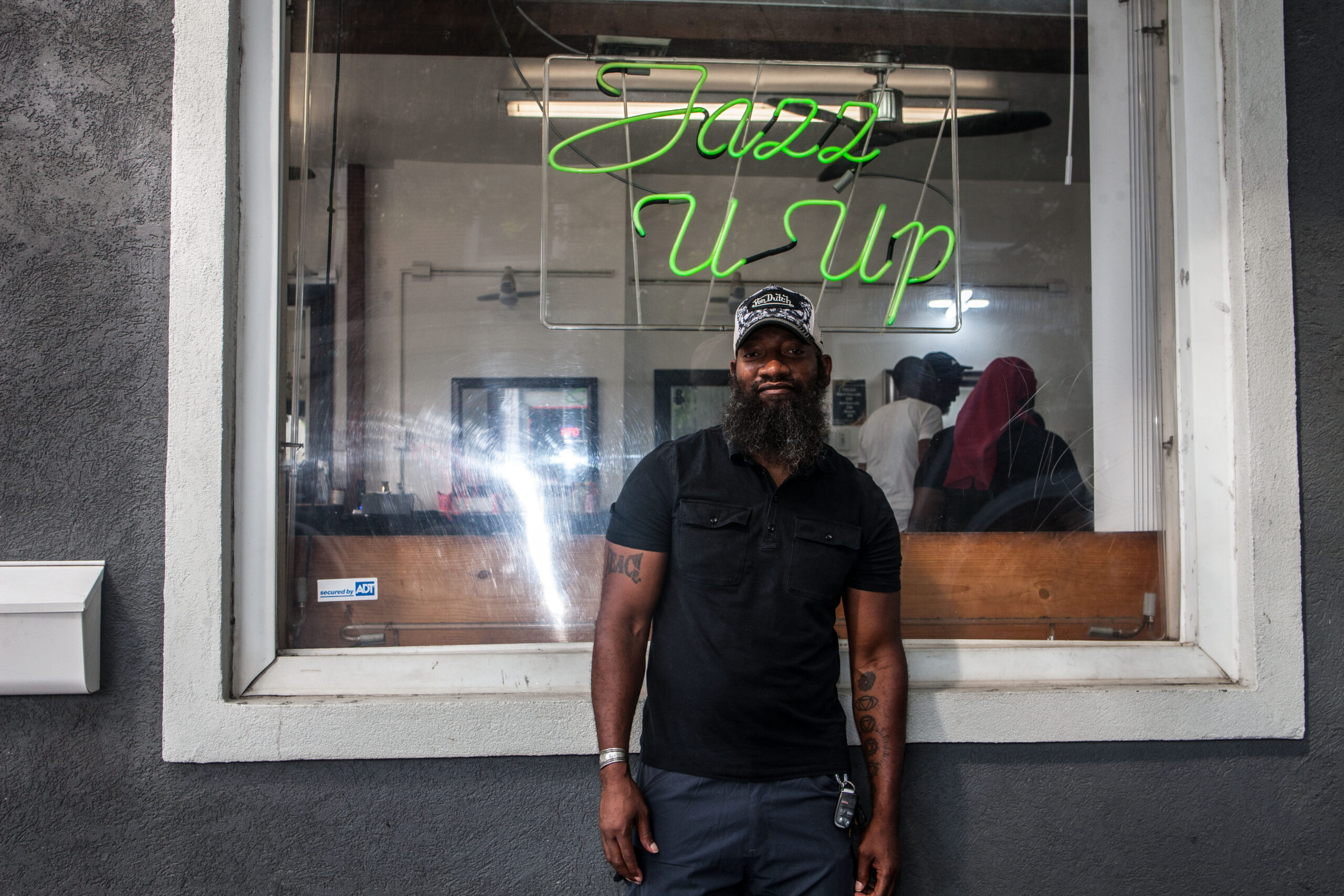
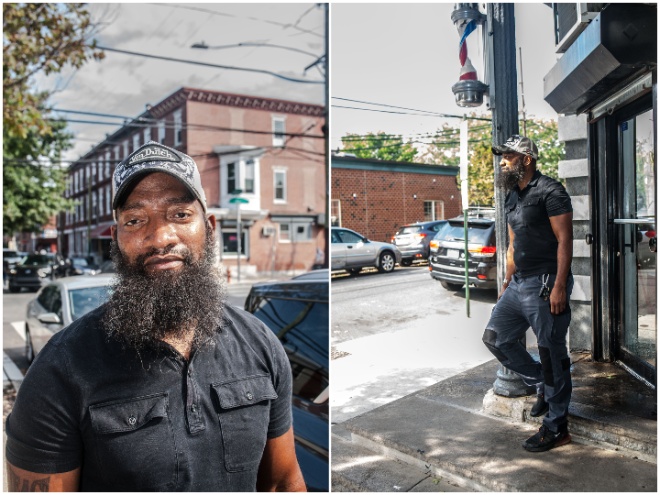
Will Little has been a known quantity on the scene for a while now. Ten years ago, The Philadelphia Citizen wrote about how he gave out gun locks to anyone who’d come by Jazz-U-Up, his barbershop at 16th and Tasker.
Listen to the interview edition here:
He’s done a TED Talk that featured his original poetry. Been featured on TV with Lamont Hatton, whose brother Little shot and killed in 1989, while they were going around to schools, trying to reach youth, talking about gaining emotional intelligence, building the ability to resist violence, even though violence might be one of the first things they come to learn.
Will and I connected 20 years ago, through a great mutual friend, Leon Woodard, aka Big Zah. He invited me onto a show he did with Comcast to talk about navigating mental health as Black men in Philly, and in America. By then, he’d come a long way from his origin story.
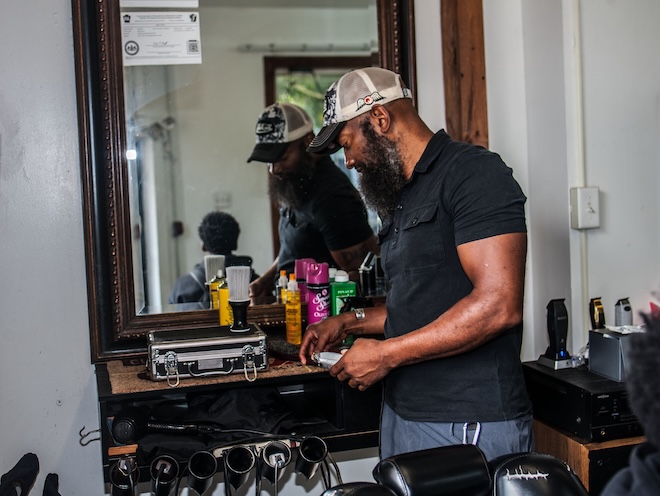
Little moved around a lot as a kid, mostly around South Philly. When his house caught fire, he, his mom, his grandma and his sisters moved in with one of his aunts on Passyunk. He went to school at Bregy, Smith and Childs. This was the 70s and 80s, and students there, at the time, were “a real mixed climate of Italians and Blacks.” He was a quiet kid, introverted. When he was eight or nine, he got chased through the streets by older White youths. But he also stood up for “young Italian dudes” getting picked on at school. “I don’t like to see bullies; I don’t care what nationality they were,” he says.
In the meantime, there were shootouts in the neighborhood and fights between his mom and her boyfriends at home. He was the only male in the household. “I had those different thoughts in my mind, like. Where’s my dad at? Why he ain’t around?” He longed for someone to look up to. Instead, he developed a temper that served as his armor.
At age 13, he jumped into a fight between his mom and her boyfriend, and the man took him outside to show him his 32 Dillinger. “I guess he was trying to do something to intimidate me or scare me, but I was so angry that I showed no signs of fear,” he says. “That trauma right there shaped my world for being in the streets.”
By age 14 or 15, he was robbing. At 16, he was selling drugs and buying guns, riding around in a car he bought himself, getting into disputes with neighborhood guys. You can almost predict what happens next. At age 19, Little found himself outside the old skating rink at 20th and Christian streets, in a group of kids who’d gotten into an altercation earlier that night. One group who’d left came back, and shot at Little’s group. He took out his gun, too, hitting and killing 18-year-old Terrence Brice.
Three weeks later, Little was locked up at Holmesburg, charged with murder, attempted murder on a witness, aggravated assault, conspiracy, and possession of a gun. He waited 30 months for a trial, because the court system had been overwhelmed that year with cases, nearly 500 murders in 1989 alone. Holmesburg was “wild at the time.” He nearly killed another man with a pipe. He started to change after eight months, when his son was born.
In the middle of “chaos and riots,” he started a journey of reflection. “I knew I couldn’t be a good father unless I was a good man,” and he couldn’t wait until he got out of jail. “Reflection became my freedom.”
He thought about his childhood, that he was a “good kid, laid back … genuine, respectful … I reflected on my father not being there — abandonment: That’s trauma. Seeing my mom go through this struggle: That’s trauma. The dude putting a gun in my face: That was trauma.” He started to forgive himself for the things he’d done. He also converted to Islam, taking on the role of imam and mentoring younger men around him, “dudes that had triple life, double life, dudes that wanted to just go fight and stab somebody … I became the voice of reason for a lot of arguments in that joint.”
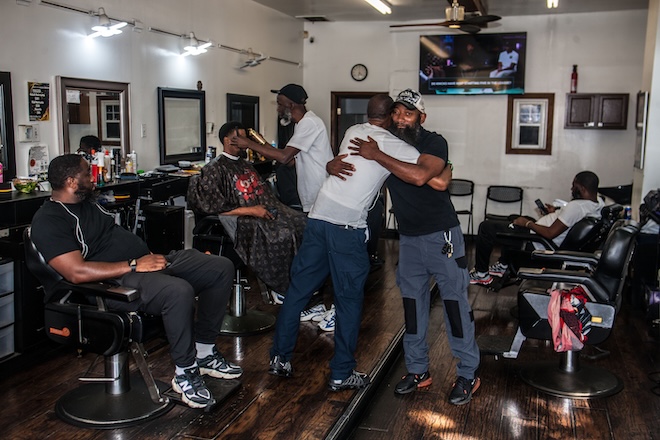
In 1998, he was released to a halfway house, and started talking to kids from his neighborhood about his experiences. “My motto was, ‘Progress over pride,’” he says. He worked in a warehouse, and had another baby. When a barbershop opened on the corner around from his house, and the owner offered him a chair, he practiced on his nephews, then took the leap. It didn’t take long to learn the trade. What surprised him was having to learn to interact with all kinds of people. “I got to really work on my social skills,” he says. “I needed thicker skin if I was going to deal with the public … I was learning people’s emotions, learning how to communicate, learning how to de-escalate certain things in real time.”
At the same time, Will was writing poetry and organized “Poetry in Motion” events at Warmdaddy’s and other spots — and Hatton, the brother of the young man he’d shot and who’d spent years talking about seeking revenge, came into the shop, and forgave him. They also started working together, talking to kids.
Little kept learning, too, absorbing everything he could on personal, emotional development from YouTube and Instagram. Soon, he was accepting invitations to talk to all kinds of groups about his transformation — and sharing that same information with people left out of those circles through personal development courses on Instagram Live.
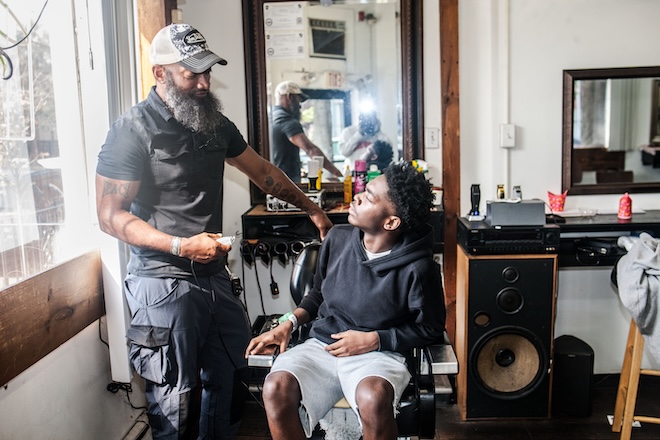
These sessions are “geared towards helping people in the community who are dealing with trauma, trying to find their way through life, going through some kind of mental breakdown … We have not been given the tools on how to live; we’ve just been learning how to survive.”
He tells his audiences that they’re all part of Allah’s creation, that given what they’ve been through, they’re stronger than they know, strong enough to make choices. This fall, he’s inviting his students to the Poconos, where he rents a couple of houses away from the noise of the city to be in nature, a space that’s “conducive to healing.”
“You get time to calm down, get your pocket of peace, relax, reflect on your life … recalibrate a little bit and figure out your direction where you’re trying to go,” he says, all the while, “relating to other people just like you, same dilemma, same trauma, same childhood.” These escapes offer a “lasting impact,” he says, one that he’s experienced himself, and knows others can, too.
West Philly born and raised with a slosh of Brooklyn, Big Rube partnered with Mitchell & Ness in 2000 to help make it a global brand marketing and selling high-end throwback jerseys. He has been photographing Philly since 2009, including in a Daily News Column from 2011 to 2017. He’s also a chef, preparing to open his own space in 2026.
 MORE FROM BIG RUBE’S PHILLY
