

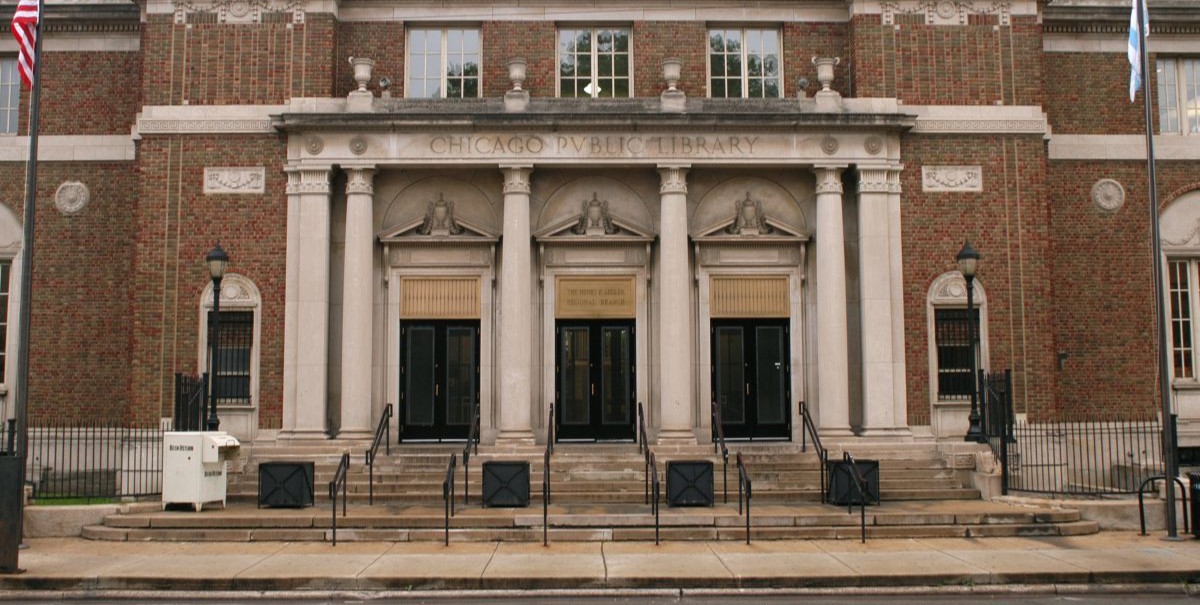


In 2024, the Pratt Free Market at the Enoch Pratt Free Library in Baltimore opened the nation’s first full-service food pantry in a public library. In January 2026, the Legler Regional Library in Chicago became the second big-city library fully to connect nourishment for the body and mind through their food pantry, open Thursday evenings and Sunday afternoons.
Listen to the audio edition here:
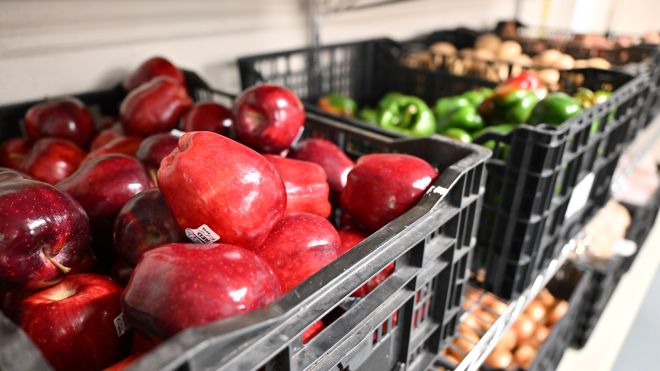
According to Shilo Jefferson, director of the Legler Regional Library, the facility’s pantry is in a Chicago neighborhood thought of as a food desert. Legler partners with the Greater Chicago Food Depository (GCFD) to provide access to food, as well as mental health support, an artist-in-residence program, youth programming and learning opportunities. The Legler Regional Library also receives a monthly USDA (U.S. Dept of Agriculture) allotment. Community members 18 years and above can register in person or through GCFD’s online platform to, Jefferson says, “‘shop’ at the pantry and get access to a rotating selection of protein, fresh fruits and vegetables, dairy and other essential food groups that support a healthy diet. We strive to create a welcoming, dignified experience by offering a personalized shopping model in which staff assist by handling the food patrons select. Patrons are invited to visit once a month, but nobody is turned away.”
Legler Regional Library provides staffing for the pantry, which is the only expense to the library itself. The program has been very successful. Since its soft opening at the end of July 2025, 600 households a month have benefitted. The resource had its official grand opening in January; organizers expect they’ll attract new patrons and resources from other community organizations in the coming year.
Philadelphia should steal this idea. The need here is great. Penn Medicine defines food insecurity as “limited or uncertain access to adequate food to stay healthy.” One indicator of food insecurity is the percentage of households receiving Supplemental Nutrition Assistance Program (SNAP) benefits. In the United States as a whole, 12.4 percent of households receive SNAP; in Pennsylvania, 14.4 percent; in Philadelphia, it’s nearly double: 27.3 percent.
The Free Library of Philadelphia is already an amazing resource
The Free Library already offers many non-food resources. Online and in-person help is available for job seekers, entrepreneurs, and nonprofit organizations, including free professional headshots. Patrons can access social services, information, and government forms through the library. The array of cultural resources is extensive and imaginative: music, crafting, nature exploration, STEAM events, book clubs, and story times. Neighborhood libraries offer after school programming and homework help, along with adult education options and English as a second language classes.
Philadelphia libraries are also already doing a great deal to address food insecurity and general health and wellness. Free meals and snacks for K-12 students are available at Joseph E. Coleman Northwest Regional, Nicetown-Tioga, and Queen Memorial libraries. Holmesburg, Fox Chase, Oak Land, and Chestnut Hill libraries serve as collection points for food donations. The Lillian Marrero Library in North Philadelphia hosts a free farmers market with PhilAbundance.
Then there’s the Culinary Literacy Center (CLC), a large teaching kitchen at the Parkway Central branch that joins with local chefs, educators and civic partners to offer programs focused on cooking, nutrition, and food culture. Neighborhood libraries also host culinary events. Until June 2025, the People’s Fridge program at the Lucien E. Blackwell Regional Library hosted pop-up food availability. But the program outgrew the space and is now operating out of a larger warehouse location. The library continues to explore partnerships with The People’s Fridge and also offers other health resources, including Narcan, menstrual supplies, and COVID-19 tests, while supplies last.
It may be time for the Free Libraries of Philadelphia to plan a full-fledged food pantry, tailored to the space available, with regular, advertised hours. I’m not suggesting that it would be feasible, at least not initially, to have food pantries at all 54 neighborhood branches. But Philly is well-positioned to become the third city (after Baltimore and Chicago) to launch a full-service food pantry at Lucien E. Blackwell or at another site.
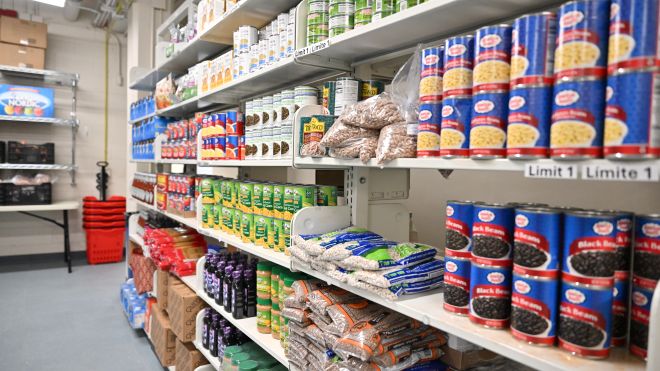
Let me say right away that libraries should not be the only places addressing food insecurity. Community centers, health centers, and places of worship should also find ways to offer food assistance — and dozens of these, and other centers in Philadelphia, already do.
But a full-service food pantry at Philadelphia Free Library locations would go a long way to further what Chicago library commissioner Chris Brown referred to in the Sun-Times as a library’s “legacy as a place where community members can nourish their bodies, minds, and souls.”
With cutbacks in federal food assistance, Philadelphians are worried about the additional rules and paperwork designed to make SNAP benefits less accessible. Food insecurity is rampant. And it’s hard to read or learn when you are hungry. Let’s imagine The Free Library of Philadelphia Foundation teaming up with the City and with other nonprofits like Philabundance to go Chicago and Baltimore one better by opening food pantries for predictable, extended hours in as many libraries as possible. Let’s also envision counsellors available in our library/food pantries to help clients navigate the new, onerous SNAP regulations.
Such services would be a boon for many of the Free Library’s 50-plus locations, even its most prominent and historic one. On a recent freezing evening, I entered the Parkway Central branch to find it was serving as a Warming Center, full of people seeking shelter there. It’s a tribute to the venue that those people looked at home with their dignity preserved. That’s when I remembered the article I had read the day before about the full-service food pantry at Chicago’s Legler Regional Library and thought how welcome such a pantry would be to those individuals warming up in what we used to call the “Main Library” on the Parkway.
I realize there’s a difference between food pantries with regularly established hours and immediately feeding the people who take shelter in libraries. Even so, the regular availability of a food pantry would in and of itself address food insecurity for anyone, regardless of housing status. A pantry is a democratic place. Anyone who needs food is welcome with no questions asked.
Things we can do
- Support the Free Library of Philadelphia by joining the library and, if possible, contributing to The Free Library of Philadelphia Foundation.
- Support Philabundance, People’s Fridge, and other food banks. Encourage them to team up with the Free Library to establish full-service food pantries in libraries.
- Attend the Author Events at the Parkway Central Library and tell your friends about them.
- Read, read, read — and encourage others to do so.
Elaine Maimon, Ph.D., is the author of Leading Academic Change: Vision, Strategy, Transformation. Her long career in higher education has encompassed top executive positions at public universities as well as distinction as a scholar in rhetoric/composition. Her co-authored book, Writing in the Arts and Sciences, has been designated as a landmark text. She is a Distinguished Fellow of the Association for Writing Across the Curriculum.
 MORE IDEAS WE SHOULD STEAL