



My apartment has a new rule: I’m not allowed to listen to opera at night. It’s new partly because I recently played Tosca loud enough to wake my partner, and mostly because prior to last year, I never listened to opera, so there was no need for a ban.
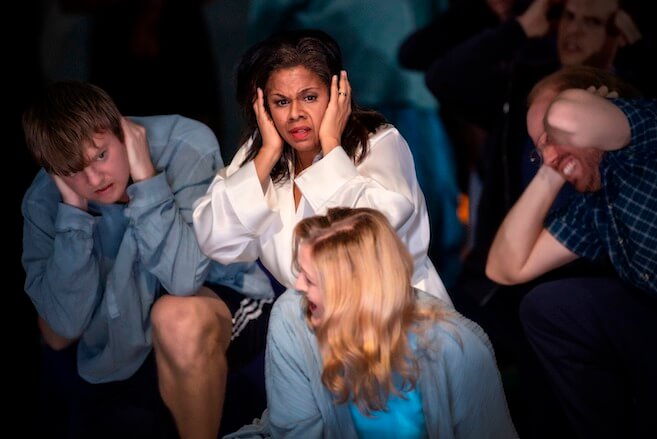
That changed when Opera Philadelphia, under General Director and President Anthony Roth Costanzo, transformed the organization’s performance fees, lowering the starting ticket price to $11. I wasn’t an opera virgin — I had been to productions in college — but I wouldn’t have called myself a fan. Still, I love a deal, so last year, I bought tickets to every show and found myself transformed during the U.S. premiere of The Listeners, a contemporary opera by composer Missy Mazzoli and librettist Royce Vavrek that arrested my imagination like few things have in our oversaturated attention economy. After my experience at the Academy of Music, I was hooked and started listening to albums and reading everything I could find to catch up.
We need art precisely because it evades the easy cost-benefit analyses that increasingly govern our lives, and aims to fulfill metaphysical needs essential to our humanity.
Opera Philadelphia’s changes — first to ticketing, then to programming — have started conversations about the challenges of making art financially accessible and keeping cultural institutions viable. I’m bemused by how some critics’ handwringing over new audiences and old repertoire seem to ignore that incredible result of the changes: Every performance had a younger, more diverse, and actually full audience.
I believe that Philadelphia thrives at the intersection of high standards and accessible entry, and it feels natural that, to grow, the Opera should embrace this ethos (work that has continued post-season with programs like a new partnership at the Wanamaker that launched in August). Experiencing these efforts — including a panel on The Listeners I helped promote for Giovanni’s Room bookstore — I’ve come to believe conversations around Philly’s opera, and arts in general, are missing the point.
Namely, the pesky question: Why? Why should art be accessible and cultural institutions be preserved? This cannot be answered by maxims of “art for art’s sake.” After all, while institutions have been essential in cultural preservation, they have also been bastions of class- and race-based exclusions. Classics are often venerated by classists and are not virtuous simply by virtue of lasting. A cynic could easily look at the opera’s effort as a desperate grab to attract an audience that left for legitimate social and aesthetic reasons.
Art is necessary
But I’m not a cynic when it comes to the arts. I spent years as an English teacher, and during that time, besides watching my hair gray, I found myself unable to shake the belief that got me in the career: Art does something necessary for us. Not merely because it is entertaining or (my least favorite word) relatable. Rather, we need art precisely because it evades the easy cost-benefit analyses that increasingly govern our lives, and aims to fulfill metaphysical needs essential to our humanity.
Of course, the necessity of art is far from an original idea. Aristotle argued for our need for catharsis, and contemporary writers like Ocean Vuong continue to laud the arts as “a space of pure potential, of possibility.” Art can simultaneously disrupt and offer epiphany; it can provoke new frameworks and reawaken appreciation of old forms. Vitally, it can shake us from the well-critiqued patterns of frictionless, surveilled consumption by requiring attention for our uniquely grand and messy lives, something opera’s always done.
I’ve found that opera resists the worst of algorithmic culture and its lack of both emotional complexity and authentic innovation. I’m still learning to listen to opera and appreciate its scope. It isn’t always easy; it requires me to constantly venture from what I know (including the English language) but, when I first listen to an aria that makes me tear up, I’m reminded of how worthwhile it is to experience the new and keep myself open to more.
I believe that Philadelphia thrives at the intersection of high standards and accessible entry.
Artistic institutions, then, are not only preservers of the arts but antidotes to the loneliness and confusion that define our current moment. I believe thriving cultural institutions are good for the communities in which they are situated because they can provide audiences a means to access the full scope of their humanities in ways that are otherwise bulldozed by our politics and technologies. If artistic institutions believe their missions — that the works they’re sharing actually improve peoples’ lives — removing barriers to entry (like ticket prices) must be priorities to accomplish their noble goals. (Opera Philadelphia’s budget has revealed that admission isn’t generating revenue to pay the bills anyway.)
While misinformation has resulted in distrust in our institutions, one must acknowledge that some have lost sight of their missions (and their publics) in favor of appeasing established audiences or relying on known entities. I am not suggesting that shifting cultural trends to reach new audiences is easy, particularly when politicized issues around funding and censorship have made the hard work of running cultural institutions even harder. I do not envy Philadelphia’s cultural leaders. But I believe that when their missions are so important to our community’s wholeness, we must remind them how we need them to succeed and celebrate the ones, like the Opera, that have responded by trying boldly and creatively to do so.
Thriving cultural institutions are good for the communities in which they are situated because they can provide audiences a means to access the full scope of their humanities in ways that are otherwise bulldozed by our politics and technologies.
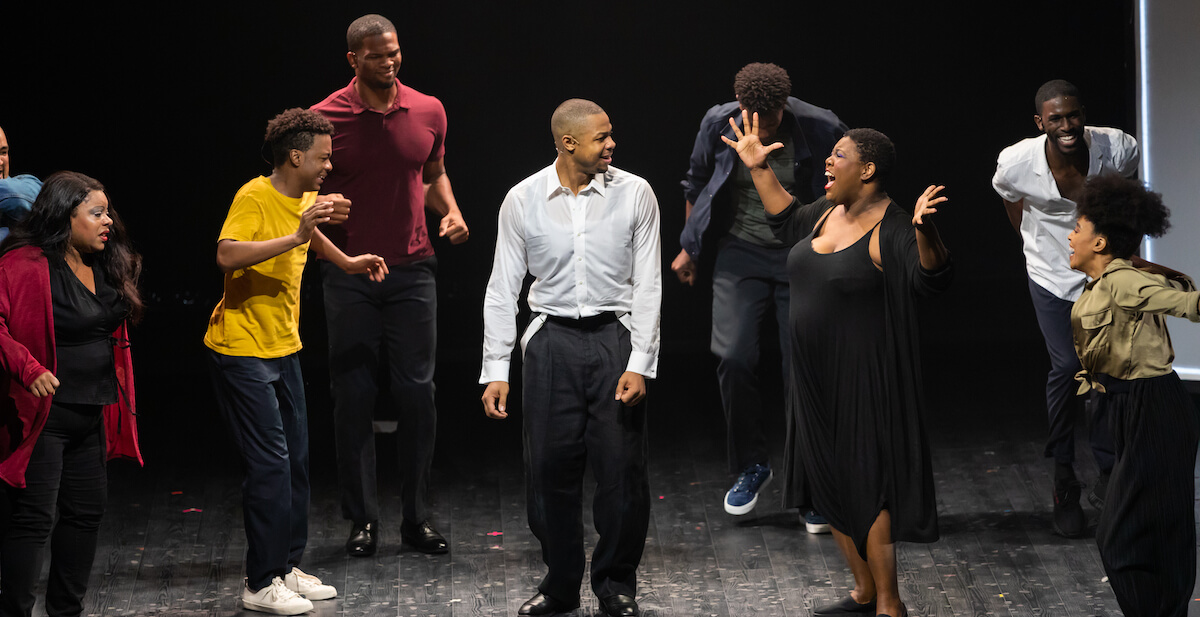
And the Opera, for its part, has done so with style and commitment. This season, I’m looking forward to seeing operas across theaters (and now the Wanamaker Building) throughout Philadelphia. Costanzo is helping new audiences, like me, expand our idea of not only what opera can be or sound like (including new operas like Complications in Sue starring the MacArthur “Genius Award” Fellow Justin Vivian Bond and older, rarely performed pieces like Langston Hughes’ The Black Clown), but how and where it’s staged, who it’s marketed to, and how it’s paid for (thanks to new subscription models like their Opera Pass). It’s exciting to watch an art adapt and adjust in real time, but of course, Philadelphia is no stranger to being on the front lines of history.
Whatever you feel about opera or institutions, it’s impossible to ignore our society’s rapid, even frightening changes. Responding to them is never easy. These days, when I’m working to accept change in my life, I sometimes think of the Marchellin’s aria in Der Rosenkavalier (something I’d never heard of last fall and was delighted to recognize an organ transcription of at the Wanamaker). “It’s in the how,” you accept time’s changes, she reminds herself (and us), “there is the whole difference.” I hope, for my own development and community, that Philadelphia’s cultural institutions follow Opera Philadelphia and embrace new “hows” of artistic innovation and accessibility that will make all the difference to our city.

MORE ACCESSIBLE ARTS AND CULTURE IN PHILADELPHIA